Onboard motherboard audio has gotten better over the years, but it still struggles with the two things competitive and immersive gamers care about most: precise positional cues and clean output for headsets or speakers. Electrical interference from crowded PC cases, weak headphone amps, and compressed surround processing can all blur the difference between hearing a footstep behind you and getting flanked. A dedicated sound card or external DAC/amp solves this by isolating audio processing and giving you dedicated hardware for amplification, surround virtualization, and mic clarity.
This guide breaks down six of the most popular gaming-focused sound cards and USB DACs on the market right now, from budget-friendly USB dongles to high-end internal cards with discrete amplifiers and RGB lighting. Whether you’re running a competitive FPS setup, a full surround speaker system, or just want cleaner chat audio, you’ll find a solid match below.


As an Amazon Associate we earn from qualifying purchases at no extra cost to you. Product prices and availability are accurate as of the date shown and are subject to change.



🎮 Get More From Your Setup — Free
Prime Gaming gives you free PC games every month, in-game loot, and a free Twitch channel sub — plus fast free shipping on all the gear above. New members get a 30-day free trial.
Watch: Best Sound Card For Gaming — Video Review
How to Choose a Sound Card For Gaming (2026)
- Connection type: Internal PCIe cards offer the lowest latency and best isolation from case noise, while USB DACs are easier to install and work across PC, console, and laptop.
- Headphone amp quality: Look at impedance range and SNR ratings if you use high-impedance or audiophile-grade headsets, since a weak amp will leave them sounding flat.
- Surround and virtualization: Features like Dolby Digital, DTS, or Super X-Fi matter most for positional accuracy in competitive shooters and immersive open-world games.
- Microphone processing: Built-in noise reduction and voice clarity tools are worth prioritizing if you stream, record, or regularly use voice chat.
- Platform compatibility: Confirm support for your setup, since some cards are PC-only while USB options often work with PS5, Switch, and Mac as well.
The Best Sound Card For Gaming (2026)s Reviewed
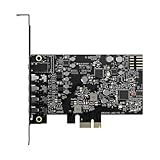
Sound Blaster Audigy Fx Pro
A compact, budget-friendly PCIe card that still delivers a noticeable upgrade over onboard audio, with clean output and decent headphone amplification for casual to mid-range gaming headsets.
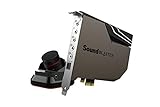
Sound Blaster AE-7
Creative’s flagship internal card pairs a high-quality DAC with a discrete headphone bi-amp and an external control module, making it an excellent choice for gamers running demanding, high-impedance headphones who also want streaming-grade mic input.
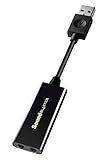
Sound BlasterX G6
This external USB DAC and amp is ideal for players who switch between PC and consoles, offering Hi-Res 7.1 virtual surround and enough headphone power to drive most gaming and audiophile headsets without needing to open your case.
Sound BlasterX AE-5 Plus
Built around a SABRE32-class DAC with up to 122dB SNR, this card is aimed at gamers who want near-audiophile fidelity alongside Dolby Digital and DTS support, plus customizable RGB lighting for aesthetics-focused builds.
Fosi Audio C3 Gaming DAC
A no-fuss USB external sound card with 7.1 surround and a footstep enhancement mode tailored for FPS players, and its broad compatibility with PS5, Switch, and laptops makes it a versatile pick for multi-platform gamers.
Related Guides
- Best Apple Computer For Gaming (2026)
- What Is The Best Handheld Gaming Device (2026)
- Best Gaming Notebook Under 1500 (2026 Guide)
- 5080 Pre Built PC (2026)
- Best Years In Gaming (2026)
Frequently Asked Questions
Do I really need a sound card if my motherboard has built-in audio?
Onboard audio is fine for casual use, but dedicated sound cards reduce electrical interference, provide stronger headphone amplification, and offer better positional audio processing, which matters for competitive gaming and premium headsets.
Is an external USB DAC as good as an internal PCIe sound card?
Modern USB DACs like the Sound BlasterX G6 or Fosi Audio C3 can rival internal cards in sound quality and are often more convenient, though internal cards still tend to offer stronger headphone amps and more advanced surround features at the high end.
Will a gaming sound card improve my microphone quality?
Yes, most gaming-focused cards include dedicated mic preamps and noise reduction processing that noticeably improve voice clarity for chat, streaming, and recording compared to a motherboard mic jack.
Can these sound cards work with consoles like the PS5?
USB options such as the Fosi Audio C3, Sound BlasterX G6, and Sound Blaster Play! 3 support console use, while internal PCIe cards like the AE-7 and AE-5 Plus are PC-only.
Final Thoughts
For most gamers, the Sound Blaster AE-7 stands out as the best all-around internal card thanks to its balance of fidelity and mic performance, while the Sound BlasterX G6 is the top pick for anyone wanting console flexibility, and the Fosi Audio C3 is the smartest budget choice for FPS-focused players who want footstep clarity without a big investment.
Top picks from this guide
 RazerRazer BlackShark V2 X Gaming Headset for PC, 3.5mm Audio…$41 \xc2\xb7 98/100
 GvyugkeGvyugke 2.4GHz Wireless Gaming Headsets for PS5, PS4, PC, Switch,MatteBlack$32 \xc2\xb7 97/100
 CorsairCorsair K70 CORE TKL Wireless RGB Tenkeyless Mechanical Gaming Keyboard…$120 \xc2\xb7 95/100
 ValoriseWireless Gaming Headset for PC PS5 PS4 Mac Switch 7.1…$46 \xc2\xb7 95/100