A gaming PC’s specs come down to six parts doing six jobs: the graphics card draws every frame, the processor feeds it game logic, RAM holds the working data, storage loads the world, the power supply keeps it all stable, and the motherboard ties it together. If you understand what each one does and how much of it a given resolution needs, you can read any spec sheet or game requirement list and know instantly whether a machine will run what you want to play.
Think of this as gaming computer specs explained from the ground up. It covers each component in plain terms, lists the real requirements for a gaming PC at each level, then maps them into three practical tiers: a 1080p budget build, a 1440p mainstream build and a 4K high-end build. It finishes with a quick way to decode “minimum” and “recommended” requirements printed on a game’s store page.

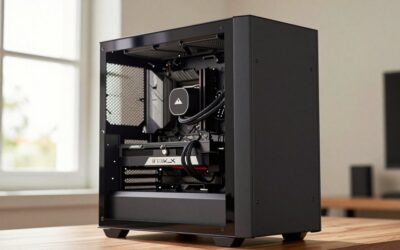
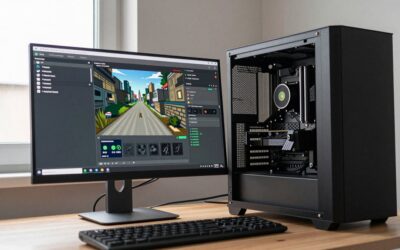
CyberPowerPC Gamer Xtreme VR Gaming PC, Intel Core i5-13400F 2.5GHz, GeForce RTX 5060 8GB, 16GB DDR5, 1TB PCIe 4.0 SSD, WiFi Ready & Windows 11 Home (GXiVR8060A40)
Included for 'Gaming PC Specs Explained: What Each Part Does and How Much You Need' because the listing specifies Intel Core i5-13400F 2.5GHz and GeForce RTX 5060 8GB, details this guide uses to compare options.
View on Amazon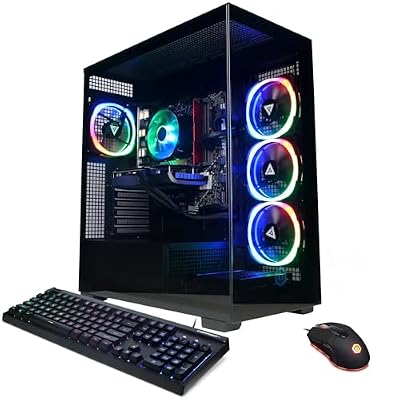
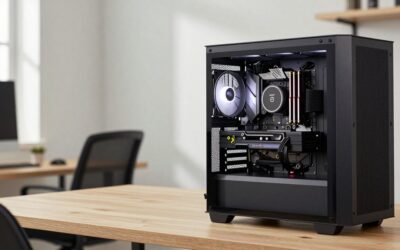
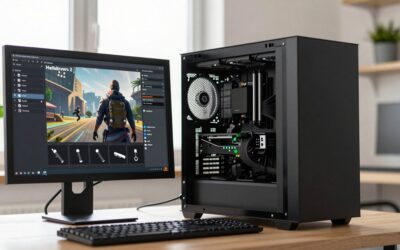
CyberpowerPC Gamer Master Gaming PC, AMD Ryzen 5 8400F 4.2GHz, GeForce RTX 5060 8GB, 16GB DDR5, 1TB PCIe 4.0 SSD, WiFi Ready & Windows 11 Home
Included for 'Gaming PC Specs Explained: What Each Part Does and How Much You Need' because the listing specifies AMD Ryzen 5 8400F 4.2GHz and GeForce RTX 5060 8GB, details this guide uses to compare options.
View on Amazon
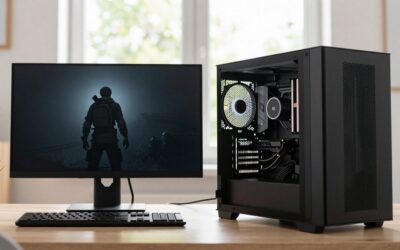
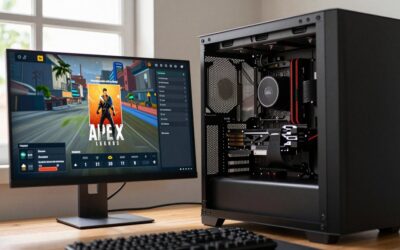
CYBERPOWERPC Gamer Master Gaming PC, AMD Ryzen 5 5500 3.6GHz, Radeon RX 6400 4GB, 16GB DDR4, 500GB PCIe Gen4 SSD, WiFi Ready & Windows 11 Home (GMA3100A)
Included for 'Gaming PC Specs Explained: What Each Part Does and How Much You Need' because the listing specifies AMD Ryzen 5 5500 3.6GHz and Radeon RX 6400 4GB, details this guide uses to compare options.
View on AmazonQuick answer: Our top pick in 2026 is the CPU — our #1 rated choice. See the full ranked comparison, alternatives and buying advice below.
The Spec Tiers at a Glance
Here are the computer specs needed for gaming at each resolution in 2026. Treat these as the typical gamer PC specs for each target rather than absolute floors; a careful build can stretch a tier, and a poorly balanced one will fall short of it.
| Component | 1080p Budget (60-144 fps) | 1440p Mainstream (100-165 fps) | 4K High-End (60-120+ fps) |
|---|---|---|---|
| CPU | 6 cores / 12 threads (Ryzen 5 7600, Core i5-14400F) | 6-8 cores, high boost or large cache (Ryzen 7 7800X3D, Ryzen 5 9600X, Core Ultra 5 245K) | 8 cores with large cache (Ryzen 7 9800X3D, Core Ultra 7 265K) |
| GPU | 8-12 GB VRAM class (RTX 5060, Radeon RX 9060 XT) | 12-16 GB VRAM class (RTX 5070, Radeon RX 9070) | 16-32 GB VRAM class (RTX 5080, RTX 5090, Radeon RX 9070 XT at tuned settings) |
| RAM | 16 GB DDR4-3200 or DDR5-5600 (32 GB preferred) | 32 GB DDR5-6000 | 32-64 GB DDR5-6000 |
| Storage | 1 TB PCIe 4.0 NVMe | 2 TB PCIe 4.0 NVMe | 2-4 TB PCIe 4.0/5.0 NVMe |
| PSU | 550-650 W, 80 Plus Bronze or better | 750 W, 80 Plus Gold | 850-1000 W, 80 Plus Gold, ATX 3.1 |
| Typical total build cost | usually $700-$1,000 | usually $1,300-$1,800 | usually $2,500-$4,500 |
The basic requirements for a gaming PC, at the very bottom of the 1080p tier, are a 6-core CPU, a dedicated GPU with at least 8 GB of VRAM, 16 GB of RAM and an SSD. Drop below any of those and modern releases start to stutter, run out of video memory or take minutes to load.
What Each Component Actually Does in a Game
GPU: the frame factory
The graphics card renders every pixel of every frame, so it decides your resolution, detail level and most of your frame rate. Two numbers matter most. Raw shader performance sets how many frames you get, and VRAM sets how high you can push textures before performance collapses. As a rule of thumb, 8 GB is workable at 1080p with sensible texture settings, 12 GB is comfortable at 1440p, and 16 GB or more is the safe zone for 4K with ray tracing. Upscalers such as DLSS and FSR render internally at a lower resolution and reconstruct the image, which is why a mainstream card can still deliver playable 4K in many titles.
CPU: the game’s brain
The processor runs physics, AI, draw-call preparation and everything else the GPU needs before it can draw. At 4K the GPU is almost always the limit, so the CPU matters less. At 1080p with a high-refresh monitor the reverse is true: the CPU must prepare 144 or 240 frames per second, and a weak one caps your fps no matter which graphics card you own. Large L3 cache chips like AMD’s X3D line excel here because games constantly reuse the same data.
RAM: the workbench
System memory holds game assets, the operating system and background apps such as Discord or a browser. With 16 GB, a modern open-world game plus a browser can push you into the page file, which causes hitching. 32 GB removes that risk for nearly every gamer. Speed matters too: on AM5, DDR5-6000 with CL30 timings is the widely recommended sweet spot because it lets the memory controller run in sync.
Storage: the loading dock
An NVMe SSD cuts load times from the 30-60 seconds typical of a hard drive to a few seconds, and games that stream assets as you move need it to avoid texture pop-in. Many current releases install at 100-150 GB each, so 1 TB fills fast. A PCIe 4.0 drive is plenty for gaming; PCIe 5.0 drives help large file transfers more than in-game performance.
PSU: the foundation
The power supply converts wall power into clean, stable rails. A cheap, overloaded unit can cause random shutdowns under load or damage parts. Size it with headroom and buy from a reputable line with a proper efficiency rating.
Motherboard and cooling: the support crew
The motherboard does not add frames, but it decides which CPU, memory type and upgrades you can use. A B650 or B850 board for AM5, or a B760 board for Intel 12th-14th gen, covers almost every gaming build. Cooling keeps the CPU at full boost; a decent tower air cooler is enough for most 6- and 8-core chips.
Worked Example: Sizing the Power Supply
Power supply sizing is where many first builds go wrong, so here is the method. Add the typical gaming power of the GPU and CPU, add about 75 W for the motherboard, RAM, storage and fans, then multiply by 1.4 for transient spikes and efficiency headroom.
| Build | GPU draw | CPU draw (gaming) | Rest of system | Subtotal | x 1.4 headroom | Pick |
|---|---|---|---|---|---|---|
| 1080p budget | ~150 W | ~70 W | 75 W | 295 W | 413 W | 550-650 W |
| 1440p mainstream | ~250 W | ~90 W | 75 W | 415 W | 581 W | 750 W |
| 4K high-end | ~360 W (RTX 5080 class) | ~120 W | 75 W | 555 W | 777 W | 850-1000 W |
Rounding up to the next common wattage gives you room for a future GPU upgrade. Flagship cards in the RTX 5090 class draw up to around 575 W on their own, which is why those builds start at 1000 W.
Minimum vs Recommended vs High-End Specs: How to Read a Game’s Requirements
Game publishers list requirements in tiers, and they rarely mean the same thing from one studio to the next. Here is how to interpret them:
- Minimum: usually 1080p (sometimes 720p) at the lowest preset, targeting about 30 fps. It means the game will start and remain playable, not that it will feel good. Treat minimum specs as a warning line, not a goal.
- Recommended: typically 1080p at high settings near 60 fps. These are the recommended computer specs for gaming that most buyers should meet or beat, especially if you own a 144 Hz monitor.
- High-end or “ultra”: often 1440p or 4K at maximum settings, sometimes with ray tracing and upscaling enabled. Check the footnotes; many ultra tiers assume DLSS or FSR in Performance or Quality mode.
When comparing your own PC against a list, match the GPU first, then VRAM, then the CPU. Storage requirements almost always specify an SSD now, and a line reading “16 GB RAM” increasingly means you will be more comfortable with 32 GB.
Which Spec Should You Prioritize?
Balance matters more than any single number. Use this short decision guide:
- Competitive shooters at 1080p, 240 Hz: spend more on the CPU (an X3D chip if possible) and keep the GPU mid-range.
- Single-player games at 1440p: put the largest share of the budget into the GPU, roughly 40-45% of the total build.
- 4K with ray tracing: the GPU and its VRAM dominate; a 16 GB card is the practical minimum.
- Streaming while gaming: add CPU cores or rely on the GPU’s hardware encoder, and go straight to 32 GB of RAM.
Frequently Asked Questions
Is 16 GB of RAM still enough for gaming in 2026?
It runs most games, but 32 GB is now the comfortable standard because several big releases and background apps together exceed 16 GB. If you are building new, choose a 2×16 GB kit.
Do I need a PCIe 5.0 SSD for gaming?
No. Load time differences between good PCIe 4.0 and 5.0 drives are typically a second or two. Capacity is the better place to spend.
What is a basic gaming PC spec I can upgrade later?
Start with an AM5 platform, a 6-core CPU, 32 GB of DDR5, a 1 TB NVMe drive and a 750 W Gold PSU, then add the strongest GPU you can afford. That base leaves room for a faster processor and graphics card without replacing the motherboard or power supply.
Ready to decide? Our #1 pick for 2026 is the CPU.
Live price & availability on Amazon.