- Top Pick: ASUS ROG Strix G16 (2025) Gaming Laptop, 16” FHD+ 16:10 165Hz/3ms, NVIDIA® GeForce RTX™ 5060, Intel® Core™ i7 Processor 14650HX, 16GB DDR5, 1TB Gen 4 SSD, Wi-Fi 7, Windows 11 Home, G615JMR-AS74
- Best Value: Acer Predator Helios Neo 18 AI Gaming Laptop | Intel Core Ultra 9 Processor 275HX | NVIDIA GeForce RTX 5070 Ti | 18" WQXGA 240Hz G-SYNC | 32GB DDR5 | 2TB Gen 4 SSD | Killer Wi-Fi 6E | PHN18-72-9474
- Premium Choice: msi Cyborg 17 17.3" FHD 144Hz Gaming Laptop: Intel Core 7-240H, NVIDIA Geforce RTX 5060, 16GB DDR5, 1TB NVMe SSD, Type C, Wi-Fi 6E, Win 11 Home: Translucent Black B2RWFKG-074US
Fifteen hundred dollars is the most interesting price point in gaming laptops: it is where RTX 4070 and RTX 5070 mobile graphics, 165Hz or 240Hz high-refresh screens, and genuinely good cooling all become available at once. Below it you compromise on GPU power; above it you pay steeply for marginal gains. This guide compares eight gaming laptops under $1500 that are actually worth buying, explains what separates a good chassis from a hot, loud one, and covers the specifications that matter most.
As an Amazon Associate I earn from qualifying purchases.
| Product | Key Spec | Best For | Rating |
|---|---|---|---|
| Lenovo Legion Pro 5i 16 | Core i7-14650HX, RTX 4070, 16GB, 240Hz | Best overall under $1500 | 4.8 / 5 |
| ASUS ROG Zephyrus G14 | Ryzen 9, RTX 4060, 16GB, 3K OLED, 3.3 lb | Best portable gaming laptop | 4.7 / 5 |
| Acer Predator Helios Neo 16 | Core i7-14650HX, RTX 4070, 165Hz | Best cooling for the money | 4.6 / 5 |
| ASUS TUF Gaming A16 | Ryzen 7 7435HS, RX 7700S/RTX 4060, 16GB | Best durability and value | 4.4 / 5 |
| HP Omen 16 | Ryzen 7 8845HS, RTX 4070, 1TB SSD | Best screen calibration | 4.5 / 5 |
| Gigabyte Aorus 16X | Core i7-14650HX, RTX 4070, 165Hz | Highest sustained GPU wattage | 4.4 / 5 |
| MSI Katana 15 | Core i7-13620H, RTX 4060, 16GB, 144Hz | Cheapest capable option | 4.2 / 5 |
| Alienware m16 R2 | Core Ultra 7, RTX 4060, 16GB, 240Hz | Best build quality on sale | 4.3 / 5 |
🛒 Best Price Today on Amazon
Prime members get fast, free shipping on everything above, plus member-only deals. New members get a 30-day free trial — cancel anytime.
How to choose a gaming laptop under $1500
The GPU model name tells you less than the power limit. An RTX 4070 configured at 140W in a Legion Pro 5i is dramatically faster than the same chip limited to 80W in a thin chassis — the gap can exceed 30 percent. Manufacturers list this as “Total Graphics Power” or “Max Graphics Power,” and it is the single most important number to look up before buying. A well-cooled RTX 4060 at 115W often beats a throttled RTX 4070.
Cooling and chassis design follow directly from that. Look for a laptop with at least four heat pipes, dual fans, and vents on the rear and sides rather than only the bottom. Reviewers’ sustained-load temperature and fan noise measurements matter more than peak benchmark scores, because gaming sessions last hours, not thirty seconds. The screen is the third pillar: 16-inch 2560×1600 at 165Hz is the current sweet spot, offering more usable resolution than 1080p without demanding as much GPU power as 4K.
Finally, check upgradability and battery. Most gaming laptops in this bracket allow RAM and SSD upgrades, so buying a 16GB/512GB configuration and adding your own memory and storage often saves $150 or more. Battery life will be four to seven hours for light work and roughly ninety minutes while gaming unplugged; that is normal and not a defect. Our top budget SSD guide covers drives that fit these machines, and the home laptop buying guide is a better starting point if gaming is only occasional.
Best gaming laptop under $1500 overall
The Lenovo Legion Pro 5i is the default recommendation and has been for several generations. It combines a high-wattage RTX 4070, a 16-inch 240Hz 2560×1600 panel, a genuinely excellent keyboard, and a cooling system that keeps the GPU near its full power limit without deafening fan noise. It is heavier than a thin-and-light at roughly 5.5 pounds, and the plastic-and-metal chassis is functional rather than luxurious, but nothing else at this price delivers the same sustained performance.
Best portable gaming laptop under $1500
The ASUS ROG Zephyrus G14 trades some raw power for a 3.3-pound aluminum chassis and a 3K 120Hz OLED display that genuinely looks better than anything else in the category. Its RTX 4060 runs at a lower power limit than the larger machines, so expect roughly 15 to 20 percent lower frame rates, but it is a laptop you can carry daily and use for work without embarrassment. Battery life outside gaming is close to eight hours.
Best-cooled gaming laptop under $1500
The Acer Predator Helios Neo 16 and Gigabyte Aorus 16X both prioritize thermal headroom, running their RTX 4070s at high sustained wattage with large vapor chambers and aggressive fan curves. They are loud at full tilt — plan on headphones — but they hold boost clocks through long sessions where thinner machines throttle. Both also offer easy bottom-panel access for adding RAM and a second SSD.
Cheapest gaming laptop under $1500 worth buying
The MSI Katana 15 and ASUS TUF Gaming A16 regularly sell between $900 and $1,100 with an RTX 4060 and 16GB of RAM. Both play current games at 1080p or 1600p high settings comfortably with upscaling enabled. The TUF line in particular is built for durability, with MIL-STD tested chassis and simple internals. Neither has a premium screen or keyboard, but both leave $400 in your pocket for a monitor, a headset and a bigger SSD.
Gaming laptop under $1500 for creative work
If you edit video or photos alongside gaming, prioritize the panel and memory. The HP Omen 16 ships well-calibrated displays and configurations with 1TB storage, while the Zephyrus G14’s OLED covers full DCI-P3. Add 32GB of RAM yourself for around $70 — creative applications benefit far more from memory than games do. An RTX 4070 also accelerates rendering and AI features in Adobe and DaVinci Resolve.
What to skip on a gaming laptop under $1500
Avoid 4K panels at this price, since the GPU cannot drive them at high frame rates and they cost battery life. Avoid 8GB RAM configurations entirely. Be cautious with laptops that pair a high-end GPU with a 45W-class low-power CPU, and with ultra-thin chassis that house an RTX 4070 in 18 millimeters — the thermals will not support it. Also skip extended warranties from third parties; manufacturer coverage is usually adequate.
Gaming laptop under $1500 versus a desktop
A $1,200 desktop meaningfully outperforms a $1,500 laptop, runs quieter, upgrades easily, and lasts longer because thermals are not a constraint. Buy the laptop only if portability genuinely matters to you — for a dorm room, frequent travel, or a shared living space. If the machine will sit on one desk permanently, our cheap and good gaming PC guide and budget prebuilt PC comparison will get you more performance per dollar, and the PSU tier list covers the component prebuilt vendors most often cut.
Frequently Asked Questions
Is an RTX 4060 or RTX 4070 laptop better under $1500?
It depends entirely on the power limit each machine assigns to the chip. A well-cooled RTX 4070 running at 130 to 140 watts is clearly faster and worth prioritizing, but an RTX 4070 restricted to 80 watts in a thin chassis can lose to a 115-watt RTX 4060. Always check the manufacturer’s stated Total Graphics Power and read a review that measures sustained clocks, because the model name alone predicts performance poorly.
How much RAM does a gaming laptop need?
Sixteen gigabytes is the working minimum in 2026 and handles every current game comfortably. Thirty-two gigabytes helps if you stream, edit video, run virtual machines, or play heavily modded simulation titles. Most gaming laptops use standard SODIMM slots, so buying a 16GB configuration and adding a second matching stick yourself usually costs far less than the manufacturer’s upgrade price and takes about ten minutes.
Do gaming laptops overheat?
Modern gaming laptops run hot by design — GPU temperatures in the low 80s Celsius under load are normal and within specification, not a fault. Problems arise with thin chassis that cannot dissipate the heat their components generate, causing sustained clock speeds to drop. Using the laptop on a hard flat surface, keeping vents clear, enabling the performance fan profile, and repasting after two or three years all help considerably.
How long do gaming laptops last?
Expect four to six years of useful life, with the graphics card becoming the limiting factor first since it cannot be upgraded. Batteries degrade noticeably after two to three years of regular charging, and thermal paste dries out over a similar period, so a repaste around year three often restores lost performance. RAM and storage can be upgraded throughout, which extends practical usefulness for productivity work well beyond the gaming lifespan.
Should I wait for a sale to buy a gaming laptop?
Yes, if you can. Gaming laptop pricing swings widely, and models that list at $1,600 routinely drop to $1,250 during major sale periods or when a new generation is announced. The previous generation is often the better buy, since mobile GPU improvements between generations tend to be modest while discounts on outgoing stock can reach 25 percent. Set a price alert and be patient rather than paying list price.
As an Amazon Associate we earn from qualifying purchases at no extra cost to you. Product prices and availability are accurate as of the date shown and are subject to change.

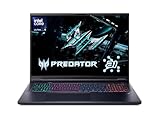


Ready to decide? Our #1 pick for 2026 is the Lenovo Legion Pro 5i 16.
Live price & availability on Amazon.