Social VR lives or dies on expression. Standing in a virtual room with friends, meeting new people in a public world, or hosting a watch party is a completely different experience when the people around you can read you: where your eyes are looking, whether you are smiling, how your hands move when you talk. A headset for social VR therefore needs more than a sharp screen. It needs microphones that carry your voice clearly, tracking that follows your hands and ideally your face, avatars that respond to you, and optics clear enough that nameplates, chat panels, and other people’s expressions stay readable at conversational distance.
Pancake lenses help socially too: menus, friend lists, and world text stay legible without breaking conversation to adjust the headset, and slimmer visors feel less isolating in a long hangout. Every headset here is standalone, so joining friends takes seconds with no PC or cable. The honest constraint is supply — requiring standalone operation, pancake optics, and a verifiable Amazon US listing leaves three headsets. Fresnel models and pancake models sold only outside Amazon US were excluded. Within the three, social differences are real, especially around face and eye tracking.
Disclosure: As an Amazon Associate, we earn from qualifying purchases made through links in this article.
Quick Picks
- Best for most social VR users: Meta Quest 3 — the largest social platform and friend network, clear pancake optics, and capable hand tracking.
- Best for expressive avatars: Meta Quest Pro — face and eye tracking that lets compatible social apps mirror your expressions and gaze.
- Best for smaller, PC-connected social groups: HTC VIVE XR Elite — a slim standalone headset with hand tracking and a route into SteamVR social worlds through streaming.
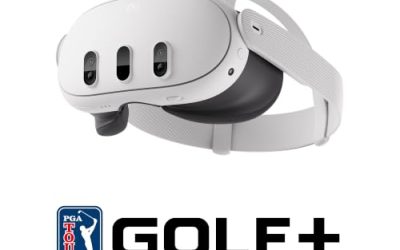
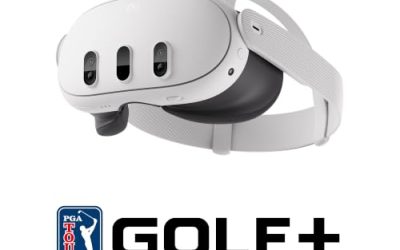
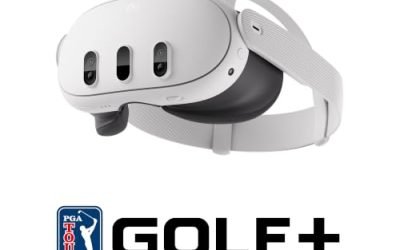
Meta Quest 3

If your friends are already in VR, they are most likely on Quest, and that network effect is the Quest 3’s biggest social advantage. Meta Horizon Worlds and a wide range of standalone social and multiplayer apps run natively on the headset, friend invites and party voice are built into the platform, and the standalone design means a meetup can start wherever you are. The pancake lenses keep world text, menus, and other avatars’ details clear across the view, which matters during long conversations where constant headset adjustment would be a distraction.
Hand tracking lets you gesture naturally in supported spaces, and the built-in microphones handle party chat. What the Quest 3 lacks is face and eye tracking, so avatar expression relies on voice and movement rather than your smile or gaze. For most friend groups, platform size outweighs that limit.
Specs
- Type: Standalone VR and mixed reality headset, no PC required
- Processor: Qualcomm Snapdragon XR2 Gen 2
- Optics: Pancake lenses, full-color passthrough
- Storage: 512 GB on this listing
- Tracking: Inside-out 6DoF, Touch Plus controllers, hand tracking, built-in microphones
- ASIN: B0CD1JTBSC
- Amazon: https://www.amazon.com/dp/B0CD1JTBSC
Pros:
– Largest standalone social ecosystem and the most likely place to find your friends
– Pancake clarity keeps chat panels, nameplates, and world text readable
– Fast, cable-free joining from anywhere with Wi-Fi
Cons:
– No face or eye tracking, so avatar expression is limited to voice and movement
– Social features are tied to a Meta account and platform rules
– Stock strap comfort varies during long social sessions
Meta Quest Pro
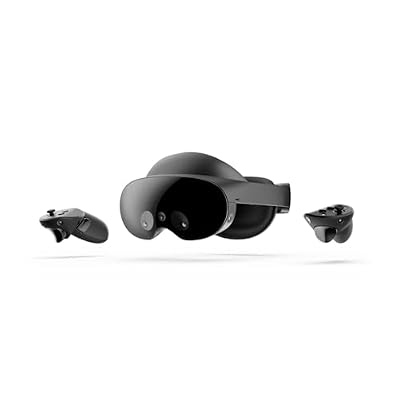
The Quest Pro is the expressive choice. Its inward-facing cameras track your eyes and parts of your face, and social applications that support the feature can map your gaze, blinks, and smiles onto your avatar. In conversation that changes the feel of social VR noticeably: eye contact lands where it should, and reactions show on your avatar’s face instead of needing to be narrated. Combined with pancake lenses and color passthrough, it remains the most socially expressive standalone headset in a verifiable US listing.
Its self-tracking controllers keep gestures natural when your hands drop to your sides mid-conversation. The compromises: an earlier processor than the Quest 3, a platform discontinued from production, and face tracking that not every social app implements — check your main world before paying for the feature. Where it is supported, nothing else here matches it.
Specs
- Type: Standalone VR and mixed reality headset, no PC required
- Processor: Qualcomm Snapdragon XR2 Plus
- Optics: Pancake lenses, full-color passthrough
- Storage: 256 GB
- Tracking: Inside-out 6DoF, eye tracking, face tracking, hand tracking, self-tracking controllers
- ASIN: B09Z7KGTVW
- Amazon: https://www.amazon.com/dp/B09Z7KGTVW
Pros:
– Face and eye tracking give avatars real expressions and eye contact in supported apps
– Self-tracking controllers keep hand gestures accurate at conversational positions
– Balanced fit and open periphery suit relaxed, talk-focused sessions
Cons:
– Face tracking support varies by app, so verify your main social platform uses it
– Older processor and a platform discontinued from production
– Open design lets in room light and sound, reducing privacy in shared spaces
HTC VIVE XR Elite

The XR Elite serves social users whose groups live partly on PC. Standalone, it runs HTC’s VIVEPORT ecosystem and social experiences such as VIVE Sync oriented gatherings, with hand tracking for natural gesturing and a slim pancake visor that feels less isolating during a long hangout. Through VIVE Streaming it can also join SteamVR social worlds rendered by a PC, which opens a much larger catalog of community spaces than its standalone store alone, while keeping the headset itself light and untethered in the room.
That flexibility comes with friction: the VIVEPORT social scene is far smaller than Meta’s, so finding active public worlds is harder, and its XR2 is an older generation. Choose it if your circle already uses HTC or SteamVR social spaces, not as a first headset for finding a new scene.
Specs
- Type: Standalone VR and mixed reality headset, convertible form factor
- Processor: Qualcomm Snapdragon XR2
- Optics: Pancake lenses, full-color passthrough cameras
- Storage: 128 GB on the original listing configuration
- Tracking: Inside-out 6DoF with four tracking cameras, hand tracking, built-in microphones
- ASIN: B0D6D5Q5M2
- Amazon: https://www.amazon.com/dp/B0D6D5Q5M2
Pros:
– Slim, light visor is comfortable through long conversations
– Hand tracking supports natural gesturing without controllers
– Streaming route into SteamVR social worlds expands where you can meet
Cons:
– Standalone social ecosystem is much smaller than Meta’s platform
– No face or eye tracking for expressive avatars
– PC social worlds require a capable PC and a streaming setup
How to Choose
Start where your people are: hardware cannot compensate for an empty friend list, so confirm your group’s platform before comparing optics. For most new buyers that points to Quest; established SteamVR or HTC groups may find the XR Elite more social in practice. Next, decide how much expression matters — games and watch parties need only voice, hand tracking, and a clear image, while hours in conversational worlds make the Quest Pro’s face and eye tracking worth having, since no accessory can add it later. Finally, consider your room: an open design leaks sound both ways, so a sealed fit and a safe boundary help in shared spaces.
FAQs
Do I need face tracking for social VR?
No, but it changes the experience in supported apps. Face and eye tracking let your avatar make eye contact and mirror expressions, which makes conversation feel more natural. Voice and hand gestures still carry most social VR today.
Which social apps run standalone without a PC?
On Quest, Horizon Worlds and many standalone social and multiplayer apps run natively. On the XR Elite, VIVEPORT hosts HTC’s social and meeting experiences, and PC-based social worlds are available through streaming.
Can Quest and HTC users meet in the same social world?
Sometimes. Cross-platform social apps that exist on both stores, and PC VR worlds reached through streaming, can bring different headsets together. Platform-exclusive worlds cannot, so check the specific app your group uses.
Is pancake clarity important if I mainly talk to people?
Yes, in a supporting role. Menus, chat text, nameplates, and avatar detail stay readable across the view, and the slimmer headsets pancake optics allow are more comfortable across a long hangout.
Conclusion
For social VR, the best headset is the one that puts you in front of your friends with the least friction and the most expression. The Meta Quest 3 wins for most people on platform size alone, backed by clear pancake optics and easy standalone meetups. The Meta Quest Pro is the pick when avatar expression matters, thanks to face and eye tracking no rival here offers. The HTC VIVE XR Elite suits HTC and SteamVR circles who want a light, convertible headset. Pick by community first, expression second, and comfort third.