Flight simulators, racing simulators, and training simulations live or die on visual clarity. A distant runway, a braking marker, or a small instrument readout must be readable at a glance, and that is where micro-OLED earns its reputation. Micro-OLED panels pack far more pixels into a small display than conventional VR panels, producing sharp text, deep blacks, and clean contrast with almost no visible pixel grid. The best micro-OLED VR headsets for VR simulation pair that display quality with comfortable fits for long seated sessions and tracking that stays steady when the action gets busy.
Simulation has different priorities from room-scale gaming. Sessions are long and mostly seated, so weight and balance matter more than wireless freedom. Cockpit instruments and track details reward high pixels-per-degree over wide field of view. And a tethered PC connection is often an advantage, since a powerful graphics card drives the high resolutions these panels demand. The three headsets below cover the main approaches to simulation in 2026: an ultra-light PC VR specialist, a premium standalone spatial computer, and a high-resolution Android XR headset.
How to Choose the Best Micro-OLED VR Headsets for VR Simulation
Resolution per eye decides readability
For simulation, the number that matters most is resolution per eye, because it decides whether gauges, checklists, and distant objects stay legible. Micro-OLED headsets in this guide range from 2560 pixels per eye to over 3800, and the higher end makes small text far easier to read. Pair the headset with a graphics card that can drive its native resolution at a steady frame rate, or the clarity advantage will be lost to reprojection and stutter.
Contrast and black levels
Cockpits, night flights, and dark tracks are full of shadow detail, and micro-OLED panels switch individual pixels off for true blacks. That contrast makes instruments readable against dark panels and gives night scenes depth that LCD headsets cannot match. If the simulation work includes night driving, night flying, or space scenes, contrast should weigh heavily in the decision.
Weight and comfort for long sessions
Simulation sessions often run for hours, and a heavy headset becomes a distraction. Headsets under 200 grams feel dramatically different from headsets over 500 grams after the first hour. Balance matters too: a front-heavy design strains the neck during long seated sessions, while a well-balanced strap and a tethered battery keep the load manageable.
Tracking and controls
Seated simulation often needs less tracking than room-scale play, since the hands stay near a wheel, yoke, or stick. Some simulators need no controllers at all, while others benefit from precise hand tracking or base-station tracking for the most stable head pose. Check whether the headset needs external base stations, whether controllers are included, and whether the simulator supports the headset’s tracking method before buying.
PC tethered or standalone
PC-tethered headsets draw on a desktop graphics card for maximum fidelity, which suits flight and racing simulators built for PC. Standalone headsets run on their own chips and need no PC, which suits training simulations that move between rooms or sites. Standalone headsets can also stream PC VR over a local network, but a wired DisplayPort connection remains the most reliable path for high-resolution simulation.
Our Picks
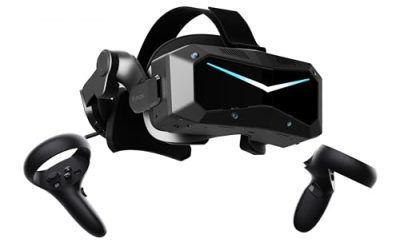
1. Pimax Dream Air Lighthouse Edition

The Pimax Dream Air is built for simulation first. Its dual Sony micro-OLED panels deliver 3840 by 3552 pixels per eye, the highest resolution in this guide, with pancake lenses and a 110-degree horizontal field of view. Eye tracking runs at 120 Hz, and the headset alone weighs under 170 grams, which makes multi-hour sessions far easier on the neck than heavier headsets.
This Lighthouse Edition tracks with SteamVR base stations, which are not included, and connects to a PC over DisplayPort for uncompressed video. That combination suits seated simulators perfectly: the head pose stays rock steady, the image stays sharp, and no controllers are needed for driving or flying. The trade-off is setup effort, since base stations and a strong PC are required to get the most from it.
Who it suits: Flight and racing sim enthusiasts who want maximum clarity and the lightest possible headset for long seated sessions.
View the Pimax Dream Air on Amazon
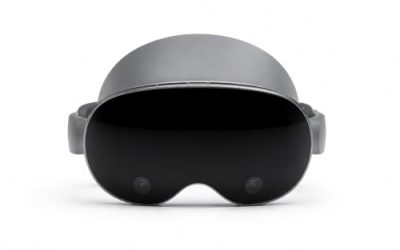
2. Apple Vision Pro

Apple Vision Pro brings micro-OLED clarity to a standalone spatial computer. Its display system holds 23 million pixels across two micro-OLED panels, with eye tracking, hand tracking, and a dedicated R1 chip handling sensor input with low latency. The M2 chip drives visionOS, spatial video, and Mac Virtual Display, which turns a Mac desktop into a large virtual workspace inside the headset.
For simulation, Vision Pro suits training and procedural work more than PC racing or flight sims. Its standalone design means no base stations and no tether to a desk, so training scenarios can run anywhere, and its sharp displays make checklists, diagrams, and virtual instruments easy to read. The external battery and the weight of the headset are the practical limits for very long sessions, so fit and break scheduling matter.
Who it suits: Training and professional simulation where standalone use, sharp text, and Apple ecosystem integration matter most.
View the Apple Vision Pro on Amazon
3. Samsung Galaxy XR

Samsung Galaxy XR is the first headset built on Google’s Android XR platform, and its display is a strong fit for simulation. Two micro-OLED panels provide 3552 by 3840 pixels per eye, with eye tracking, hand tracking, and a Snapdragon XR2+ Gen 2 processor driving the experience. The headset includes 16GB of memory and 256GB of storage, and it supports PC game streaming through Game Link for simulators that run on a desktop.
Galaxy XR balances standalone convenience with high resolution. It needs no base stations, its controllers are an optional add-on, and its mixed reality passthrough lets a simulator blend virtual instruments with a real cockpit or desk. Battery life runs around two hours of general use, so longer sessions need a power plan.
Who it suits: Simulation users who want high-resolution micro-OLED visuals in a standalone headset with strong mixed reality passthrough.
View the Samsung Galaxy XR on Amazon
Comparison Table
| Product | Key Spec | Best For |
|---|---|---|
| Pimax Dream Air | Sony micro-OLED, 3840 by 3552 per eye, under 170 g | Maximum clarity for PC flight and racing sims |
| Apple Vision Pro | Micro-OLED, 23 million pixels, M2 and R1 chips | Standalone training and professional simulation |
| Samsung Galaxy XR | Micro-OLED, 3552 by 3840 per eye, Android XR | High-resolution standalone simulation with passthrough |
Frequently Asked Questions
Why is micro-OLED better for simulation than LCD?
Micro-OLED panels combine very high pixel density with per-pixel light control, so text stays sharp and blacks stay truly black. In a simulator, that means readable instruments, clear distant objects, and night scenes with real depth. LCD panels can match brightness, but they cannot match the contrast and pixel density of micro-OLED at the same size.
Do I need a powerful PC for a micro-OLED headset?
For PC-tethered headsets like the Dream Air, yes. Driving 3840 by 3552 pixels per eye at a steady frame rate demands a strong graphics card, and the headset’s own specifications list high-end GPUs for the best experience. Standalone headsets like Vision Pro and Galaxy XR run on their own chips, so they need no PC, though they can stream PC content over a network.
Do simulation headsets need controllers?
Often not. Racing and flight simulators use a wheel, pedals, yoke, or stick as the primary input, and head tracking handles the view. The Dream Air Lighthouse Edition does not include controllers, while Vision Pro and Galaxy XR rely on hand and eye tracking. Check the simulator’s input requirements before deciding which tracking setup is needed.
How long can I wear a micro-OLED headset in one session?
It depends on weight, balance, and fit. The Dream Air, at under 170 grams, is built for long sessions, while heavier standalone headsets benefit from scheduled breaks and a well-adjusted strap. Standalone headsets also have battery limits, typically around two hours of general use, so plan charging or a tethered power connection for longer runs.
Conclusion
The best micro-OLED VR headsets for VR simulation are the ones that make small details readable and long sessions comfortable. The Pimax Dream Air leads for PC flight and racing sims with its unmatched per-eye resolution and featherweight build, Apple Vision Pro brings micro-OLED clarity to standalone training and professional simulation, and Samsung Galaxy XR pairs high-resolution panels with Android XR and strong passthrough. Match the headset to the simulator: PC-tethered for maximum fidelity, standalone for flexibility, and always with a graphics setup that can feed the panels.
Disclosure: As an Amazon Associate, we may earn from qualifying purchases.