Buying VR for a business differs from buying one headset for home. A fleet for training, design review, onboarding, or collaboration also needs device management, controlled app deployment, business user accounts instead of personal ones, wipe and reprovisioning between employees, and enterprise support. That management layer is what makes a headset business-class. Standalone models suit this well because there is no PC to buy and maintain per seat: a trainee can collect a charged headset and be inside the application in minutes.
The shortlist below is deliberately narrow. It includes only standalone headsets with a genuine business route: a named enterprise or business program, business device management, or a listing sold explicitly as a business edition. Consumer headsets without that layer were left out, even when the hardware itself is capable.
Disclosure: As an Amazon Associate, we earn from qualifying purchases made through links in this article.
Quick Picks
- Best for most business deployments: Meta Quest 3 — strong standalone performance with the Meta Quest for Business management platform behind it.
- Best purpose-built business headset: HTC VIVE Focus 3 — sold as a Business Virtual Reality Headset, with VIVE Business management and a swappable battery for shared use.
- Best for mixed reality work and portability: HTC VIVE XR Elite — a convertible standalone headset with a business edition route and a glasses-style portable mode.
- Best for high-resolution review and eye tracking: HTC VIVE Focus Vision — standalone and PC VR in one unit, with eye tracking, automatic IPD adjustment, and VIVE Business support.
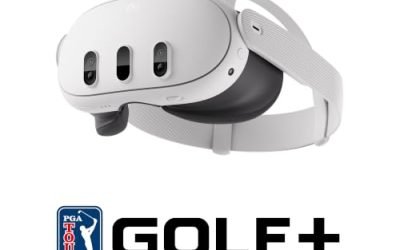
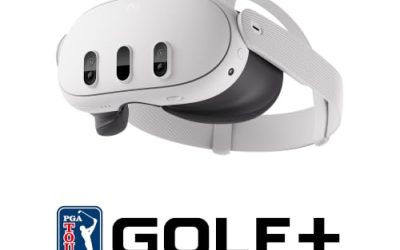
Meta Quest 3

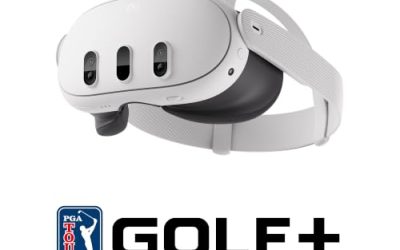
The Quest 3 is the default starting point for many business pilots because the hardware is capable, the standalone app ecosystem is the largest in this group, and Meta Quest for Business adds the controls an IT team actually needs: device management, user management, app deployment, and the ability to keep headsets on business accounts rather than personal ones. The Snapdragon XR2 Gen 2 processor, pancake lenses, and full-color passthrough make it credible for design visualization, soft-skills training, and mixed reality work instructions, not just video playback.
Plan the program, not just the purchase: Quest for Business is a separate subscription layer, so confirm features and terms with Meta before a fleet order, and budget for a sturdier strap, a charging routine, and spare facial interfaces for shared use.
Specs
- Type: Standalone VR and mixed reality headset, no PC required
- Processor: Qualcomm Snapdragon XR2 Gen 2
- Optics: Pancake lenses, full-color passthrough
- Storage: 512 GB on this listing
- Business route: Meta Quest for Business device and app management, sold separately
- ASIN: B0CD1JTBSC
- Amazon: https://www.amazon.com/dp/B0CD1JTBSC
Pros:
– Largest standalone app and training content ecosystem in this roundup
– Quest for Business adds fleet management, deployment, and account controls
– Pancake lenses and passthrough suit mixed reality work instructions
Cons:
– Business management is a separate program with its own terms and cost structure
– Stock strap and shared-use hygiene need accessory planning
– Battery life requires a charging routine for all-day training schedules
HTC VIVE Focus 3

The Focus 3 is the most explicitly business-first product here. HTC sells this listing as a Business Virtual Reality Headset, and the design follows that brief: a swappable battery so a shared headset returns to service quickly, a durable frame, active cooling, and VIVE Business support for management and deployment. For venues running headsets all day, the swappable battery alone can justify its place.
The trade-offs are age and ecosystem: an earlier XR2 platform and Fresnel optics trail newer headsets, and the standalone library is smaller than Meta’s. Many business buyers will not care, because the value is controlled deployment of their own training application. If your content is custom and headsets are shared assets, the Focus 3 remains a serious enterprise tool.
Specs
- Type: Standalone business VR headset, no PC required
- Processor: Qualcomm Snapdragon XR2
- Display: High-resolution panels with a wide field of view, as listed by HTC
- Battery: Swappable battery pack for shared and venue use
- Business route: VIVE Business management and deployment platform
- ASIN: B0962LK37V
- Amazon: https://www.amazon.com/dp/B0962LK37V
Pros:
– Sold and supported as a business headset, not a consumer model with add-ons
– Swappable battery suits shared headsets and all-day training venues
– VIVE Business tools cover management, deployment, and location-based use
Cons:
– Older platform and Fresnel optics trail newer headsets on clarity
– Smaller standalone content library than the Quest ecosystem
– Accessories and batteries for shared use add to the fleet budget
HTC VIVE XR Elite

The XR Elite is the portability pick for users who travel between sites. It works as a full standalone headset and can convert into a lighter glasses-style form with a compatible power source, making it easier to carry for demonstrations and site visits. HTC has offered it in a business configuration with VIVE Business services, so it can sit inside a managed deployment.
Its pancake lenses and passthrough suit design review and mixed reality presentations. The limits are battery endurance in the standard configuration and a smaller library than Quest, so treat it as the headset for mobile professionals and presentation-focused teams rather than a default training-center fleet device.
Specs
- Type: Standalone VR and mixed reality headset, convertible form factor
- Processor: Qualcomm Snapdragon XR2
- Optics: Pancake lenses, full-color passthrough cameras
- Storage: 128 GB on the original listing configuration
- Business route: VIVE Business support and a business edition configuration from HTC
- ASIN: B0D6D5Q5M2
- Amazon: https://www.amazon.com/dp/B0D6D5Q5M2
Pros:
– Convertible design travels better than any other headset here
– Pancake lenses keep the front of the headset slim for longer wear
– Business support route through HTC VIVE Business services
Cons:
– Standard battery arrangement favors portability over long sessions
– Standalone content library is smaller than Meta’s
– Deluxe Pack configuration differs from the base headset listing, so check contents
HTC VIVE Focus Vision

The Focus Vision is the premium option for work that depends on visual detail. It runs standalone applications and can stream PC VR, including a wired DisplayPort mode for lossless quality from a workstation, which suits engineering review. Eye tracking and automatic IPD adjustment help shared headsets adapt to each user quickly and can support attention studies in applications built to use the data.
HTC offers VIVE Business management for enterprise deployments of the Focus series. Confirm licensing and management terms for your region before a fleet purchase, because the Amazon listing here is the Consumer Edition hardware. For a few high-value design or research seats that step is reasonable; for a large basic training fleet, the Quest 3 or Focus 3 is usually simpler.
Specs
- Type: Standalone and PC VR headset, no PC required for standalone apps
- Display: Combined 5K resolution across both eyes, as listed by HTC
- Tracking: Inside-out tracking, eye tracking, automatic IPD adjustment
- Connectivity: Wireless streaming and wired DisplayPort PC VR mode with the appropriate kit
- Business route: VIVE Business management for enterprise deployments, terms to confirm
- ASIN: B0DDRLX7V4
- Amazon: https://www.amazon.com/dp/B0DDRLX7V4
Pros:
– Highest visual detail in this roundup for design and inspection work
– Eye tracking and auto-IPD make shared headsets faster to hand over
– Standalone use plus wired PC VR covers two deployment styles in one device
Cons:
– Consumer Edition listing means business terms must be arranged separately
– Heavier and more complex than a basic training fleet headset
– Wired DisplayPort streaming needs the appropriate streaming kit
How to Choose
Start with management, not resolution: decide who provisions headsets, controls apps, wipes devices between users, and handles a lost unit, and buy into a named program such as Quest for Business or VIVE Business from the start. Next, match the work pattern: shared training headsets favor swappable batteries (Focus 3, Focus Vision); assigned headsets favor comfort and app breadth (Quest 3); presenters should weigh the XR Elite. Finally, pilot with your real application before scaling, and confirm warranty and subscription terms in writing.
FAQs
What makes a standalone headset business-class?
A business management layer: centralized device setup, controlled app deployment, business user accounts, remote wipe or reset, and enterprise support. Hardware alone does not make a headset business-class.
Do business headsets need a PC?
No. Every headset here runs applications standalone. Some, such as the Focus Vision, can also connect to a PC for heavier applications, but a PC is optional rather than required.
Can one headset be shared safely between employees?
Yes, with a process: replaceable or wipeable facial interfaces, a cleaning routine between users, and a managed account setup so one employee’s data does not carry over to the next session.
Should we buy headsets before choosing a management platform?
No. Choose the management platform first, confirm the headset models it supports and the subscription terms, and then buy hardware that fits that platform.
Conclusion
For most businesses, the Quest 3 with Quest for Business is the easiest path from pilot to fleet. The Focus 3 remains the purpose-built choice for shared, all-day training, the XR Elite serves mobile professionals, and the Focus Vision covers high-detail review where eye tracking earns its place.