Micro-OLED is the display technology that changed what a VR headset can show. By building the display directly onto a silicon backplane, micro-OLED panels reach pixel densities that conventional VR displays cannot, with per-pixel light control for deep blacks and vivid color. The result is an image with almost no visible pixel grid, sharp text, and contrast that makes virtual worlds feel solid. The best micro-OLED VR headsets use that advantage in different ways: one is a featherweight PC VR specialist, one is a standalone spatial computer, and one is a high-resolution Android XR headset.
These headsets sit at the premium end of VR, and each one asks for something in return for its image quality. The PC headset needs base stations and a strong graphics card. The standalone headsets trade some raw gaming breadth for convenience, ecosystem integration, and mixed reality. This guide compares them side by side so the choice comes down to how the headset will actually be used.
How to Choose the Best Micro-OLED VR Headsets
Pixel density and resolution per eye
Micro-OLED headsets are defined by resolution per eye, and the models in this guide span from 3552 to 3840 pixels per eye. Higher resolution makes text sharper, distant objects clearer, and the screen-door effect nearly invisible. For reading, simulation, and detailed virtual work, prioritize the highest per-eye resolution the budget and the graphics hardware can support.
Contrast, color, and brightness
Because each micro-OLED pixel produces its own light, black pixels are truly off, which gives night scenes, space environments, and dark games a depth that LCD headsets cannot reproduce. Color coverage matters too: wide-gamut panels render richer skies, skin tones, and cockpit lighting. Brightness affects how punchy the image feels in mixed reality passthrough, so consider the lighting of the room where the headset will be used.
Weight, balance, and fit
A headset that looks great for twenty minutes can become uncomfortable after two hours. Weight is the simplest predictor: headsets under 200 grams feel very different from headsets over 500 grams. Balance matters as much as total weight, since a front-heavy design pulls on the neck. Check the strap design, the facial interface, and whether the battery sits on the headset or on a tethered pack.
Standalone or PC-tethered
Standalone headsets run on their own processors and need no PC, which makes them easy to pick up and use anywhere. PC-tethered headsets draw on a desktop graphics card for higher fidelity, but they need a cable, base stations, or both. Some standalone headsets can also stream PC VR over a local network, giving a middle path between convenience and visual quality.
Tracking, controllers, and content
Tracking decides how the headset follows the head and hands. Base-station tracking is the most precise for seated PC VR, inside-out camera tracking needs no external hardware, and hand tracking removes controllers entirely for some uses. Before buying, confirm that the headset supports the games and applications planned, whether controllers are included, and what else must be purchased to complete the setup.
Battery life and session length
Standalone headsets run on batteries, typically for around two hours of general use or video watching. PC-tethered headsets have no battery limit, since the PC supplies power through the cable. For long sessions, plan for charging breaks, a spare battery, or a tethered power connection.
Our Picks
1. Apple Vision Pro

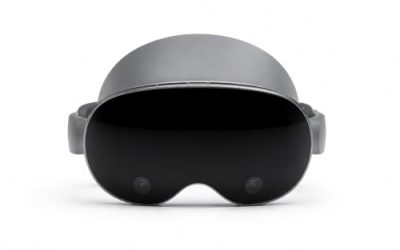
Apple Vision Pro is the most polished micro-OLED headset available, built around a display system with 23 million pixels across two micro-OLED panels. The M2 chip handles computing while the dedicated R1 chip processes sensor input from twelve cameras, five sensors, and six microphones with low latency. Eye tracking, hand tracking, and voice input replace controllers for most tasks, and visionOS supports spatial photos and video, immersive entertainment, and Mac Virtual Display.
Vision Pro is a spatial computer as much as a VR headset. Its strengths are media, productivity, and professional applications where sharp text and precise tracking matter. It is heavier than the PC specialist headsets in this guide, and its battery lasts around two hours of general use, so fit and session planning matter for long wear.
Who it suits: Apple users who want the sharpest standalone micro-OLED experience for media, spatial computing, and professional work.
View the Apple Vision Pro on Amazon
2. Samsung Galaxy XR

Samsung Galaxy XR is the first headset on Google’s Android XR platform, and it pairs micro-OLED displays with a standalone design. Two panels provide 3552 by 3840 pixels per eye, with 16GB of memory, 256GB of storage, and a Snapdragon XR2+ Gen 2 processor. Eye tracking and hand tracking are built in, and Gemini features are woven through the Android XR interface.
Galaxy XR stands out for mixed reality. Its color passthrough blends virtual windows and 3D content with the real room, and PC game streaming through Game Link extends it to desktop titles. The headset weighs 545 grams without its tethered battery, and controllers are an optional add-on, so the full setup depends on how it will be used.
Who it suits: Android and Google users who want a high-resolution standalone headset with strong mixed reality and streaming.
View the Samsung Galaxy XR on Amazon
3. Pimax Dream Air Lighthouse Edition

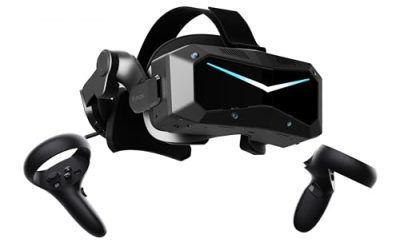
The Pimax Dream Air is the purest micro-OLED headset in this guide, built for PC VR enthusiasts who care about image quality above all else. Dual Sony micro-OLED panels deliver 3840 by 3552 pixels per eye through pancake lenses, with a 110-degree horizontal field of view and 120 Hz eye tracking. The headset alone weighs under 170 grams, making it the lightest option here by a wide margin.
This Lighthouse Edition tracks with SteamVR base stations and connects to a PC over DisplayPort for uncompressed video. It has no standalone mode and no included controllers, so it is a specialist tool for buyers who already own base stations or plan to buy them. For flight simulators, racing simulators, and seated PC VR, its combination of resolution and weight is unmatched.
Who it suits: PC VR enthusiasts who want the sharpest image and lightest headset, and who already have a SteamVR setup.
View the Pimax Dream Air on Amazon
Comparison Table
| Product | Key Spec | Best For |
|---|---|---|
| Apple Vision Pro | Micro-OLED, 23 million pixels, M2 and R1 chips | Standalone spatial computing and media |
| Samsung Galaxy XR | Micro-OLED, 3552 by 3840 per eye, Android XR | Standalone mixed reality and PC streaming |
| Pimax Dream Air | Sony micro-OLED, 3840 by 3552 per eye, under 170 g | Maximum clarity in PC VR |
Frequently Asked Questions
What makes micro-OLED different from regular OLED in VR?
Micro-OLED builds the display on a silicon backplane instead of glass, which allows far smaller pixels and much higher pixel density. That density removes the visible grid between pixels and makes text and fine detail far sharper. Both technologies produce their own light per pixel for deep blacks, but micro-OLED reaches resolutions that conventional OLED panels cannot fit into a headset-sized display.
Are micro-OLED headsets good for gaming?
They are excellent for visual quality, but the best choice depends on the games. PC-tethered micro-OLED headsets suit simulators and detailed PC VR titles, while standalone headsets suit media, productivity, and mixed reality. Fast-paced room-scale games with heavy controller use may be better served by lighter standalone headsets with included controllers, so match the headset to the library.
Do micro-OLED headsets need a PC?
It depends on the model. The Pimax Dream Air is PC-only and connects over DisplayPort, while Apple Vision Pro and Samsung Galaxy XR are standalone headsets with their own processors and storage. Standalone headsets can also stream PC VR content over a local network, though a wired connection remains the most reliable path for the highest fidelity.
Why are micro-OLED headsets so expensive?
Micro-OLED panels are costly to manufacture at headset scale, and the headsets built around them add premium processors, tracking systems, and optics. The technology is still concentrated in flagship devices, so prices reflect that position. As manufacturing scales, more affordable micro-OLED headsets are expected to follow.
Conclusion
The best micro-OLED VR headsets all share the same core advantage: an image so sharp and contrast-rich that the display itself disappears. Apple Vision Pro leads for standalone spatial computing and media, Samsung Galaxy XR pairs high-resolution panels with Android XR and strong mixed reality, and the Pimax Dream Air delivers the sharpest PC VR image in the lightest package. Choose by use: standalone convenience, ecosystem fit, or maximum PC fidelity, and let the display quality carry the rest.
Disclosure: As an Amazon Associate, we may earn from qualifying purchases.