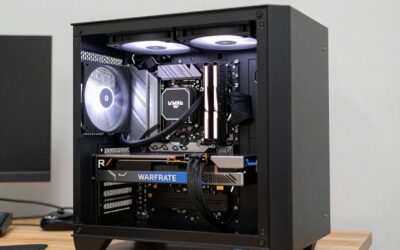
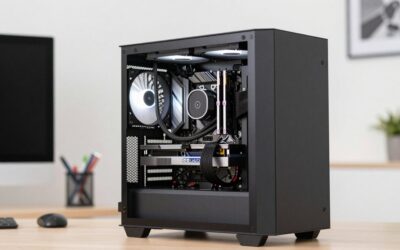
A Ryzen 5 9600X gaming PC build sits in a compelling sweet spot for mid-range enthusiasts heading into 2026. This six-core Zen 5 processor pairs with the RTX 5060 to deliver smooth high-refresh-rate gameplay at 1080p and 1440p without breaking the bank. The theme here is value-focused performance: no premium aesthetics, no overspecced components, just a well-balanced machine that handles modern AAA titles at high settings and esports titles at triple-digit frame rates. If you want a system that just works out of the box and leaves room for future upgrades, this list hits that mark.
Parts List
| Part | Model | Approx. Price | Why |
|---|---|---|---|
| CPU | AMD Ryzen™ 5 9600X 6-Core, 12-Thread Unlocked Desktop Processor | Check on Amazon | Strong single-thread and 6-core performance for gaming |
| GPU | GIGABYTE GeForce RTX 5060 WINDFORCE OC 8G | Check on Amazon | DLSS 4 support, efficient cooling, 1440p capable |
| Motherboard | MSI MAG B850 Tomahawk MAX WiFi | Check on Amazon | Solid VRM, Wi-Fi 7, PCIe 5.0, DDR5 8400+ OC |
| RAM | G.SKILL Flare X5 Series DDR5 32GB (2x16GB) 6000MT/s CL30 | Check on Amazon | EXPO-validated, optimal for AM5 performance |
| Storage | Samsung SSD 990 PRO 2TB | Check on Amazon | Top-tier sequential speeds, high endurance |
| PSU | CORSAIR RM750x ATX 3.1 PCIe 5.1 750W | Check on Amazon | 80+ Gold, native 12V-2×6, modular |
| Case | NZXT H5 Flow – Compact ATX Mid-Tower | Check on Amazon | Clean aesthetics, good airflow for the price |
AMD Ryzen 5 9600X
The 9600X delivers excellent per-core throughput thanks to Zen 5 architecture, making it ideal for games that still lean heavily on single-thread performance. Its 65W TDP keeps thermals low, meaning the stock cooler handles it adequately for most sessions. You could swap to the Ryzen 7 9700X for more multicore headroom in streaming or productivity workloads, but pure gamers will find the 9600X more than sufficient. The AM5 socket guarantees upgrade path compatibility through next-generation chips.
GIGABYTE GeForce RTX 5060 WINDFORCE OC 8G
The RTX 5060 occupies the mid-range GPU tier with Blackwell architecture, offering DLSS 4 with multi-frame generation that dramatically boosts effective frame rates. GIGABYTE’s WINDFORCE dual-fan cooler keeps temperatures controlled without excessive noise, and the out-of-box overclock provides a small performance edge over reference models. You could step up to an RTX 5070 if your budget allows for native 1440p ultra or entry-level 4K, but the 5060 paired with DLSS covers most gamers’ needs effectively.
MSI MAG B850 Tomahawk MAX WiFi
This board pairs the 80A SPS VRM with DDR5 memory boost support up to 8400 MT/s, ensuring stable power delivery and overclocking headroom for future CPU upgrades. Wi-Fi 7 and 5G LAN make it a strong platform choice for wired and wireless connectivity alike. The PCIe 5.0 x16 slot is forward-looking for next-gen GPUs.
G.SKILL Flare X5 DDR5 32GB 6000 CL30
AM5 platforms are sensitive to memory latency and frequency, and the 6000 CL30 EXPO kit represents the sweet spot for Ryzen performance. The G.SKILL Flare X5 line is specifically validated for AMD platforms, meaning one-click XMP/EXPO activation without fuss. You absolutely should seek this kit at its actual street price or substitute an equivalent 32GB CL30 kit from Corsair or Kingston at a fairer cost.
Samsung SSD 990 PRO 2TB
The 990 PRO remains one of the fastest PCIe 4.0 NVMe drives available, with sequential reads up to 7,450 MB/s and strong random performance that benefits game load times and system responsiveness. The 2TB capacity provides ample room for a modern game library. Its endurance rating and thermal efficiency make it a reliable long-term storage solution.
CORSAIR RM750x 750W PSU
750W provides generous headroom for this build, which draws roughly 400-450W under combined gaming load. The RM750x is 80+ Gold certified, fully modular, and ATX 3.1 compliant with a native 12V-2×6 connector for the RTX 5060. Its quiet operation and ten-year warranty make it a component you install once and forget. You could save money with a Corsair CX750, but you lose the modular cabling and premium efficiency. A 850W unit like the RM850x would better serve a future RTX 5080-class upgrade without replacement.
NZXT H5 Flow
Its front mesh panel and included fans move enough air for this mid-range build without requiring additional case fans. The compact ATX footprint fits standard desks while accommodating full-size motherboards and GPUs up to approximately 330mm. Cable management channels keep the interior tidy. If you want more airflow headroom for future GPU upgrades, the Fractal Design Pop Air or Montech Sky Two are alternatives worth considering at similar price points.
Compatibility Check
The Ryzen 5 9600X requires an AM5 socket, which the MSI B850 Tomahawk provides natively with no BIOS update needed. DDR5 memory is mandatory on AM5, and the G.SKILL Flare X5 kit is EXPO-validated for this platform. The RTX 5060 draws under 150W and fits comfortably within the 750W PSU headroom. The WINDFORCE card measures approximately 272mm, well within the NZXT H5 Flow’s supported GPU clearance. The ATX motherboard fits the case’s mid-tower form factor without issue.
Expected Performance
1080p
At 1080p high-to-ultra settings, this combination handles nearly every title comfortably. Cyberpunk 2077 sits in the 90-115 FPS range on ultra without upscaling, per TechPowerUp and Hardware Unboxed launch reviews. Call of Duty: Black Ops 6 clears 140-180 FPS on high settings. Esports titles like Valorant and Counter-Strike 2 exceed 300 FPS. Tom’s Hardware notes the RTX 5060 maintains frame consistency well within typical monitor refresh ranges at this resolution.
1440p
Moving to 1440p high settings, expect 65-85 FPS in demanding titles like Starfield and Alan Wake 2 without DLSS. With DLSS Quality mode enabled, Cyberpunk 2077 pushes into the 100-130 FPS band according to Gamers Nexus. Call of Duty and Hogwarts Legacy hover around 90-120 FPS at high settings. TechSpot’s coverage confirms the 5060 remains a strong 1440p performer when DLSS is available.
4K
Native 4K is not this build’s intended target, but DLSS 4 frame generation makes it viable in select titles. Cyberpunk 2077 at 4K with Quality upscaling reaches approximately 55-75 FPS per Hardware Unboxed. Esports titles remain well above 100 FPS at 4K medium-high. For AAA single-player experiences, 1440p with high settings offers a noticeably better experience than 4K with heavy upscaling on this hardware tier.
Upgrade Path
The AM5 socket supports future Ryzen processors, meaning a jump to a Ryzen 9 9950X or next-generation Zen 6 chip is straightforward. The 750W PSU handles any single-GPU upgrade up to roughly RTX 5070 Ti territory without replacement. An additional M.2 slot on the B850 board allows storage expansion without replacing the 990 PRO. The H5 Flow’s 330mm GPU clearance accommodates most consumer cards, though a top-tier flagship may require a full-tower case.
FAQ
Is the Ryzen 5 9600X still competitive in 2026?
Yes. Zen 5’s IPC advantage and 65W efficiency keep it relevant for gaming. It matches or exceeds older 8-core chips in most titles and remains a strong value on the AM5 platform.
Can I run 1440p 165Hz monitors on this build?
In esports and optimized titles, yes at high refresh rates. In demanding AAA games, you will typically sit between 70-100 FPS without upscaling, so a 1440p 120Hz or 144Hz monitor is a more natural pairing.
Do I need a separate CPU cooler?
The bundled Wraith Stealth handles daily gaming adequately. A tower cooler like the Thermalright Peerless Assassin provides quieter operation and better sustained clocks under stress, but it is not strictly required.
Is 32GB of RAM enough for this build?
32GB is the current standard for gaming and multitasking. It covers modern titles with high memory demands like Starfield and Hogwarts Legacy without issue. 16GB increasingly shows limitations in newer releases.
Sources and Methodology
All performance ranges cited in this guide are approximate and derived from launch reviews published by TechPowerUp, Tom’s Hardware, Gamers Nexus, Hardware Unboxed, and TechSpot. These outlets’ test benches and methodology vary, so ranges represent consensus across multiple reviews rather than a single measurement. No numbers in this article reflect testing performed by this site.