Dialing in the right NZXT Kraken settings is one of the fastest ways to shave several degrees off your processor without spending a single dollar on new hardware. Many builders leave their AIO liquid cooler on default profiles and never realize how much thermal headroom they are giving away. This guide breaks down the best Kraken settings for CPU temp in 2026 and pairs them with the accessories that help you get there.
- Best Kraken Settings for CPU Temp: The Direct Answer
- Top Products to Optimize Your Kraken CPU Temperatures
- What to Look For When Tuning a Kraken
- Which Tweak Should You Start With?
- Common Mistakes When Tuning a Kraken
- A Simple Starting Profile
- Reading Your Results Fairly
- Frequently Asked Questions About Kraken Settings for CPU Temp
- Related Articles
- Related Guides
As an Amazon Associate I earn from qualifying purchases.
As an Amazon Associate we earn from qualifying purchases at no extra cost to you.





🛒 Best Price Today on Amazon
Prime members get fast, free shipping on everything above, plus member-only deals. New members get a 30-day free trial — cancel anytime.
Best Kraken Settings for CPU Temp: The Direct Answer
The best Kraken settings for CPU temp use a custom pump and fan curve inside NZXT CAM that keeps the pump at 80-100% for consistent coolant flow while ramping radiator fans smoothly from about 40% at 40°C to 100% at 75°C. Set the pump to respond to liquid temperature and the fans to respond to CPU temperature, enable a 3-5 second smoothing delay to stop fan surging, and confirm the cold plate is seated with fresh thermal paste. This combination typically lowers load temperatures by 5-12°C compared with the default “Silent” preset while keeping noise reasonable.
If your Kraken is still running hot after tuning, the problem is usually mounting pressure, old paste, or restricted case airflow rather than the software profile itself. The products below help you address every one of those variables so your liquid cooling setup performs the way NZXT intended.
Top Products to Optimize Your Kraken CPU Temperatures
| Product | Best For | Standout Feature | Rating |
|---|---|---|---|
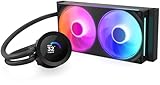
| NZXT Kraken Elite 360 RGB | High-end overclocked CPUs | LCD display with real-time coolant temperature readout | |
| Thermal Grizzly Kryonaut Paste | Lowering contact temperatures | Extreme conductivity for a fresh remount | |
| Arctic P12 PWM PST Fans | Replacing weak radiator fans | High static pressure at low noise | |
| Noctua NT-H2 Thermal Compound | Long-term reliability | Non-curing formula lasts for years | |
| NZXT F Series RGB Core Fans | Balanced airflow and looks | Matched aesthetics with CAM control |
Building the Ideal Kraken Fan Curve for Lower CPU Temp
A flat, aggressive-only curve makes your PC loud, while a lazy curve lets heat soak build up. The best Kraken settings for CPU temp use a stepped curve: idle fans near 35-40% for silence, a gentle climb through mid-range gaming loads, and full speed reserved for sustained rendering or stress tests. Because the radiator dissipates heat that the coolant has already absorbed, tying fans to CPU temperature keeps them reactive to sudden spikes. Pairing the Kraken with high static pressure fans like the Arctic P12 lets each step in the curve move more air through the fins, so you can run quieter at the same temperature target.
Why Pump Speed Matters More Than People Think
The pump is the heart of any AIO, and running it too slowly to chase silence is a common mistake. Set the pump to follow liquid temperature and keep a minimum floor of 70-80% so coolant never stagnates in the block. A faster pump moves heat away from the die more consistently, which flattens the temperature spikes that trip thermal throttling. If you hear a whine, a 2-3 second smoothing delay in CAM usually removes it without hurting the best Kraken settings for CPU temp. Check our notes on pump noise troubleshooting if the sound persists after tuning.
Thermal Paste and Mounting: The Foundation of Good Temps
No software profile can fix a bad mount. If your Kraken was installed years ago, the factory paste has likely dried and cracked, adding several degrees of resistance between the die and the cold plate. Reapplying a premium compound such as Thermal Grizzly Kryonaut or Noctua NT-H2 and evenly tightening the mounting bracket in a diagonal pattern often delivers a bigger drop than any curve adjustment. Aim for firm, even pressure so the entire integrated heat spreader makes contact. Our thermal paste application guide walks through the pea-versus-spread debate in detail.
Case Airflow: Feeding Your Kraken Cool Air
Even a perfectly tuned Kraken struggles if the radiator is breathing hot, recycled air. Mount the radiator as a front intake or top exhaust, ensure intake fans outnumber or match exhaust for slight positive pressure, and keep dust filters clean. Cooler ambient air entering the radiator directly improves the effectiveness of the best Kraken settings for CPU temp. Upgrading stale case fans to a matched set, like NZXT F Series or Arctic P12 units, keeps the whole loop supplied with fresh air and reduces the load your CPU cooler comparison favorites have to handle.
Monitoring and Verifying Your Results
After applying your settings, verify them with a repeatable test rather than guessing. Run a 10-minute stress test while watching both CPU package temperature and coolant temperature in CAM. A healthy tuned loop shows coolant a few degrees above ambient at idle and a controlled, plateauing curve under load. Log your before-and-after numbers so you can prove the tuning worked and catch pump degradation early. Consistent monitoring is what separates a set-and-forget build from one that quietly overheats months later.
What to Look For When Tuning a Kraken
Choosing the Temperature Source
NZXT CAM lets each fan profile follow CPU, GPU, or, on compatible coolers, the liquid temperature. Modern processors jump several degrees within a second when a background task wakes up, and a fan that follows the CPU will rise and fall in step with every spike. Liquid temperature moves slowly because the loop has thermal mass, so a curve tied to it produces steadier, quieter fan behavior. Many owners on enthusiast forums keep coolant below roughly 40 to 45 degrees Celsius and use that as their reference.
Reading the Preset Modes
CAM offers Fixed, Silent, Performance, and Custom modes. Silent holds the fans low until temperatures climb, Performance ramps early, and Custom lets you drag nodes on the curve. Start with a preset to learn how your case behaves, then switch to Custom only after you have seen where your idle and load temperatures actually land.
Knowing Your Processor’s Limit
Targets differ by silicon. AMD Ryzen 7000 chips are designed to boost until they reach about 95 degrees Celsius, so a high reading under all-core load is expected behavior, not a fault. Many recent Intel desktop chips have a maximum junction temperature near 100 degrees Celsius. Build your curve so fans reach full speed well before those limits instead of at them.
Which Tweak Should You Start With?
| If you notice… | Start with… |
|---|---|
| Fans surging up and down at idle | The fan curve, switching the source to liquid temperature |
| A constant hum from the radiator area | Pump speed, lowered from maximum |
| High temperatures only seconds after a load begins | Thermal paste and mounting pressure |
| Liquid temperature climbing during long sessions | Case airflow and radiator placement |
| Uncertain whether any change helped | Monitoring, with a repeatable load and a fixed room temperature |
Common Mistakes When Tuning a Kraken
- Running the pump at maximum around the clock. One published test of an older Kraken X62 at about 170 watts measured only a roughly 3 degree Celsius CPU difference between half and full pump speed, while the noise difference was large.
- Making the curve too steep. Large fan jumps over a few degrees cause the audible pulsing people mistake for a defect.
- Changing several settings at once. Adjust one variable, repeat the same workload, and compare, otherwise you cannot tell what worked.
- Ignoring room temperature. A warmer room raises every reading by roughly the same amount, so compare results as a difference above ambient.
- Running other control software alongside CAM. Utilities that talk to the same cooler can conflict, and tools such as liquidctl cannot configure the device while CAM is running.
- Chasing a single number. A brief peak during a benchmark matters far less than the steady temperature during normal play.
A Simple Starting Profile
- Set the pump to a fixed mid-range speed and leave it there.
- Select liquid temperature as the fan source.
- Place the first node where the fans hold low speed through light use.
- Place a second node near the temperature where you want noise to start rising.
- Place a final node at full speed several degrees below your processor’s limit.
- Run a long game session, watch the liquid temperature, and nudge only one node at a time.
Reading Your Results Fairly
Raw temperature numbers mislead when the room changes between runs. Subtract the room temperature to get the rise above ambient, then compare that figure. Suppose a processor reached 78 degrees Celsius in a 21 degree room before tuning, a rise of 57 degrees. After adjusting the curve it reached 74 degrees in a 24 degree room, a rise of 50 degrees. The raw reading dropped only 4 degrees, but the cooling actually improved by 7. Log the room temperature, the workload, and the run length beside each result so every comparison stays honest.
Frequently Asked Questions About Kraken Settings for CPU Temp
Should the Kraken pump run at 100 percent all the time?
Running the pump at 100 percent gives the most consistent temperatures and only a slight noise penalty on modern Kraken units, so many enthusiasts leave it maxed. If silence matters more, an 80 percent floor tied to liquid temperature is an excellent compromise that still keeps coolant moving briskly through the block.
Why is my CPU temperature still high after tuning the Kraken?
Persistent high temperatures after software tuning almost always point to a hardware issue such as dried thermal paste, uneven mounting pressure, a partially clogged radiator, or hot air recirculating inside the case. Remount the block with fresh paste and improve case airflow before assuming the cooler itself has failed.
Should Kraken fans follow CPU or liquid temperature?
Radiator fans respond best when tied to CPU temperature because they can react quickly to sudden processor load spikes, while the pump should follow the slower-changing liquid temperature. This split keeps fans responsive without constant surging and lets the pump maintain steady flow regardless of momentary CPU activity.
What CPU temperature is safe with a Kraken cooler?
Most modern processors are comfortable up to around 80-85°C under sustained load, with throttling typically beginning near 90-100°C depending on the model. A well-tuned Kraken should keep gaming temperatures in the 60s and heavy rendering loads in the 70s, leaving plenty of safety margin below the throttle point.