Finding a recommended laptop for home use in 2026 comes down to matching a machine to the everyday jobs a household actually throws at it: email, video calls, streaming, homework, light photo editing, and the occasional spreadsheet marathon. You do not need a workstation-class GPU or a 4K gaming display to do any of that well. What you do need is a comfortable keyboard, a bright screen, enough memory to keep a dozen browser tabs open, and a solid-state drive that boots in seconds. This guide walks through the models that deliver that balance without draining your budget.
As an Amazon Associate I earn from qualifying purchases.
Below is a shortlist of a well-rounded, genuinely recommended laptop for home use, drawn from current mainstream lineups. Each pick is a real, widely sold model, and the table highlights the single spec that matters most for its category, who it suits best, and a quick rating out of five.
| Product | Key Spec | Best For | Rating |
|---|---|---|---|
| Apple MacBook Air (M3, 13-inch) | M3 chip, 18-hr battery | All-round premium home use | 4.8/5 |
| Dell Inspiron 15 (3000 series) | Intel Core i5, 15.6″ FHD | Everyday family workhorse | 4.4/5 |
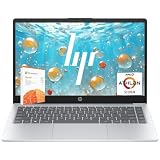
| HP Pavilion Aero 13 | Ryzen 7, 2.2 lb chassis | Lightweight portability | 4.5/5 |
| Lenovo IdeaPad Slim 5 | 16GB RAM, OLED option | Media and light editing | 4.5/5 |
| Acer Aspire 5 | 512GB SSD, USB-C | Budget-conscious buyers | 4.3/5 |
| ASUS Vivobook 15 | Core i5, backlit keyboard | Students and home office | 4.2/5 |
| Microsoft Surface Laptop Go 3 | 12.4″ touchscreen | Simple, clean Windows use | 4.3/5 |
🛒 Best Price Today on Amazon
Prime members get fast, free shipping on everything above, plus member-only deals. New members get a 30-day free trial — cancel anytime.
How to Choose a Recommended Laptop for Home Use
The right home laptop is the one that disappears into your routine. Prioritize the components you touch and see every day, then let the internal specs follow. Use the sections below to weigh each factor, and jump to the frequently asked questions if you already know what you want and just need a few doubts cleared up.
Screen size and quality for a recommended laptop for home use
A 14-inch panel is the sweet spot for most households: large enough for comfortable reading and video, small enough to carry between rooms. If the laptop mostly lives on a desk, a 15.6-inch screen like the one on the Dell Inspiron 15 gives you more room. Look for at least a 1920×1080 (Full HD) resolution and an IPS panel so colors stay accurate off-axis. OLED options, such as the one offered on the Lenovo IdeaPad Slim 5, add richer contrast for movie nights.
Processor and memory that keep up at home
For browsing, streaming, and office apps, a current Intel Core i5, AMD Ryzen 5, or Apple M-series chip is plenty. The real quality-of-life upgrade is memory: 16GB of RAM keeps dozens of tabs, a video call, and a music app running smoothly, while 8GB starts to stutter under a busy household load. If you can only splurge on one thing, splurge on RAM.
Storage speed matters more than size
A 512GB solid-state drive is the comfortable baseline for a recommended laptop for home use. SSDs boot the system in seconds and open apps instantly, which is the single most noticeable difference between a laptop that feels new and one that feels sluggish. Avoid machines still shipping with mechanical hard drives; cloud storage and streaming mean you rarely need more than 512GB locally.
Battery life and portability
Battery endurance separates a laptop you can use on the couch from one tethered to the wall. The MacBook Air M3 and HP Pavilion Aero 13 both clear a full working day on a charge. If you want to carry it around the house or on trips, weight under three pounds makes a real difference over time.
Build quality, keyboard, and ports
Because a home laptop gets handled constantly, a sturdy chassis and a comfortable, backlit keyboard pay off daily. Check that the model includes at least one USB-C port for modern charging and accessories, plus a traditional USB-A port for older peripherals and an HDMI output if you plan to connect a TV or monitor. The Acer Aspire 5 is notable for keeping a generous port selection at a low price.
Operating system: Windows vs macOS
Windows laptops such as the ASUS Vivobook 15 and Surface Laptop Go 3 offer the widest software compatibility and the lowest entry prices. macOS, on the MacBook Air, trades some flexibility for excellent battery life, tight security, and a polished experience. Both are excellent for home use; pick the ecosystem your phone and family already live in.
Matching a recommended laptop for home use to your budget
You can land a genuinely good home laptop for around $500 with the Acer Aspire 5 or ASUS Vivobook 15. Stepping up to roughly $800 buys nicer screens, more memory, and better battery life. Above $1,000, the MacBook Air delivers premium polish. Decide your ceiling first, then buy the best screen, RAM, and SSD your ceiling allows. Still unsure how much to spend? The FAQ below puts numbers to each tier.
Future-proofing without overpaying
The smartest way to future-proof a recommended laptop for home use is to buy 16GB of RAM and a 512GB SSD today rather than chasing the fastest processor. Software gets hungrier for memory faster than for raw CPU speed, so that extra RAM keeps the machine feeling responsive years longer. A USB-C port that supports charging and video also means one cable can grow with your accessories.
Frequently Asked Questions
What is the best recommended laptop for home use overall?
For most households the Apple MacBook Air M3 is the strongest all-round pick, thanks to its all-day battery, silent fanless design, and fast performance. If you prefer Windows or a lower price, the Dell Inspiron 15 and Acer Aspire 5 both deliver dependable everyday performance for browsing, streaming, and office work without stretching a typical family budget.
How much RAM does a home-use laptop really need?
Aim for 16GB of RAM if your budget allows, because it keeps many browser tabs, a video call, and background apps running smoothly at the same time. You can get by with 8GB for very light use such as email and streaming, but memory is the component most likely to make an older laptop feel slow, so more is a worthwhile investment.
Is an SSD necessary for a recommended laptop for home use?
Yes, a solid-state drive is essential in 2026. An SSD boots the operating system in seconds and opens applications almost instantly, which is the single biggest factor in whether a laptop feels fast or frustrating. A 512GB SSD offers a comfortable balance of speed and capacity, and you should avoid any new laptop still shipping with a slower mechanical hard drive.
Should I choose a touchscreen for home use?
A touchscreen is a nice convenience but not a requirement for most home tasks. It helps with casual browsing, drawing, and tablet-style use, as seen on the Microsoft Surface Laptop Go 3. However, touchscreens add cost and can slightly reduce battery life, so if you mainly type and click, a standard non-touch panel is perfectly fine and often a better value.
How long should a recommended laptop for home use last?
A well-chosen home laptop with 16GB of RAM and an SSD should comfortably serve four to six years of everyday use. Longevity depends more on memory and storage than on the processor, since software demands grow steadily over time. Keeping the operating system updated, avoiding overheating, and replacing the battery once it fades will extend a good laptop’s useful life considerably.
As an Amazon Associate we earn from qualifying purchases at no extra cost to you. Product prices and availability are accurate as of the date shown and are subject to change.




Ready to decide? Our #1 pick for 2026 is the Apple MacBook Air (M3, 13-inch).
Live price & availability on Amazon.