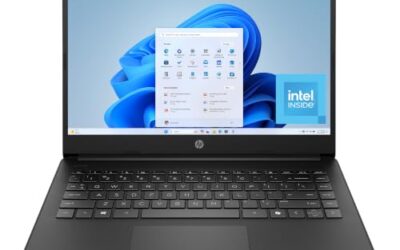
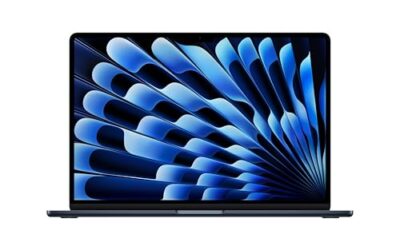
The term “sleeper gaming laptop” describes a machine that looks understated and business-like on the outside but hides genuinely capable hardware inside. Instead of aggressive angles and rainbow lighting, a sleeper blends into a coffee shop or lecture hall, then quietly runs your favorite titles when you get home. It is a growing category because plenty of players want performance without announcing it to the entire room.
- Watch: Sleeper Gaming Laptop: Review & Buyer’s Guide — Video Review
- Design & Build
- Performance
- Pros & Cons
- Alternatives to Consider
- What to Look For in a Sleeper Gaming Laptop
- Realistic Expectations by Hardware Tier
- Which Sleeper Should You Buy?
- Common Mistakes When Buying a Sleeper Laptop
- Getting the Most From a Plain-Looking Laptop
- Reading a Laptop Listing Honestly
- Cooling and Noise Discipline
- Frequently Asked Questions
- Verdict
- Related Articles
In this review we look at a spread of affordable, low-key laptops that fit the sleeper idea, from the compact NIMO 15.6″ with its AMD Ryzen 5 6600H to the more overtly powerful Alienware 16 Aurora with an RTX 5050. Along the way we also weigh in on thin-and-light AMD builds and a couple of entry machines that lean more toward everyday use than serious frame rates, so you know exactly what you are getting.
🎮 Get More From Your Setup — Free
Prime Gaming gives you free PC games every month, in-game loot, and a free Twitch channel sub — plus fast free shipping on all the gear above. New members get a 30-day free trial.
Watch: Sleeper Gaming Laptop: Review & Buyer’s Guide — Video Review
Design & Build
Sleeper appeal starts with the chassis, and most of these picks nail the muted aesthetic. The NIMO 15.6″ and 17.3″ models keep clean, dark shells with minimal branding, backlit keyboards, and slim profiles that pass for productivity notebooks. The thin-and-light NIMO with the Ryzen 7 7735HS is especially convincing here, offering a 180-degree hinge and a restrained look that hides its Radeon 680M graphics. The Alienware 16 Aurora is the outlier: it is the most powerful of the group, but its styling is bolder and its footprint larger, so it is less of a true sleeper and more of an honest gaming machine. The budget N150 and Ryzen 7 5700U builds feel plasticky but stay light and portable.
Performance
This is where honesty matters. Only the Alienware 16 with its dedicated RTX 5050 is a genuine modern gaming GPU capable of smooth 1080p play in demanding titles. The AMD Ryzen 6600H and 7735HS NIMO models rely on integrated Radeon graphics, which handle esports staples like Valorant, League of Legends, CS2, and older AAA games at reduced settings, but they are not built for maxed-out ray tracing. The Ryzen 7 5700U and Intel N150 machines are best understood as productivity and light-gaming laptops rather than dedicated rigs. If frame rate is your top priority, the Alienware leads by a wide margin; if you want a discreet all-rounder, the AMD NIMO units strike a nicer balance of price, portability, and casual play.
Pros & Cons
- Discreet styling that does not scream “gamer” in professional settings.
- Strong value on the AMD Ryzen models, with generous RAM and NVMe storage.
- One true gaming option in the Alienware 16 Aurora for buyers who need the RTX 5050.
- Portable weights across the thin-and-light picks make daily carry easy.
- Integrated graphics limits mean most models are not for high-settings AAA gaming.
- Entry chips like the N150 are underpowered for anything beyond basics.
- Battery life varies widely and the Alienware trades runtime for power.
Alternatives to Consider
If none of these fit, shoppers cross-comparing sleeper builds often look at mainstream RTX 4050 and RTX 4060 laptops from ASUS TUF, Acer Nitro, or Lenovo LOQ lines, which offer discrete graphics in relatively plain shells. Those cost more but deliver dependable dedicated-GPU performance. For pure portability with casual gaming, a well-specced AMD Ryzen 7 ultrabook with Radeon 780M graphics is another strong middle ground between these budget NIMO units and the pricier Alienware.
What to Look For in a Sleeper Gaming Laptop
Graphics Tier and Power Limit
The graphics chip sets the ceiling for everything else. The laptop version of the RTX 5050 uses 2,560 CUDA cores and 8GB of GDDR7 on a 128-bit bus, good for about 384 GB/s of bandwidth. Its power limit is configurable by the maker, with configurations ranging from 50W up to 100W, and up to 115W with dynamic boost. That spread matters: two laptops with the same chip name can perform differently if one runs the card at a lower wattage. Listings for the Alienware 16 Aurora describe an 80W configuration, so check the exact power figure for the specific model rather than relying on the chip name.
What Integrated Graphics Can and Cannot Do
The NIMO models rely on Radeon integrated graphics. The Radeon 680M inside the Ryzen 7 7735HS has 12 RDNA 2 compute units and 768 shader processors, which is among the stronger integrated options and suits esports titles and older games at reduced settings. The Intel N150 is a 4-core, 6W processor with 24 graphics execution units, designed for office work. Expect basic video, browsing and very light games from it. A Ryzen 7 5700U is an older Zen 2 design and sits between those two for graphics. Integrated graphics also share system memory, so a laptop running memory in dual-channel mode generally performs better than one with a single module.
Display, Keyboard and Discretion
A sleeper succeeds or fails on its outward appearance. Matte lids, small logos and white or amber lighting blend into an office. The Alienware 16 Aurora is listed with a 16-inch 2560 x 1600 IPS display at 120Hz, 300 nits and full sRGB coverage, and at least one published assessment notes that 120Hz is lower than the 144 to 165Hz offered by some competitors. A 15.6-inch 1080p IPS panel is a sensible match for the Radeon-powered models, because the integrated graphics cannot drive higher resolutions in modern games.
Battery, Charger and Weight
A discreet laptop is carried more often, so weight and charging deserve attention. The Alienware is listed with a 96 Wh battery, a 180W adapter and a weight of about 5.5 lb. Thin machines with integrated graphics draw far less power, so they tend to run longer between charges and can often charge over USB-C. A barrel-style charger is bulkier, but a high-wattage laptop cannot be fed over a small USB-C brick.
Realistic Expectations by Hardware Tier
| Hardware tier | Typical use | Limits |
|---|---|---|
| RTX 5050 laptop GPU | Recent games at 1080p, DLSS-assisted play | 8GB of memory, power depends on configuration |
| Ryzen 7 7735HS with Radeon 680M | Esports, older games, light creative work | Modern AAA games need low settings |
| Ryzen 5 6600H with integrated graphics | Esports and everyday use | Weaker than the 7735HS for graphics-heavy tasks |
| Ryzen 7 5700U | Study, browsing, casual gaming | Older architecture, limited gaming headroom |
| Intel N150 | Office work, video, web | Not designed for games beyond simple titles |
Which Sleeper Should You Buy?
| If you… | Choose… | Reason |
|---|---|---|
| Want real modern gaming performance | Alienware 16 Aurora | The only one here with a dedicated RTX 5050 |
| Care most about a quiet, plain look | NIMO thin-and-light with Ryzen 7 7735HS | Restrained styling and a stronger integrated GPU |
| Want a larger screen and more memory for multitasking | NIMO 17.3-inch model | Listed with 32GB of RAM and 1TB of storage |
| Need a compact laptop for esports and school | NIMO 15.6-inch with Ryzen 5 6600H | Balanced performance in a light body |
| Mainly study and browse, with occasional casual games | The Ryzen 7 5700U or N150 builds | Light, portable and low power draw |
Common Mistakes When Buying a Sleeper Laptop
- Expecting discrete-GPU results from integrated graphics. The Radeon 680M is capable for its class, but it is not an RTX card.
- Ignoring the power limit. The same GPU name can run at very different wattages in different laptops.
- Overlooking memory configuration. A single module halves the memory bandwidth integrated graphics depend on.
- Choosing style over cooling. A thin chassis limits sustained performance, so a plain laptop with weak cooling can throttle in long sessions.
- Forgetting the charger. A powerful laptop needs a large adapter, which undermines the discreet look in a meeting.
Getting the Most From a Plain-Looking Laptop
- Update the graphics driver from the chip maker, not only through Windows Update.
- Set the Windows power mode to best performance while plugged in.
- Open the system information tool and confirm memory runs in dual-channel mode, using a utility such as CPU-Z.
- Choose a modest resolution and enable upscaling, such as FSR or DLSS, before lowering texture quality.
- Cap the frame rate slightly below the screen refresh rate to reduce heat and fan noise.
- Rest the laptop on a hard, flat surface or a stand so the intake vents stay clear.
Reading a Laptop Listing Honestly
- Marketing comparisons. A line claiming to “beat” a named Intel chip is the seller’s claim, not a measured result, so look up the processor itself.
- Peak clock speeds. An “up to 4.75 GHz” figure is a short boost, not a sustained speed.
- Graphics named without wattage. The same card at 50W and 100W performs differently.
- Memory without a module count. Ask whether the 16GB is one stick or two, because dual-channel matters for integrated graphics.
- Battery without a capacity. Hours of runtime vary with the workload; watt-hours are a firmer comparison.
Cooling and Noise Discipline
A laptop that looks like an office machine usually has a smaller cooling system than a bold gaming model, and that shapes how to use it. Short gaming sessions run at full speed, but long ones may settle at lower clocks as heat builds. A flat surface, clear vents and a frame cap keep temperatures in check. For the Alienware, the larger body and the 96 Wh battery listing suggest more room for cooling, while the thin NIMO machines depend on the Radeon chip staying inside a lower power budget.
It also helps to match the settings to the hardware instead of fighting it. On the integrated-graphics models, 720p or 900p with upscaling can feel smoother than native 1080p at the lowest preset. On the RTX 5050 laptop, enabling DLSS in supported games raises frame rates at a modest cost in image quality.
Frequently Asked Questions
What actually makes a laptop a “sleeper”?
A sleeper looks plain and professional while packing more capability than its appearance suggests. The idea is stealth performance, so muted colors and minimal branding matter as much as the internal specs.
Can integrated graphics really game?
Yes, within limits. Modern AMD Radeon integrated graphics in chips like the Ryzen 7 7735HS run esports titles and older AAA games smoothly at lower settings, but they cannot match a dedicated RTX GPU for newer, demanding releases.
Is the Alienware overkill for a sleeper?
It depends on your goal. Its RTX 5050 gives it real gaming muscle, but its bolder styling and size make it less discreet than the NIMO models. Choose it if performance outranks stealth for you.
How much RAM and storage should I expect?
Most of these picks ship with 16GB of RAM and a 512GB NVMe SSD, which is a comfortable baseline. The 17.3″ NIMO steps up to 32GB and 1TB, which suits multitasking and creators better.
Verdict
The sleeper category is really two conversations. If you want authentic modern gaming performance in an unassuming package, the Alienware 16 Aurora with its RTX 5050 is the clear performance leader, even if it is the least discreet. If you value a quiet, portable machine for esports, older titles, work, and study, the AMD Ryzen NIMO models deliver the best blend of stealth looks and everyday value. Match the pick to your real workload, and you will end up with a laptop that keeps its capabilities pleasantly hidden.