Affiliate disclosure: As an Amazon Associate we earn from qualifying purchases. This post contains affiliate links — we may earn a small commission at no extra cost to you. This never affects our picks. Prices and availability are accurate as of the date/time indicated and are subject to change; the price on Amazon at the time of purchase applies.
- At-a-glance comparison for builders
- Round 1: GPU pairing — does your card actually need OLED?
- Round 2: Resolution and refresh rate — what’s the sweet spot?
- Round 3: Power, thermals, and the case behind the panel
- Round 4: Connectors, cables, and the boring compatibility stuff
- Round 5: Picture quality ceiling and the new-build wow factor
- Round 6: Upgrade path and how long the panel will serve the build
- Round 7: Total build cost and where to spend the marginal dollar
- Round 8: The peripheral and accessories puzzle
- Recommendation: OLED for premium new builders
- Recommendation: IPS for budget and mid-tier builders
- Conditional verdict: when each technology is the right pick
- FAQ for builders
- The bottom line for builders
- Related Guides
- Related Articles
- Frequently Asked Questions
- Related Articles
Top picks at a glance:

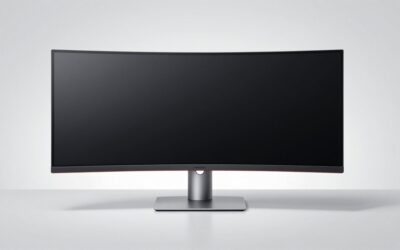
LG 27GX704A-B 27-inch Ultragear QHD (2650x1440) OLED Gaming Monitor 240Hz, 0.03ms, NVIDIA G-Sync Compatible, AMD FreeSync Premium Pro, VESA Display HDR TrueBlack400, HDMI 2.1, DisplayPort, Black
Included for 'OLED vs IPS Gaming Monitor in 2026: A Builder's Guide to Picking the Right Panel' because the listing specifies 0.03ms and NVIDIA G-Sync Compatible, details this guide uses to compare options.
View on Amazon
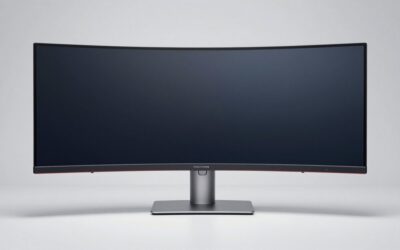
msi MPG 321URX QD-OLED, 32" 4K UHD Quantum Dot OLED Gaming Monitor, 3840 x 2160, 0.03ms, 240Hz, True Black HDR 400, 90W USB Type C, HDMI, DP Port
Included for 'OLED vs IPS Gaming Monitor in 2026: A Builder's Guide to Picking the Right Panel' because the listing specifies 32" 4K UHD Quantum Dot OLED Gaming Monitor and 3840 x 2160, details this guide uses to compare options.
View on AmazonWhen you’re choosing a monitor as part of a full PC build, the decision matrix differs from someone shopping for a panel in isolation. The monitor has to make sense alongside the GPU you’re buying, fit the resolution your CPU can drive at the framerates you want, suit the desk and room the build is going into, and play nicely with the rest of the parts list for years to come. OLED vs IPS in 2026 is one of the more consequential calls you’ll make in your build, because the panel choice shapes how the whole system feels in use — and how long the rest of the parts will hold up before they start to feel like the weak link.
Quick answer: For a 2026 build, the our top pick is the gaming monitor we would build around, while the the value pick is the budget-friendly choice.
This guide is built around what actually matters to a builder. We’ll work through the round-by-round comparison the way we’d think about it at the parts-picker page, then hand you split recommendations: OLED for new builders putting together a premium 1440p or 4K rig with the GPU headroom to drive it, IPS for budget and mid-tier builders who’d gain more from a balanced parts list than a flagship panel. The right answer genuinely depends on the rest of your build, and we’ll show you how to reason about it.
If you’re still putting together your parts list, our gaming monitors buyers guide covers the panels we’d actually pick this year across both technologies. Use that alongside this comparison — this article tells you which technology suits which build, that article tells you which specific models are worth your money.
At-a-glance comparison for builders
| Build consideration | OLED | IPS | Builder verdict |
|---|---|---|---|
| GPU pairing demands | Wants high-end GPU to feed it | Pairs cleanly with any tier | IPS more forgiving |
| Resolution sweet spot | 1440p or 4K to justify the panel | Scales well from 1080p to 4K | IPS more flexible |
| Power draw of the panel | Lower at typical content | Higher sustained backlight draw | OLED |
| Cable / port compatibility | DisplayPort 2.1 / HDMI 2.1 needed for max specs | Wider compatibility range | IPS easier |
| Picture quality ceiling | Highest available in 2026 | Excellent, especially mini-LED IPS | OLED |
| Upgrade path | Will outlast 2 GPU generations | Will outlast 3+ GPU generations | IPS for longevity |
| Total build cost share | 15-25% of a premium build | 8-15% of a balanced build | IPS for budget headroom |
| Risk of regret in 3 years | Burn-in management ongoing | Set and forget | IPS lower-risk |
Builder’s headline verdict: If your build’s total budget is $2000 or more, with a current-gen high-end GPU, OLED is the panel that matches the rest of the system. If your build sits under that mark, IPS gives you more total system performance for the same money and is the right pick for budget and mid-tier rigs.
Round 1: GPU pairing — does your card actually need OLED?
Why this matters for builders
A monitor only shows what the GPU feeds it. A flagship OLED running at native resolution and high refresh needs serious horsepower behind it, especially at 4K with HDR on. If your GPU can’t push the frames, you’re paying premium-panel money for a feed that doesn’t fill it.
For 4K OLED at 240Hz, you want a current-gen flagship GPU to even get near those numbers in modern AAA titles. For 1440p OLED at 240Hz, a current-gen high-end GPU handles it comfortably in most titles. For 1440p at 144–165Hz, a mid-high tier GPU is enough. Anything below that and the GPU bottleneck will dominate the experience long before the panel does.
IPS panels are more forgiving here. A 1440p IPS at 165Hz looks fine fed by a midrange GPU, and the gap between max refresh and what your GPU actually delivers matters less, because IPS’s response-time deficit versus OLED is small enough at moderate framerates that the perceived motion clarity is comparable.
Match the panel to the GPU. Don’t buy a flagship OLED if your GPU is a midrange card from two generations ago — you’ll bottleneck the build. See our graphics cards buyers guide for current-gen options that pair sensibly with each panel tier.
Builder verdict: IPS pairs more flexibly across GPU tiers. OLED needs a serious card behind it.
Round 2: Resolution and refresh rate — what’s the sweet spot?
Why this matters for builders
Choosing a resolution sets the framerate ceiling and the GPU you’ll need. OLED panels cluster at 1440p and 4K with 240Hz becoming standard. IPS spans 1080p, 1440p, 4K, and offers everything from 144Hz to 480Hz.
The 1440p 240Hz sweet spot is where both technologies meet on the most common builder spec. At that resolution and refresh, OLED’s motion-clarity edge shows clearly and the GPU demand is manageable with current-gen high-end cards. 4K at 240Hz is the new aspirational target and OLED leads here, but the GPU bill is heavy.
For builders targeting 1080p — entry-level builds, esports-first rigs, students on tight budgets — IPS is the only sensible answer. OLED isn’t really chasing that market in 2026, and what’s available is overpriced for the resolution. A 1080p 240Hz Fast IPS is the right panel for a budget esports build.
For builders targeting 4K, both technologies are viable but OLED’s per-pixel emission really pays off at high resolution. The mix of 4K resolution and per-pixel HDR is genuinely jaw-dropping in cinematic games. If your GPU can drive it, this is OLED’s strongest pitch.
Builder verdict: 1440p builders get the closest race; IPS owns the 1080p tier; OLED owns the 4K cinematic tier.
Round 3: Power, thermals, and the case behind the panel
Why this matters for builders
Easy to overlook, but the panel’s power draw shapes what you put in the system. OLED panels generally draw less power than equivalent IPS for typical mixed content, because pixels that aren’t lit don’t consume power. IPS backlights are always on at the brightness level you’ve set.
This isn’t huge in raw watts, but it can affect heat output in the room and the build’s overall power budget. For a builder sizing a PSU, the monitor isn’t on the PSU at all — it has its own wall power — but you should know what you’re putting on your circuit. A flagship OLED plus a flagship GPU plus a high-end CPU is a real load.
For room thermals, OLED runs cooler on typical content. If you’ve ever had a 32″ IPS panel in a small office, you know the heat it can throw at full brightness. OLED is more pleasant for compact spaces.
None of this is going to flip your decision on its own, but it’s the kind of thing a serious builder should factor in. The rest of your thermal profile — case, fans, cooler — matters more, and our CPU coolers buyers guide covers what to pair with whichever monitor and chip combo you land on.
Builder verdict: Slight edge to OLED on thermals and power. Not a decision-flipper on its own.
Round 4: Connectors, cables, and the boring compatibility stuff
Why this matters for builders
To get the most from a high-spec panel, your GPU needs the right outputs. 4K at 240Hz with HDR really wants DisplayPort 2.1 or HDMI 2.1 with DSC, which is fine on current-gen flagship GPUs but limited on older cards. If you’re reusing a GPU from a previous build, check the output specs before you buy a flagship OLED — you might be capped at lower refresh rates than the panel supports.
IPS panels at moderate resolutions are forgiving. 1440p 165Hz works fine on DisplayPort 1.4 and older HDMI standards. The compatibility headache only crops up at the high end, which is where both technologies converge anyway.
Also worth weighing: USB-C with DisplayPort Alt Mode is a nice-to-have if you’ll dock a laptop alongside the desktop. Some flagship monitors of both technologies have it, some don’t. Check the spec sheet.
Builder verdict: IPS easier for mixed-vintage builds; both fine on current-gen flagship parts.
Round 5: Picture quality ceiling and the new-build wow factor
Why this matters for builders
You’re building a system you want to take pride in and enjoy for years. Picture quality is the most visible expression of a high-end build to anyone sitting in front of it — future you included.
OLED in 2026 is the new picture-quality ceiling. The contrast, the per-pixel HDR, the motion clarity — there’s no spec-sheet argument that IPS matches it. When you finish a build and fire up Cyberpunk or Alan Wake on a flagship QD-OLED, the wow factor is real and lasting. It’s the part of the build a non-PC person actually notices.
IPS picture quality is excellent, and the best mini-LED IPS panels have closed the HDR gap significantly. But “very good” isn’t “best in class,” and a builder going for a no-compromise system in 2026 should weight that.
For midrange builds, the IPS picture-quality ceiling is still high enough that you’re not visibly compromising. A great Fast IPS 1440p panel looks fantastic and you won’t sit there feeling shortchanged. The diminishing-returns curve from “very good IPS” to “great OLED” is steep, and the dollars are real.
Builder verdict: OLED for premium builds reaching for the ceiling. IPS for balanced builds where “very good” is the right bar.
Round 6: Upgrade path and how long the panel will serve the build
Why this matters for builders
You’ll swap GPUs every 3–5 years, maybe the CPU and motherboard once or twice over the panel’s life. The monitor is usually one of the longest-lived parts in the build. Choosing a panel that ages well matters.
IPS ages predictably. We have a decade-plus of longevity data on IPS, and the panels fade slowly and gracefully — gradual backlight dimming over many years, no catastrophic failures. A great IPS bought today is still a great IPS in 7–8 years.
OLED’s longevity story is encouraging but unproven at population scale. The technology has matured enormously since the early adopters, and modern burn-in mitigations have largely solved the worst-case scenarios for typical use. But the long-term data simply isn’t there yet at the scale IPS has. If you’re someone who buys a monitor and runs it until it physically dies, IPS is the more confident bet.
The flip side: panel technology is moving fast, and a flagship OLED today will likely be matched or beaten by mid-tier OLED in 5 years. Buying premium IPS to last forever is a defensible plan; buying premium OLED to enjoy now and replace in 5–7 years is also defensible.
Builder verdict: IPS for buy-once-cry-once builders. OLED for users comfortable with shorter panel cycles.
Round 7: Total build cost and where to spend the marginal dollar
Why this matters for builders
Every dollar on the panel is a dollar off the GPU, CPU, RAM, SSD, or peripherals. The right monitor is the one sized appropriately to the rest of the build — neither bottlenecking it nor outclassing it.
For a $1500 build, IPS is almost always the right call. The OLED premium would eat budget that’s better spent on a higher-tier GPU or more storage. A great 1440p IPS at 165–240Hz is the panel for this tier, and the build will feel better with that spread of spending.
For a $2000–2500 build, the math shifts. You have GPU headroom for OLED, the rest of the build is solid, and the panel becomes the visible flagship. This is where premium IPS and entry OLED start to compete, and OLED’s picture-quality advantage justifies the premium.
For a $3000+ build, OLED is the right call. The rest of the system can drive a flagship panel, and the picture quality lines up with the rest of the build. Pairing a top-tier GPU with anything less than the best panel feels unbalanced.
Our $2000 prebuilt vs DIY analysis shows where these crossover points fall in real builds — it’s the same trade-off whether you’re going DIY or comparing prebuilts.
Builder verdict: IPS below $2000 total budget; either above, with OLED winning at $3000+.
Round 8: The peripheral and accessories puzzle
Why this matters for builders
A build isn’t just the tower and the monitor — it’s the whole desk. Keyboard, mouse, microphone, headset, and RAM all shape how the system actually feels, and the budget for those competes with the panel budget.
If your panel takes too big a slice, the rest of the desk suffers. We see it constantly in build-help posts — someone spent on a flagship OLED and is running a $30 keyboard and a budget mic. That’s not a balanced build.
If you’re picking IPS to free up budget, redirect it intentionally. Our gaming keyboards buyers guide, gaming mice buyers guide, streaming microphones buyers guide, and gaming RAM buyers guide are all the things that complete the picture. A balanced build with great peripherals and an IPS panel will feel better than an unbalanced build with an OLED and entry-level everything else.
If you’re going OLED, budget for it before you lock in the rest of the parts list. Don’t squeeze peripherals to make room for the panel late in the process — the whole build needs to scale up together.
Builder verdict: Build balance is the goal. Panel choice should follow the budget reality, not the other way around.
Recommendation: OLED for premium new builders
If you’re putting together a 1440p or 4K premium build with a current-gen flagship GPU, OLED is the panel that matches the rest of your system. The picture-quality ceiling justifies the premium, and the rest of your build has the headroom to feed it properly. Pair a top-tier QD-OLED with a high-end CPU and GPU and the build will look and feel like the flagship system it is. The motion clarity, contrast, and HDR will be a daily reminder that you didn’t compromise on the experience.
This recommendation assumes you can take on the burn-in management discipline — autohide your taskbar, vary your content, run the panel refresh cycles when prompted — and that you have the budget to replace the panel in 5–7 years rather than 10. For builders in this segment, those are reasonable trade-offs.
Match the rest of the build to the panel’s level. Don’t pair a flagship OLED with a budget GPU — that’s a build out of balance. Use our gaming CPUs buyers guide for chips that complement a flagship panel and GPU combination.
Recommendation: IPS for budget and mid-tier builders
If your total build budget is under $2000, IPS is the right panel for your system. You’ll get a larger, brighter, more flexible panel for the money, and the savings let you put a better GPU or more storage in the build. The performance gain from a higher-tier GPU shows up in every frame of every game, all the time. The panel-quality gap with OLED shows up most clearly in dim-room cinematic content — beautiful when you’re using it, but a smaller share of typical use.
This recommendation also covers builders chasing maximum panel size for the money. 4K 32″ IPS at 144Hz is genuinely outstanding for productivity and gaming, and the same spend on OLED gets you a 27″ 1440p panel. On desk real estate per dollar, IPS still wins decisively.
It also covers builders whose room or workflow doesn’t suit OLED — bright offices, sustained productivity workloads, families with mixed users, anyone wanting a set-and-forget panel they never have to think about.
Conditional verdict: when each technology is the right pick
Pick OLED if: Your total build budget is $2000 or more, your GPU is current-gen high-end or better, your main use is gaming with at least some single-player and cinematic content, your room is dim to moderately lit, and you can live with periodic burn-in hygiene. The picture quality is unmatched and your build deserves it.
Pick IPS if: Your total build budget is under $2000, your GPU is midrange, your use mixes gaming and productivity, your room is bright, you want a larger panel for the money, or you’re building a system meant to outlive multiple GPU generations. IPS is the safer, more versatile, lower-regret choice for most new builders in 2026.
For a deeper look at how the rest of the parts shape this decision, our gaming monitors buyers guide covers specific models we’d buy, and the rest of our buyers’ guide series — for CPUs, GPUs, RAM, mice, keyboards, and coolers — completes the picture for a balanced 2026 build. The right panel is the one that fits the rest of your system, not the one with the best spec sheet in isolation.
FAQ for builders
Can I pair an OLED with a midrange GPU and upgrade the GPU later?
You can, but you’ll bottleneck the panel until the upgrade lands. If that GPU upgrade is imminent (within 6 months), it’s defensible. If it’s hypothetical (within 2 years), put the panel money into a better GPU now and run a great IPS until you can afford the OLED + flagship GPU combo together.
Does the case or build aesthetic affect the panel choice at all?
Indirectly. A premium build with a glass-panel case and RGB throughout wants a flagship monitor to match. A clean, functional build doesn’t need the picture-quality halo. Match the panel to the visual ambition of the rest of the build.
Will a current-gen OLED still be great in 5 years for a long-life build?
Probably yes for moderate use, with the caveat that long-term degradation data on 2024–2026 panels isn’t complete yet. If you’re building a system you expect to run unchanged for 7+ years, IPS is the more confident bet. If you’re fine upgrading the panel mid-build-life, OLED is fine.
What’s the most common mistake builders make picking a panel in 2026?
Choosing a panel that doesn’t match the rest of the build — usually buying too much panel for the GPU, or buying an underwhelming panel on a flagship build. Match the parts to each other. Use the buyers’ guide series across CPU, GPU, RAM, coolers, mice, keyboards, and microphones to keep the build balanced from end to end.
The bottom line for builders
OLED vs IPS in 2026 has no one-size-fits-all answer for builders. It rides on what else goes in the system, what you want the build to do, what room it lives in, and how long you plan to keep it together. For premium new builders assembling $2000+ rigs with current-gen flagship GPUs, OLED is the panel that matches the rest of the build’s ambition. For budget and mid-tier builders, IPS delivers better total system performance per dollar and a longer, more predictable service life. Pick the panel that fits the build you’re actually assembling, not the build you wish you could afford.
Related Guides
Related Articles
Want more on this topic? Browse the hand-picked guides below — each one runs on the same scoring rubric used in this review.
Frequently Asked Questions
Is OLED or IPS better for gaming?
OLED offers superior contrast, perfect blacks and near-instant response times for stunning image quality, while IPS delivers excellent color, high brightness and no burn-in risk at lower cost. OLED wins on visuals; IPS wins on brightness, longevity and value. The best choice depends on priorities.
Should I worry about OLED burn-in?
Modern OLED monitors include burn-in mitigation features and warranties, greatly reducing the risk for typical mixed gaming and desktop use. Displaying static elements at high brightness for very long periods raises risk. For most gamers, careful use makes burn-in an unlikely concern.
Are OLED monitors bright enough for daytime gaming?
OLED excels at contrast but peak full-screen brightness is lower than many IPS panels, which can matter in bright rooms. HDR highlights still pop impressively. If you game in a very bright environment, IPS may look punchier; otherwise OLED’s contrast usually impresses regardless.
Do OLED monitors have faster response times?
Yes, OLED panels feature near-instantaneous pixel response, producing exceptionally clear motion with minimal blur, which benefits fast-paced games. IPS response times have improved but generally trail OLED. For crisp motion clarity in competitive titles, OLED holds a distinct advantage.
Is an IPS monitor better value than OLED?
Typically yes. IPS monitors cost less, get brighter and carry no burn-in worry, making them a safe, versatile value pick. OLED commands a premium for its superior contrast and motion. Budget-conscious buyers or bright-room users often find IPS the more sensible choice.
Ready to decide? Our #1 pick for 2026 is the GPU pairing demands.
Live price & availability on Amazon.