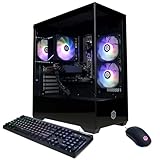
- Top Pick: KOTIN Prebuilt Gaming PC RTX 5070 12GB, Ryzen 7 9700X, 32GB DDR5, 1TB SSD
- Best Value: msi Codex Z2 Gaming Desktop: AMD R7-8700F, GeForce RTX 5070, 32GB DDR5, 2TB m.2 NVMe SSD, USB Type-C, VR-Ready, Windows 11 Home : A8NVP-436US
- Premium Choice: STGAubron Gaming PC Desktop,Core I7,RX 580 8G,16G RAM,512G SSD
Shopping for a gaming PC under $1,500 in 2026 means walking a tightrope. Spend too little and you end up with a machine that struggles at 1440p within a year. Spend too much and you’ve blown past the budget on marketing rather than silicon. The market is crowded with prebuilts that pair a decent GPU with a bottlenecked CPU, skimp on RAM, or hide a low-wattage power supply behind an RGB light show — and spec sheets rarely tell you which corner was cut.
This guide cuts through that. We’ve focused on builds that deliver genuine value at or below $1,500, with an emphasis on the RTX 5070 class of GPU that currently defines high-refresh 1440p gaming. Below you’ll find our top picks, a practical buying checklist, honest reviews of each machine, and answers to the questions we hear most often from first-time prebuilt buyers.
As an Amazon Associate we earn from qualifying purchases at no extra cost to you. Product prices and availability are accurate as of the date shown and are subject to change.




⚡ Save on Your Next PC — Amazon Prime
Prime members get fast free shipping on the systems above, plus early access to Prime Day & Black Friday PC deals. New members get a 30-day free trial.
Watch: Best Gaming PC Under $1500 — Video Review
How to Choose Gaming PC Under $1500
- Prioritize the GPU: Your graphics card determines frame rates more than anything else. At this budget, an RTX 5070 is the sweet spot for 1440p high-refresh gaming; anything in the RX 6500 XT or RX 580 class belongs to a much lower price bracket and should cost accordingly.
- Avoid CPU bottlenecks: Pair that GPU with a modern 8-core chip like a Ryzen 7 9700X, R7-8700F, or Intel Core Ultra 7 265F. An older i7 or entry-level Ryzen 5 will hold back a strong card in CPU-heavy titles and simulation games.
- Insist on 32GB of DDR5: 16GB is now the floor, not the target. Modern open-world titles, background apps, and streaming overhead make 32GB the smarter buy — and it’s cheap enough that any $1,500 build should include it.
- Check storage capacity, not just speed: A 1TB NVMe SSD fills fast when single games run 100–150GB. Look for 1TB minimum, 2TB if the price is right, and confirm there’s a free M.2 slot for later expansion.
- Look past the case: Power supply wattage, cooling design, and upgrade headroom matter more than tempered glass and fan lighting. A quality 650W+ PSU and adequate airflow protect your investment far better than aesthetics do.
The Best Picks Reviewed
KOTIN RTX 5070 / Ryzen 7 9700X
This is the strongest raw value on the list: a current-generation RTX 5070 paired with the excellent Ryzen 7 9700X, 32GB of DDR5, and a 1TB SSD. The Zen 5 chip runs cool and efficient, and there’s no meaningful bottleneck anywhere in the configuration — it’s the build we’d recommend to most buyers who want maximum performance per dollar.
MSI Codex Z2 (R7-8700F, RTX 5070)
MSI’s Codex Z2 matches the KOTIN on GPU and memory but doubles storage to a 2TB NVMe drive, which is a genuinely useful upgrade if you keep a large library installed. The R7-8700F is a capable gaming chip, and MSI’s build quality, front USB Type-C, and consistent aftermarket support make this the safest mainstream pick.
Lenovo Legion Tower 5i (RTX 5070 Ti, Core Ultra 7 265F)
The Legion Tower 5i is the fastest machine here thanks to the step up to an RTX 5070 Ti, which meaningfully extends its life at 1440p and makes 4K viable in many titles. Expect it to sit at the top of the budget, but the Core Ultra 7 265F, 32GB of memory, and Lenovo’s cooling and service network justify the premium.
Alienware Aurora (RTX 5070, Core Ultra 7 265F)
Alienware’s Aurora delivers the same 5070/Ultra 7 265F combination in a well-engineered chassis with strong thermals and clean cable management. You do pay something for the brand and the design, so check the configuration carefully — but if you want a prebuilt that looks and feels premium out of the box, this is it.
CyberPowerPC (Ryzen 5 5500, RX 6500 XT)
This is an entry-level machine that sits well below the $1,500 ceiling, and it should be judged on that basis: the RX 6500 XT with 4GB of VRAM is built for 1080p esports titles like Valorant, CS2, and Rocket League, not modern AAA releases. Buy it only if your budget is genuinely tight and you plan to upgrade the GPU later.
Frequently Asked Questions
Is an RTX 5070 enough for 1440p gaming in 2026?
Yes. The RTX 5070 comfortably handles 1440p at high settings in most current titles, and with DLSS enabled it holds high refresh rates even in demanding releases. If you want extra headroom for the next few years, the 5070 Ti in the Legion Tower 5i is the natural step up.
Should I buy a prebuilt or build my own PC?
Building your own can save money and gives you full component control, but prebuilts at this price are competitive on cost and come with a single warranty covering the whole system. If you value time, support, and a machine that works on day one, a prebuilt is a reasonable choice.
Is 16GB of RAM still acceptable?
It’s playable but no longer ideal. Several 2025–2026 titles benefit measurably from 32GB, especially if you stream or keep a browser open while gaming. At the $1,500 level there’s no reason to settle for 16GB.
Can I upgrade these systems later?
Generally yes — RAM and storage are straightforward on all of these towers. GPU upgrades depend on power supply wattage and case clearance, so confirm the PSU rating before planning a future card swap, particularly on the more compact budget models.
Final Thoughts
For most buyers, the KOTIN RTX 5070 build offers the best straight value-for-money at this price, with the MSI Codex Z2 a close second thanks to its 2TB SSD and stronger support network. If your budget stretches to the top of the range, the Lenovo Legion Tower 5i and its RTX 5070 Ti is the pick that will stay comfortable at high settings the longest.