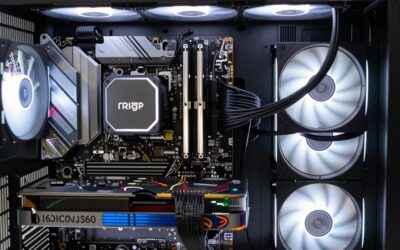
Best case fans for beginners should address specific problems: hot components, distracting noise, or insufficient ventilation. Buying an attractive multipack without compatibility checks complicates installation. These four options cover straightforward replacements, affordable expansion, larger mounts, and lighting without proprietary controllers.

How to Choose Case Fans
This guide compares the best case fans for beginners through mounting compatibility, motherboard control, airflow restrictions, and installation cost. Four models prioritize compatibility and installation requirements over advertised airflow. Recommendations use documented specifications; no hands-on temperature or acoustic testing are claimed.
Fan Size and Mounting Clearance
Check your case manual for supported fan positions, then verify clearance around radiators, drive cages, and nearby cables. Nominal diameter does not establish thickness or mounting compatibility. Three selections here use 120mm frames, while be quiet! Pure Wings 3 140mm PWM requires explicitly supported 140mm mounting positions.
Larger fans can suit generous front intakes, but incompatibility eliminates that benefit. Avoid assuming elongated slots accept every size, especially beside installed radiators. For a straightforward replacement in standard 120mm mounts, choose the Noctua NF-P12 redux-1700 PWM, which specifies a conventional 25mm frame thickness.
PWM Control and Header Capacity
Four-pin PWM fans use a control signal to regulate motor speed, enabling automatic motherboard-managed cooling. Match the connection to a documented chassis-fan header and select the appropriate mode. Every recommendation supports PWM; the ARCTIC P12 PWM PST additionally provides an integrated connection for sharing that signal.
Multiple motors require checking their combined current against the header’s documented limit. Integrated connectors simplify wiring but do not increase electrical capacity, and a shared group normally shares one signal. For economical expansion with fewer motherboard connections, the ARCTIC P12 PWM PST is particularly convenient.
Airflow Restrictions and Operating Noise
Airflow ratings describe unrestricted movement, while static pressure indicates resistance-handling capability. Filters, mesh, and radiators change operating conditions, making maximum airflow insufficient for predicting installed performance. The Noctua NF-P12 redux-1700 PWM offers a pressure-oriented design suitable for restricted positions.
Match speed to cooling requirements instead of maintaining maximum rotation continuously. Increasing speed commonly increases noise, and advertised acoustic figures are not comparable between manufacturers. For a case with compatible larger mounts and moderate cooling needs, choose the standard be quiet! Pure Wings 3 140mm PWM.
Lighting Compatibility and Installation Cost
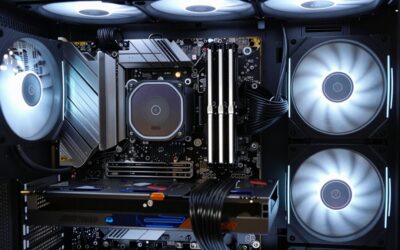
Lighting requires compatibility verification beyond motor connections. Addressable lighting uses a matching controller or motherboard lighting header, while PWM handles cooling independently. Budget for any missing controller before purchasing; the ARCTIC P12 PWM PST A-RGB 0dB uses conventional connections rather than proprietary wiring.
Switch off and disconnect the PC before installation. Match the three-pin 5V lighting plug only to a compatible addressable header, never a four-pin 12V RGB header. For conventional addressable lighting without proprietary connections, choose the ARCTIC P12 PWM PST A-RGB 0dB after verifying motherboard or controller compatibility.
Top Picks
The best case fans for beginners depend on mounting compatibility and lighting requirements. These picks include three 120mm choices and one 140mm alternative, all with PWM control. Compare the complete purchase, including splitters or lighting controllers, instead of assuming inexpensive fans guarantee economical installation.
| Product | Best For | Key Spec | Watch Out For |
|---|---|---|---|
| Noctua NF-P12 redux-1700 PWM | Best Overall | 120 × 120 × 25mm; maximum 1,700rpm; six-year warranty | Splitter and vibration mounts excluded |
| ARCTIC P12 PWM PST | Best Value | 120mm; 200–1,800rpm; integrated PWM sharing | Shared connection provides shared control |
| be quiet! Pure Wings 3 140mm PWM | Larger Mounts | 140mm; maximum 1,200rpm; four-pin PWM | Requires 140mm-compatible mounting positions |
| ARCTIC P12 PWM PST A-RGB 0dB | Addressable Lighting | 120mm; 200–2,000rpm; three-pin 5V lighting | Additional wiring and possible controller cost |
Noctua NF-P12 redux-1700 PWM: Best Overall
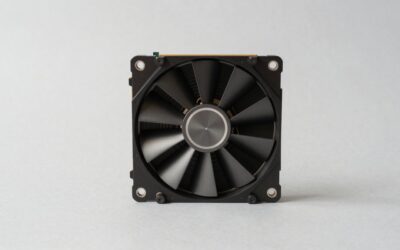
The Noctua NF-P12 redux-1700 PWM is the overall recommendation for a conventional replacement with documented specifications and warranty coverage. Its 120 × 120 × 25mm frame fits conventional mounts, maximum speed is 1,700rpm, and Noctua specifies a six-year warranty. PWM regulation provides adjustment without proprietary software requirements.
The drawback is a stripped-down accessory package: the contents include the fan and four screws, without a splitter or vibration mounts. Multiple installations may require accessory purchases. Among the best case fans for beginners, this model suits buyers prioritizing a clear specification and straightforward replacement over accessory bundles.
ARCTIC P12 PWM PST: Best Value
The ARCTIC P12 PWM PST is the value recommendation for economical individual or multipack purchases. This 120 × 120 × 25mm model specifies a 200–1,800rpm operating range and 2.20mmH2O maximum static pressure. Its integrated sharing connection is the practical advantage, particularly during conventional multi-fan installations.
Its compromise is shared control when using the integrated connection: connected positions cannot follow independent curves through one header. There is also no decorative lighting. Choose this option among the best case fans for beginners when coordinated cooling and economical installation matter more than individually controlled zones.
be quiet! Pure Wings 3 140mm PWM: Best for Larger Mounts
The be quiet! Pure Wings 3 140mm PWM suits beginners whose case supports larger front or top mounts. The standard model specifies a maximum speed of 1,200rpm, making it a restrained option for ordinary case ventilation. Its larger frame provides another sizing choice without lighting cables or proprietary software requirements.
The disadvantage is limited mounting flexibility: 140mm frames cannot replace 120mm-only mounts. This selection also lacks the higher maximum speed of the separate high-speed version, so check the complete product name. Consider it among the best case fans for beginners for compatible mounts needing moderate ventilation.
ARCTIC P12 PWM PST A-RGB 0dB: Best for Addressable Lighting
The ARCTIC P12 PWM PST A-RGB 0dB is the lighting selection for compatible addressable-control systems. It uses a 120mm frame, supports PWM sharing, and specifies a 200–2,000rpm range with a stop mode below 5% PWM. Rubberized contact surfaces reduce direct frame-to-case vibration transmission without requiring separately purchased pads.
Its disadvantage is additional wiring and controller expenditure, not an automatic improvement in cooling over the plain P12. The lighting connection and motor connection serve different functions. Choose this model among the best case fans for beginners when matching visual effects justify additional compatibility checks and cable management.
Frequently Asked Questions
Questions about the best case fans for beginners concern quantity, placement, and connectors beyond advertised aerodynamic measurements. The answers below establish a sensible starting arrangement and clarify accessory requirements. Existing working fans remain useful, so replacement should follow a specific problem instead of habit.
How Many Case Fans Do Beginners Need?
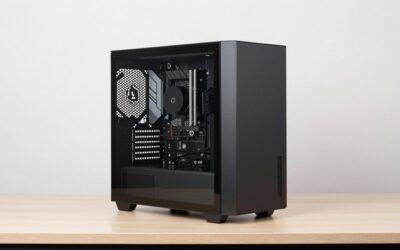
Two front intake fans and one rear exhaust provide a reasonable baseline for many conventional towers, provided those mounts exist. This arrangement is not universally applicable. Compact layouts, powerful components, and included stock fans change the calculation; begin by checking the case manufacturer’s intended ventilation pattern.
Run a representative workload and inspect component temperatures before additional purchases. Keep room temperature and settings similar during comparisons to minimize environmental variation. If temperatures already meet component limits comfortably, extra fans may provide negligible benefits against adjusting speed or cleaning blocked filters.
Which Direction Should Case Fans Face?
Use the airflow arrow molded into the frame to identify airflow direction when available. Conventional fans generally exhaust toward their support-strut side, but reverse-blade designs create exceptions. Orient front fans to supply outside air and rear fans to remove warmed air in a typical tower, following the specific case layout.
Avoid automatically populating every top position, since a frontmost top exhaust can divert intake air before component cooling. Cable routing and blocked vents also affect the resulting path. Make one placement change at a time and compare temperatures, rather than assuming a visually symmetrical layout necessarily improves ventilation.
Do Case Fans Need RGB to Work?
No, RGB is unnecessary for fan operation or motherboard speed control. It changes appearance without guaranteeing temperature reductions. An illuminated fan can normally operate through its motor connection without lighting connected; confirm documentation. Non-illuminated choices simplify wiring when a clean installation matters more than effects.
Choose lighting hardware through voltage, connector, and controller compatibility rather than brand appearance alone. The ARCTIC illuminated selection requires an addressable lighting connection for its effects. If your motherboard lacks that connection, budget for a compatible controller or choose one of the plain models instead.
Do You Need a Fan Hub for Multiple Fans?
No, you do not automatically need a fan hub for several fans. Available motherboard headers or sharing connections may already accommodate installation. A powered hub becomes useful when header capacity or connector availability is insufficient; verify its power input, supported control method, and rated output before purchasing.
Many PWM hubs distribute one control signal across connected fans, so they do not provide independent curves per position. They also commonly report speed from only one connection. Buyers needing separate intake and exhaust behavior should plan separate control groups, rather than expecting inexpensive hubs to provide independent regulation.
Final Thoughts
The best case fans for beginners here are the Noctua NF-P12 redux-1700 PWM for simple replacement and ARCTIC P12 PWM PST for economical expansion. Choose Pure Wings 3 for compatible 140mm mounts or the illuminated P12 for addressable effects. Confirm fit, connection capacity, and required accessories before purchasing unnecessary ventilation.