Best budget itx case searches often stall when an affordable enclosure rejects the planned graphics card or processor cooler. Replacement components can quickly erase the initial savings. The smartest purchase balances compact dimensions with usable clearance, keeping existing hardware useful without introducing assembly problems.
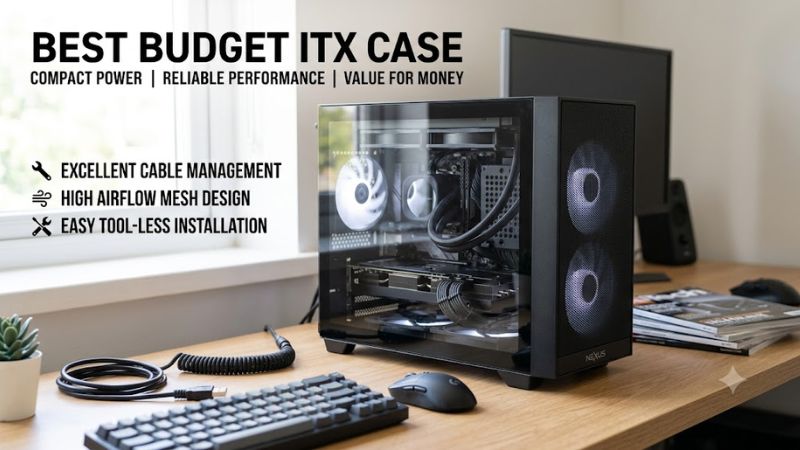
How to Choose a Budget ITX Case
This best budget itx case guide compares four practical enclosures through cooler clearance, graphics fit, power supply needs, and storage flexibility. Thermaltake Core V1 is the overall starting recommendation. The alternatives address smaller footprints and specialized builds; these selections reflect specifications, not detailed research.
CPU Cooler Clearance
Cooler clearance measures available height above the processor, but motherboard components can introduce extra restrictions. Memory modules and heatsink overhang deserve attention alongside height. Reusing an existing cooler makes this especially important, because replacement cooling can eliminate the savings from an inexpensive enclosure.
Restricted clearance favors low-profile heatsinks or liquid cooling, potentially increasing the total expense with demanding processors. Match cooling needs before selecting the best budget itx case. Fractal Design Node 304 fits a 165 mm tower, while Thermaltake Core V1 supports smaller towers measuring up to 140 mm tall.
Graphics Card Dimensions
Graphics fit involves length, thickness, and connector clearance. A sufficiently short card can still fail because its oversized heatsink occupies extra slots or its power connector obstructs the cover. Compare the manufacturer’s measurements for your exact graphics model, rather than assuming every card sharing a processor fits identically.
Long, slender cards require different accommodations from short, bulky designs. These enclosures provide two expansion slots, making oversized modern graphics hardware a fit concern. Cooler Master Elite 130 offers advertised 343 mm card clearance, making it useful for longer cards when thickness and cooling needs also align.
Power Supply Size and Reuse
Power supply fit influences overall expense because replacing an existing ATX unit with SFX hardware adds another purchase. Every enclosure here supports ATX supplies, although practical fit still depends on measurements. Connector placement, modular sockets, and unused wiring affect installation space beyond the metal housing itself.
Shorter supplies simplify cable management, while longer modular models require extra clearance around their connectors. Existing hardware remains useful only when its capacity and connections suit the upgrade. SilverStone SG13 is a practical destination for a compact ATX supply when saving desk space outweighs fitting a tall processor cooler.
Storage Capacity and Included Fans
Storage needs distinguish a simple gaming build from a compact backup machine. Motherboard-mounted M.2 storage needs no enclosure bay, whereas SATA drives require brackets, power connections, and data cables. Count existing drives before prioritizing capacity, since unused brackets can consume space otherwise available for graphics hardware.
Bundled ventilation reduces extra purchases, although fan diameter alone establishes neither noise levels nor cooling performance. Compare delivered prices and retain replacement-fan headroom if acoustics matter. Fractal Design Node 304 supports storage-heavy builds, while Thermaltake Core V1 supplies an included 200 mm front intake fan.
Top Picks
The best budget itx case preserves useful components without introducing expensive fit fixes. This comparison highlights distinct strengths and limitations before the individual recommendations. Verify the advertised version, delivered price, and return policy; scarce older inventory can undermine affordability despite its budget reputation.
| Product | Best For | Key Spec | Watch Out For |
|---|---|---|---|
| Thermaltake Core V1 | Best Overall | 140 mm CPU cooler clearance; included 200 mm front fan | 255 mm inner and 285 mm outer GPU clearance require careful interpretation. |
| SilverStone SG13 | Best Value | Approximately 11.5 liters; ATX PSU support | 61 mm CPU cooler clearance restricts heatsink choices. |
| Fractal Design Node 304 | Storage builds | Six drive mounts; 165 mm CPU cooler clearance | Long GPUs compete with drive brackets and PSU space. |
| Cooler Master Elite 130 | Long GPU reuse | Advertised 343 mm GPU clearance | 65 mm CPU cooler limit; older inventory may be overpriced. |
Thermaltake Core V1: Best Overall
Thermaltake Core V1 earns best overall for straightforward gaming builds using sensibly sized components. Its 140 mm processor cooler clearance offers considerably more air-cooling flexibility than the low-roof alternatives. An included 200 mm front fan supplies initial ventilation without requiring an immediate separate intake-fan purchase.
The principal compromise is footprint: its cube layout occupies considerable desk width despite fitting a small motherboard. Graphics clearance also requires interpretation, with Thermaltake identifying 255 mm inner space and 285 mm outer space. Treat those measurements as layout-dependent limits rather than universal fit with longer cards.
SilverStone SG13: Best Value
SilverStone SG13 earns best value when compact measurements matter and its delivered price remains competitive. Its roughly 11.5-liter enclosure fits ATX power supplies, potentially avoiding an SFX purchase. This combination suits streamlined builds with limited storage and cooling components selected specifically around the available space.
Published processor cooler clearance is only 61 mm, considerably restricting heatsink selection. Liquid cooling introduces extra expense, potentially changing whether this is the best budget itx case for your build. Prefer the mesh-front variant for intake-focused builds, and confirm the exact SKU because front connections differ between versions.
Fractal Design Node 304: Best for Storage Builds
Fractal Design Node 304 is best for storage-focused builds needing conventional tower cooling. Six combined 3.5-inch or 2.5-inch drive mounts fit substantial local storage, while 165 mm cooler clearance supports larger heatsinks. Three included fans provide an initial ventilation arrangement without purchasing each fan separately.
The tradeoff involves overlapping fit: longer graphics cards require removing drive brackets, and power supply measurements can create extra conflicts. As a result, advertised 310 mm graphics clearance is conditional. Prioritize this enclosure when storage capacity or cooler reuse justifies its price; minimalist M.2 builds benefit less.
Cooler Master Elite 130: Best for Long GPU Reuse
Cooler Master Elite 130 is best for discounted rebuilds retaining a long, slender graphics card. Advertised 343 mm card clearance fits lengths excluded by shorter enclosures, while ATX power supply support improves component reuse. Its practical appeal centers on preserving compatible hardware rather than showcasing oversized modern components.
Processor cooler clearance is restricted to 65 mm, limiting heatsink selection despite generous graphics-card length support. Legacy inventory also makes pricing unpredictable. Include it in your best budget itx case comparison only when the delivered deal remains attractive, the cooling build fits, and the seller provides acceptable return terms.
Frequently Asked Questions
Shoppers researching the best budget itx case typically need clarity about component reuse, hidden expenses, and upgrade flexibility. These questions address those practical concerns. An affordable enclosure delivers meaningful savings only when motherboard, graphics, cooling, and power needs work together without replacements.
Can a Budget ITX Case Handle a Gaming PC?
Yes, compatible ITX enclosures can fit gaming hardware, but graphics measurements and cooling constraints determine suitability. Moderate processors paired with two-slot cards fit these layouts more naturally than oversized flagship components. Select exact hardware first; motherboard format alone says little about achievable gaming performance.
Integrated graphics simplify fit by eliminating a separate expansion card and releasing internal space for wiring or storage. That approach suits lightweight gaming or living-room builds without demanding graphics needs. Future upgrades still need planning: reserve clearance instead of assuming future graphics cards share similar measurements.
Do I Need an SFX Power Supply for an ITX Case?
No, SFX power supplies are not essential for these four enclosures because each supports ATX hardware. Retaining a suitable supply can reduce spending considerably. Format fit nevertheless leaves length restrictions and connector conflicts unresolved, while power capacity and the required hardware connections must match the planned build.
An SFX supply remains worthwhile when extra space resolves a specific obstruction, with compatible mounting hardware. Never interchange modular cables between supplies unless the manufacturer confirms cable compatibility. Visually identical connectors can use different electrical wiring, so retain the cable set specified for that power supply.
Is an ITX Build Cheaper Than a Larger PC?
Not necessarily: cheaper enclosures can require specialized coolers or replacement supplies that increase the completed system’s price. Assess the best budget itx case through combined enclosure, ventilation, cooling, and power expenses. A larger alternative can deliver better value when its fit preserves components from an existing computer.
Clearance or secondhand inventory can change the calculation, especially for the Elite 130. Confirm that mounting brackets, feet, screws, and panels remain included before purchasing. Missing accessories add replacement costs or assembly problems, while inflated marketplace pricing deserves no credit for an enclosure’s former budget reputation.
How Do I Check Whether All My Parts Fit?
Start with motherboard fit, then compare exact graphics, cooler, and power supply measurements against the enclosure manual. Investigate shared-space restrictions, including brackets beside expansion cards and connectors behind supplies. Separate maximum figures cannot prove combined fit when several components compete for the same internal space.
Mock up crowded sections before final assembly, accounting for connector depth and cable clearance alongside component size. Never force a cover against obstructing power wiring. Retain packaging until assembly and testing are complete; easy returns protect your purchase when published specifications leave little margin for your specific build.
Final Thoughts
The best budget itx case for straightforward builds is Core V1, assuming graphics fit. Select SG13 for compact measurements, Node 304 for storage and taller cooling, or discounted Elite 130 for long-card reuse. Compare complete build costs before purchasing: preserving a suitable component can deliver greater savings than an enclosure discount.