WiFi 7 has arrived, and the ASUS RT-BE96U sits near the top of the consumer router food chain, promising blistering multi-gigabit speeds, rock-solid coverage, and the headroom to handle a house full of demanding devices. For gamers, streamers, and anyone with a fast internet plan and a mesh of smart gear, a flagship router like this can be the difference between smooth performance and constant buffering. This review examines whether it earns its premium.
We’ll cover design and build, real-world performance, and how the RT-BE96U compares to ASUS’s other WiFi 7 models so you can pick the right tier for your home and budget. If you’re upgrading to next-generation wireless, read on before you commit.
As an Amazon Associate we earn from qualifying purchases at no extra cost to you. Product prices and availability are accurate as of the date shown and are subject to change.


🛒 Best Price Today on Amazon
Prime members get fast, free shipping on everything above, plus member-only deals. New members get a 30-day free trial — cancel anytime.
Design & Build
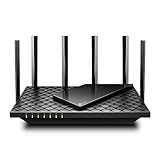
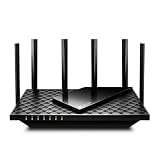
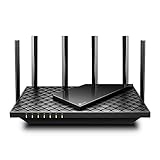
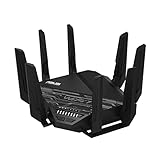
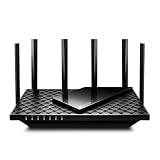
The RT-BE96U is an imposing, serious piece of networking hardware. It’s a large tri-band unit with prominent external antennas designed to blanket sizable homes, and its build quality reflects its flagship status. The standout feature set includes dual 10G ports, one for WAN and one flexible, plus support for the 6GHz band that gives WiFi 7 its extra clean spectrum. ASUS’s AiMesh compatibility lets you expand coverage by pairing it with other ASUS routers, and the generous port selection and cooling-focused chassis mark it as a device built to sit at the center of a demanding network for years.
Performance
This is where the RT-BE96U shines. With tri-band WiFi 7 and aggregate speeds up to 19 Gbps, it delivers the multi-gigabit throughput needed to fully exploit fast fiber connections and 10G-capable devices. The 6GHz band provides congestion-free spectrum for latency-sensitive tasks like competitive gaming and 8K streaming, while the dual 10G ports future-proof wired connections. Coverage is excellent for large homes, and features like MLO (multi-link operation) let capable devices combine bands for greater speed and reliability. ASUS’s robust firmware, including AiProtection security and gaming prioritization, rounds out a genuinely high-end networking experience.
Pros & Cons
- Pro: Blazing tri-band WiFi 7 speeds up to 19 Gbps.
- Pro: Dual 10G ports future-proof wired connectivity.
- Pro: Clean 6GHz band ideal for gaming and 8K streaming.
- Pro: AiMesh expandable with strong security and gaming features.
- Con: Flagship pricing places it among the priciest consumer routers.
- Con: Large footprint demands a dedicated spot.
- Con: Overkill unless you have fast internet and WiFi 7 devices.
Alternatives to Consider
If the RT-BE96U is more than you need, ASUS offers a full WiFi 7 ladder. The RT-BE88U delivers dual 10G ports and up to 7.2 Gbps for a bit less, while the RT-BE86U is a gaming-focused option with a 10G WAN and 6.8 Gbps. The tri-band RT-BE92U with 6GHz support and 9.7 Gbps splits the difference, and the RT-BE58U is the value dual-band pick at 3.6 Gbps for smaller homes. A renewed RT-BE96U can also bring the flagship experience at a friendlier price.
Related Guides
- Best Router For Tmobile Home Internet (2026)
- Best Ethernet For Gaming (2026)
- Router For Streaming (2026)
- Wi-Fi 7 Router Tri Band (2026)
- Wi-Fi 7 Router Tri Band (2026)
Frequently Asked Questions
Do I need WiFi 7 to benefit from the RT-BE96U?
You’ll see the biggest gains with WiFi 7 devices and a fast internet plan, but the router still improves range, stability, and multi-device handling for existing WiFi 6 and 6E gear thanks to its powerful hardware.
What are the 10G ports for?
The dual 10G ports let you connect to multi-gigabit internet and wire up high-speed devices like a NAS or a 10G-equipped PC, ensuring your wired network can keep pace with WiFi 7 speeds.
Is the 6GHz band important?
Yes, for demanding use. The 6GHz band offers clean, uncongested spectrum that’s ideal for low-latency gaming and high-bandwidth streaming, one of WiFi 7’s key advantages over older standards.
Can I expand coverage later?
Absolutely. The RT-BE96U supports ASUS AiMesh, so you can add compatible ASUS routers as nodes to blanket a larger home in seamless, unified WiFi coverage.
Verdict
The ASUS RT-BE96U is a superb flagship WiFi 7 router for power users with fast internet and demanding networks, delivering multi-gigabit speeds, dual 10G ports, and excellent coverage. It’s an investment, and overkill for modest setups, but if you want top-tier performance and future-proofing, it’s one of the best. Those needing less can step down to the RT-BE88U or RT-BE92U without losing WiFi 7’s core benefits.