- Top Pick: Gaming Neon Sign LED Headset Gamer Neon Light Headphone Lightup Game Signs
- Best Value: Keep Out Gamer at Work Sign – Cool Waterproof and Rust-proof Plastic Neon Gaming Posters Signs For Bedroom Door Wall Decor – Gift For Teen Boys, Boyfriend 12" * 8"
- Premium Choice: Vintage Aluminum 12×8 Gaming Room Sign Video Game Wall Decor for Adult Boys
🛒 Best Price Today on Amazon
Prime members get fast, free shipping on everything above, plus member-only deals. New members get a 30-day free trial — cancel anytime.
Is It Time to Upgrade? Here’s How to Know
PC hardware lasts longer than ever in 2026, yet games get more demanding every year. Knowing when to upgrade — and what to upgrade first — saves money and dodges pointless spending. This guide hands you the diagnostic tools and a decision framework so you know exactly when and what to upgrade.
As an Amazon Associate we earn from qualifying purchases at no extra cost to you.



Signs Your PC Needs an Upgrade
1. You Can’t Maintain Target FPS
If your PC can’t hold your target FPS (60 for casual, 144 for competitive) at acceptable settings in your most-played games, that’s a clear upgrade signal. Watch the 1% lows specifically — an 80 FPS average with 1% lows of 25 feels awful. Aim for consistent performance, not just the average number.
2. GPU is Bottlenecking (GPU at 99% Constantly)
If GPU usage sits at 99% and the CPU is below 80%, you’re GPU-limited — drop settings or upgrade the GPU. If the CPU is pegged at 100% and the GPU is under 70%, you’re CPU-limited — sort the CPU path first (close apps, enable HAGS, or upgrade the CPU). Use the MSI Afterburner overlay to spot the bottleneck.
3. Running Out of VRAM
Modern AAA games at 1440p Ultra can top 10–12GB VRAM. If your GPU has 6–8GB and you’re seeing texture streaming issues, reduced-texture-quality warnings, or bad stuttering — VRAM is the bottleneck. That means a GPU upgrade; VRAM can’t be added.
4. Your GPU is More Than 4–5 Years Old
GPU generations bring 30–50% performance gains each. A GTX 1080 Ti (2017) is roughly an RTX 3060 Ti — three generations behind. If you’re still on RTX 20 series or older, moving to RTX 50/RX 9000 series is a transformative jump, DLSS 4/FSR 4 access included.
5. Long Load Times and a Full, Slow Drive
If games take a minute to load, textures pop in late, or your drive sits above 90% full, storage is holding you back. A mechanical HDD or an early SATA SSD can’t feed a modern DirectStorage title fast enough. Moving to an NVMe Gen4 drive is often the single most noticeable upgrade — it doesn’t raise your FPS, but it slashes load screens and eliminates traversal stutter in open-world games.
Upgrade Priority Order
| Priority | Upgrade | Impact | When to Do It |
|---|---|---|---|
| 1st | SSD (if on HDD) | Transformative | Immediately — biggest $ impact |
| 2nd | GPU | Very high | GPU 4+ years old, low FPS |
| 3rd | RAM (to 16–32GB) | High | Under 16GB in 2026 |
| 4th | CPU | Medium-high | CPU bottleneck confirmed |
| 5th | Monitor | Medium | Still on 60Hz, 1080p |
| 6th | Motherboard/Platform | Long-term | CPU upgrade requires new socket |
GPU Upgrade: The Best Investment in 2026
In 2026, if you’re on an RTX 2000/3000 series or RX 5000/6000 series GPU, upgrading to an RTX 5060 Ti or RX 9070 XT gives the best performance-per-dollar bump. These cards deliver 2–3x the performance of 4-year-old hardware, include DLSS 4/FSR 4 upscaling, and pack 16GB VRAM for future games.
Don’t Forget the Power Supply
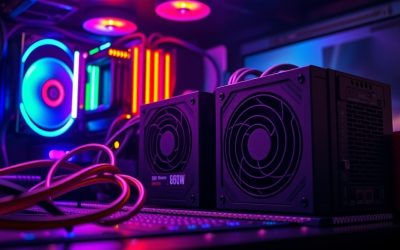
Before dropping a new GPU into an older system, check your power supply. Modern mid-range cards are efficient, but a new GPU may want a specific PCIe power layout or the 12V-2×6 connector. A tired PSU that’s five or six years old can also cause instability under load that looks like a GPU fault. If your unit is below 650W or lacks the right connectors, budget for a quality 80 Plus Gold PSU as part of the upgrade rather than an afterthought.
Upgrade vs. Full Rebuild: The Money Question
The rule of thumb: if a single component swap fixes your bottleneck and the rest of the platform is modern, upgrade. If you’d have to replace the CPU, motherboard and RAM together to move forward, you’re effectively building a new PC — at which point it’s often smarter to save toward a clean AM5 or Intel Core Ultra platform that will accept future upgrades. Selling your old parts while they still hold value offsets a surprising chunk of the cost, so list them before the next generation launches and prices drop.
How often should you upgrade your gaming PC?
Is it worth upgrading individual parts or building a new PC?
When should I upgrade from 1080p to 1440p?
How do I know if my CPU is bottlenecking my new GPU?
Will upgrading my PSU improve gaming performance?
Frequently Asked Questions
What are the signs I need to upgrade my gaming PC?
Key signs include struggling to hit playable frame rates in new games even at low settings, running out of RAM or storage, frequent stutters, long load times, and inability to run current titles due to outdated hardware. If lowering settings no longer produces smooth gameplay in the games you want to play, it is time to upgrade.
What should I upgrade first for better gaming performance?
The GPU usually delivers the biggest gaming performance boost, so it is the first upgrade for most players facing low frame rates. If you have limited RAM or a slow hard drive, adding memory or an SSD helps responsiveness and load times. Identify your bottleneck by monitoring usage during games, then upgrade the component holding you back.
How often should I upgrade my gaming PC?
Most gamers upgrade the GPU every two to four years and do a full platform refresh, meaning CPU, motherboard, and RAM, every four to six years. The right cadence depends on the games you play and your performance expectations. Incremental upgrades like adding storage or RAM can extend a system’s life between larger overhauls.
Is it better to upgrade or build a new PC?
Upgrading is best when a single component, often the GPU, is your bottleneck and the rest of the system remains capable. Building new makes sense when the CPU, motherboard, and RAM are all outdated, since upgrading them together often requires a new platform anyway. Compare the cost of targeted upgrades against a fresh build before deciding.
How do I know if my CPU or GPU is the bottleneck?
Monitor CPU and GPU usage while gaming using overlay tools. If your GPU sits near 100 percent while the CPU is lower, the GPU is the limit, so upgrading it helps. If the CPU is maxed while the GPU is underused, the CPU bottlenecks you. This tells you exactly which component to prioritize upgrading.
Ready to decide? Our #1 pick for 2026 is the 1st.
Live price & availability on Amazon.