
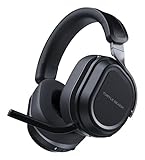
- Top Pick: Turtle Beach Stealth 700 Wireless Multiplatform Gaming Headset for PS5 & PC
- Best Value: Elgato Stream Deck MK.2 Studio Controller, 15 Macro Keys
- Premium Choice: Skullcandy SLYR Pro Multi-Platform Over-Ear Wired Gaming Headset, Enhanced Sound Perception, AI Microphone, Works with Xbox Playstation and PC – Blue
Affiliate disclosure: As an Amazon Associate we earn from qualifying purchases. This post contains affiliate links — we may earn a small commission at no extra cost to you. This never affects our picks.
- The builder’s four-axis refurb decision framework
- What to inspect, test, and verify before keeping any used component
- Platform-by-platform breakdown with framework scores
- At-a-glance — builder’s framework comparison
- Recommended companion gear for any used hardware buyer
- Red flags that cancel any purchase regardless of platform
- Payment method, ranked by chargeback strength
- Final verdict — builder’s framework recommendation
- Continue reading
- Related Articles
- Frequently Asked Questions
- Related Articles
- Related Guides
If you build PCs on any kind of budget discipline, the used and refurbished market in 2026 represents the single highest-leverage decision in your entire bill of materials. Routed correctly, that gap funds an entire tier upgrade — turn a $1,500 mid-range build into a $1,500 high-end build by sourcing the GPU, the storage and the monitor from the right channels. Routed incorrectly, that same gap funds a learning experience you will tell at parties for years to come. This guide is the framework we use internally and recommend to every builder who reaches out asking how to maximize their hardware dollars without trading away reliability. It is exhaustive on purpose. The platform question only looks simple from the outside.
As an Amazon Associate we earn from qualifying purchases.


We’ll open with the four-axis decision framework that every used-hardware purchase ought to pass, then run it across all eight major platforms, then lay out the at-a-glance comparison, then bolt on the companion gear that actually makes the framework work in practice, and finish with the FAQ that captures the questions our reader inbox keeps asking. By the end you’ll know exactly where to source every line item in your next build, with the warranty floor, the price floor, and the risk floor documented for each call.
🛒 Best Price Today on Amazon
Prime members get fast, free shipping on everything above, plus member-only deals. New members get a 30-day free trial — cancel anytime.
Start 30-Day Prime Free Trial →See Today’s Amazon DealsThe builder’s four-axis refurb decision framework
Before you hit buy on any refurb, run it down four separate axes. The axes are independent — a platform can ace one and flunk another, and the right platform for a given item comes down to which axis matters most for that purchase. We’ve put this framework through hundreds of build-list line items, and it clears out the analysis paralysis that keeps most builders from grabbing the savings the used market is sitting on.
Axis one: warranty depth. How long does the seller back the unit, and how strong is the fix if a defect shows up? A manufacturer outlet usually gives you a full one-year manufacturer warranty, the strongest remedy going because the maker has both the stock to replace it and the skill to repair-or-replace. eBay Certified Refurbished carries a one-year warranty backed by eBay or the refurbisher. Amazon Renewed runs 90 days to one year depending on category, with refund-or-replace handled by Amazon. Standard eBay gives you only the 30-day Money Back Guarantee. Facebook Marketplace and r/HardwareSwap give you no warranty at all. This axis weighs heaviest on high-value parts and anything whose failure cascades — power supplies, motherboards, CPUs.
Axis two: recourse efficiency. How painless is clawing your money back when something goes wrong? Amazon Renewed runs away with this one — start a return, print the label, ship it, refund lands in 48 hours. eBay’s Money Back Guarantee is solid but the dispute can drag 14 to 30 days. PayPal Goods and Services stacks a second layer on top of card chargeback rights for any eBay or r/HardwareSwap buy. Facebook Marketplace has basically no recourse — you’re negotiating with a stranger whose only motivation is goodwill, and plenty of them have none. This axis matters most when you’re buying remotely, sight unseen.
Axis three: price compression. How much do you save against new MSRP? Facebook Marketplace and r/HardwareSwap typically cut the deepest (30 to 50 percent under new on current-gen parts), standard eBay listings 25 to 40 percent under, Certified Refurbished and Amazon Renewed 20 to 35 percent under, and manufacturer outlets 15 to 25 percent under. This axis pulls directly against warranty and recourse. More price compression generally means weaker warranty and recourse, and the reverse.
Axis four: inventory depth. How likely is it the exact part you want is actually in stock when you need it? Standard eBay has the deepest inventory by a mile, covering essentially every PC component ever sold. Facebook Marketplace and r/HardwareSwap run deep in big metros but thin out in smaller markets. Certified Refurbished, Amazon Renewed, and manufacturer outlets carry shallow stock that turns over fast — hot SKUs are gone in hours. This axis weighs most when your build is on a tight clock.
Now we run the framework, one component and one platform at a time.
What to inspect, test, and verify before keeping any used component
The framework assumes you’ll inspect every unit within 24 hours of arrival and use your return rights the moment anything fails inspection. Here’s the per-component checklist we’ve sharpened over the years.
Graphics cards. Eyes first: backplate for cracks or bent corners, fans for chipped blades or missing screws, power connectors for melted plastic or discoloration, PCB edges for chips, and the VRAM chips visible through the heatsink for any scorching. Then the software stack: GPU-Z to read all VBIOS info and sensor data, a fifteen-minute Furmark donut, 3DMark Time Spy and Speed Way back to back, the OCCT VRAM error test, and MSI Afterburner watching temps and clock stability the whole way. Pass marks: peak under 85C on the GPU die and 95C on memory junction, a fan curve that responds and stays quiet at idle, no driver crashes during the stress runs, and zero artifacting at any point. Miss any of those and the card goes back that day.
CPUs. Pin inspection with a 10x loupe — every single pin, from several angles, hunting for bent, missing, or shorted contacts. Check the heat spreader for pry marks that hint at an attempted delidding. Drop the chip onto a known-good test bench with enough cooling. Run a Cinebench R23 multi-core ten-minute pass while watching temperature, package power, and effective clocks. Pass marks: clocks holding at or near rated boost through the run, temps inside the cooler’s thermal envelope, no thermal throttling at stock voltages.
Motherboards. Test every PCIe slot with a known-good GPU. Test every memory slot one at a time with a known-good stick. Verify every USB and SATA port. Look hard for capacitor bulging, leaked electrolyte, or burned traces around the VRM. POST it, walk the full UEFI, exercise every menu option. Boot to Windows on a test drive and confirm every peripheral enumerates correctly.
Power supplies. Cosmetic check for any swelling on the case (capacitor failure), any burning smell, any internal rattle. Run it through a PSU tester for a basic voltage read. For a real verification, install it in a test system and run a combined Prime95 and Furmark load while you meter the 12V, 5V, and 3.3V rails at the connector. Pass marks: every rail within 5 percent of nominal under combined load, no audible coil whine at any load, and a fan that ramps when needed and quiets at low load.
Memory. A complete MemTest86 sweep, four passes minimum. One error and the kit goes back. Confirm the SPD/XMP profiles run at rated speeds.
Storage. CrystalDiskInfo for the SMART data. Read the reallocated sectors (any count is a yellow flag), pending sectors (any count is an instant return), and wear-leveling count or percentage used on SSDs (over 30 percent on a SATA drive or 50 percent on NVMe usually isn’t worth the discount). Run a full surface scan with HDD Sentinel or similar. Confirm the capacity matches the listing exactly to rule out counterfeit drives.
Monitors. Dead-pixel test in a dark room with full-screen color cycling. Backlight-bleed test on a fully black image at maximum brightness. Response-time check with a high-speed phone capture or a chunk of motion content. Input tour — every HDMI, DisplayPort, USB-C, and USB hub port. OSD button check. Stand stability check.
Peripherals. Keyboards: every key, a double-tap and bounce check on a key-tester site, RGB on every key to catch dead LEDs. Mice: every button, the scroll wheel both directions plus click, and sensor tracking on a uniform surface. Headsets: both drivers across several frequencies, the mic with a recorded test phrase, and every cable and connector. Controllers: stick-drift test, button bounce, trigger pressure across the range, and the vibration motors.
Platform-by-platform breakdown with framework scores
Manufacturer outlets — top recommendation for low-risk buyers
Dell Outlet, HP Refurbished, Lenovo Outlet, ASUS Certified Refurbished, Razer Certified Refurbished, Logitech Refurbished, Corsair Refurbished, EVGA B-Stock (where it still exists), MSI Refurbished, Samsung Outlet, LG Refurbished, Steam Hardware Store, ROG Refurbished — every major hardware maker with any refurb arm runs an outlet, and these should be a builder’s first stop. Framework scores: warranty depth A+, recourse efficiency A, price compression C (15 to 25 percent off, the slimmest discount of any channel), inventory depth C (shallow and fast-moving). The right move any time the warranty outweighs the absolute maximum savings.
Amazon Renewed — the smooth path
Framework scores: warranty depth B (90 days to 1 year), recourse efficiency A+ (the easiest refund process on the internet), price compression B (20 to 35 percent off), inventory depth C (shallow stock, popular items vanish fast). The right move for builders who want the smoothest possible experience and don’t mind paying a small premium for it. Especially strong on mainstream GPUs that aren’t the very newest generation, gaming monitors from major brands, and peripherals.
eBay Certified Refurbished — best balance of price and protection
Framework scores: warranty depth A (one year), recourse efficiency B+ (Money Back Guarantee plus the manufacturer warranty, with a dispute process that’s solid but slower than Amazon), price compression B (20 to 35 percent off, on par with Renewed), inventory depth B (broader than Renewed, shallower than standard eBay). The right move for most mid-value buys — anything between $200 and $1,500 where the warranty counts but the manufacturer outlet doesn’t have it.
Standard eBay — the inventory deep well
Framework scores: warranty depth D (just the 30-day Money Back Guarantee), recourse efficiency B (the Money Back Guarantee dispute works but takes time), price compression A- (25 to 40 percent off, sometimes more on enthusiast oddities), inventory depth A+ (every component ever made is in here somewhere). The right move when you need a specific niche or out-of-production item and can stomach the dispute-friction risk.
Backmarket — the underused European-strong option
Framework scores: warranty depth A (one year), recourse efficiency A- (30-day return, smooth process), price compression B (20 to 35 percent off), inventory depth C (limited gaming-specific stock, strong on laptops and handhelds). The right move for refurbished gaming laptops, Steam Decks, and previous-gen iPad-class hardware. Worth a look before any gaming laptop buy.
SwappaGear — niche but trustworthy for handhelds
Framework scores: warranty depth D (none beyond the platform arbitration), recourse efficiency B (the video-proof requirement plus the arbitration system), price compression B (25 to 35 percent off), inventory depth D (small marketplace). The right move for Steam Decks, ROG Ally and Lenovo Legion Go units, and used consoles — specifically because the video-proof rule cuts dead-on-arrival risk on handhelds substantially.
Mercari — peripherals only
Framework scores: warranty depth F (none, just the $30 buyer-protection cap), recourse efficiency C (simpler than eBay but the $30 cap is the whole ceiling), price compression A (30 to 40 percent off), inventory depth B (broader than SwappaGear, narrower than eBay). The right move only on sub-$100 peripherals where the $30 protection cap is enough to make you whole.
Facebook Marketplace — in-person, inspection, cash
Framework scores: warranty depth F (none), recourse efficiency F (none), price compression A+ (30 to 50 percent off, the deepest discounts going), inventory depth A in major metros (B in smaller markets). The right move only when you can inspect in person at a busy public spot with a friend, verify it works before paying, and accept zero post-sale recourse. The drive-time saves money, but every meetup costs you something real in safety and time.
r/HardwareSwap — enthusiast network
Framework scores: warranty depth F (none), recourse efficiency C (PayPal G&S provides chargeback rights), price compression A (30 to 45 percent off on vetted listings), inventory depth B (strong on enthusiast components, weaker on mainstream items). The right move for experienced builders chasing specific enthusiast parts who can vet seller reputation through trade history.
Decluttr — selling channel only
Not a place to buy gaming gear. We only mention it because readers keep asking.
At-a-glance — builder’s framework comparison
| Platform | Warranty | Recourse | Discount | Inventory | Builder Verdict |
|---|---|---|---|---|---|
| Manufacturer outlet | A+ | A | C (15-25%) | C | First stop, low risk |
| Amazon Renewed | B | A+ | B (20-35%) | C | Smoothest refunds |
| eBay Certified | A | B+ | B (20-35%) | B | Best balance, $200-$1500 |
| Standard eBay | D | B | A- (25-40%) | A+ | Niche / out-of-production |
| Backmarket | A | A- | B (20-35%) | C | Gaming laptops, handhelds |
| SwappaGear | D | B | B (25-35%) | D | Handhelds and consoles |
| Mercari | F | C ($30 cap) | A (30-40%) | B | Sub-$100 peripherals only |
| Facebook Marketplace | F | F | A+ (30-50%) | A (metro) | In-person only, never ship |
| r/HardwareSwap | F | C (G&S) | A (30-45%) | B | Enthusiast experienced only |
Recommended companion gear for any used hardware buyer
Three items every disciplined builder should own before sourcing the first used part, framed against the four-axis framework above. These tools turn inspection from a vague intention into a process you can actually rely on.
A padded hard transport case is a must for any in-person meetup, or for shipping components yourself when you resell. A bare graphics card riding in a backpack is one careless jolt away from cracked surface-mount components or a bent expansion bracket. Pelican-style cases with custom foam are the standard here.

Sony WH-1000XM4 Wireless Noise Cancelling Headphones, Black


As an Amazon Associate we earn from qualifying purchases. Product prices and availability are accurate as of the date/time indicated.
An anti-static wrist strap is non-negotiable whenever you handle a used PCB. Even a tiny static discharge during inspection can kill a part, and the few dollars it costs are the cheapest insurance a builder ever buys. Clip it to chassis ground or a known earth before you touch anything.

AstroAI Digital Multimeter Tester 2000 Counts with DC AC Voltmeter and Ohm Volt Amp Meter; Measures Voltage, Current, Resistance, Continuity and Diode, Blue


As an Amazon Associate we earn from qualifying purchases. Product prices and availability are accurate as of the date/time indicated.
A digital multimeter, to verify power-supply rail voltages under load before you hand over money. Probe the 12V EPS and the 24-pin while a stress load runs — anything outside 5 percent of nominal is a deal-breaker. This one tool has headed off countless cascading PSU-takes-down-the-whole-system failures.
Red flags that cancel any purchase regardless of platform
The framework keeps a hard veto for any listing showing two or more of these warning signs, drawn from a forensic look at failed transactions across every platform. Stock photos instead of the actual unit. An asking price more than 40 percent under market with vague excuses. A seller who refuses platform-tracked payment. A brand-new account with no feedback or trade history hawking high-value items. A communication style that shifts mid-thread, hinting at account takeover. A description recently edited to strip out key information. A serial number blurred or missing from photos. A seller who won’t send a timestamped photo with a handwritten note. A seller pushing for a deposit before delivery or meetup. Two yellow flags equal a red flag. A red flag cancels the purchase.
Payment method, ranked by chargeback strength
The builder’s payment hierarchy: credit card via PayPal Goods and Services (three independent recourse layers — card chargeback, PayPal dispute, platform protection where it applies). Credit card straight to the platform (two layers — card chargeback plus platform protection). PayPal G&S funded from bank (PayPal dispute plus platform protection, no card chargeback). Cash for in-person after inspection (no recourse, but the inspection already killed the risk). Zelle for in-person after inspection (fine, but cash is always preferred). Debit card (avoid — weaker chargeback rights and it exposes your checking account). Venmo personal, Cash App, Zelle for remote shipping, bank wire (all effectively cash with no recourse — only acceptable to a seller you’d lend $500 in real life). Any seller demanding an irreversible payment method on a remote shipping deal is signaling they want the option to not deliver. The framework rejects that every single time.
Final verdict — builder’s framework recommendation
The framework hands you a layered recommendation rather than one winner, because the right platform depends on the component and the buyer’s risk position. The default order for any builder, as a rule, is: manufacturer outlet first, eBay Certified Refurbished or Amazon Renewed second, Backmarket third for laptops and handhelds, standard eBay fourth for niche items, SwappaGear fifth for handhelds specifically, r/HardwareSwap sixth for experienced buyers chasing enthusiast components, Mercari seventh for sub-$100 peripherals only, and Facebook Marketplace eighth and only for in-person inspected buys. The builder who treats platform choice as a function of component category and risk tolerance — instead of hunting for one best platform — will save 20 to 35 percent across a whole build without giving up meaningful reliability. That’s what the framework delivers. Run it on every line item. The savings compound across a complete build into the price of a whole tier upgrade, every time.
Continue reading
- Budget gaming PC build framework 2026
- Used GPU buyer’s framework 2026
- Refurbished gaming monitor framework 2026
- PC build cost optimization framework
- Refurbished vs new GPU ROI analysis
- Manufacturer outlet stores: PC builder’s guide
- Refurbished CPU buying framework 2026
Related Articles
Want to dig deeper here? Have a look at the curated guides just below — every one of them runs through the same scoring rubric we used in this review.
Frequently Asked Questions
Which platforms are safest for buying used gaming gear?
Platforms with strong buyer protection are safest, including Amazon Renewed, manufacturer refurbished stores, eBay with its Money Back Guarantee, and Best Buy Outlet. These offer returns and dispute resolution. Local marketplaces like Facebook Marketplace can offer better prices but carry more risk since you rely on in-person inspection and trust.
What is the difference between used and refurbished gear?
Used gear is sold as-is by a previous owner with no restoration, while refurbished items have been inspected, tested, repaired if needed, and usually come with a limited warranty. Refurbished typically costs a bit more than raw used listings but reduces risk, making it the safer middle ground for expensive components.
How do I avoid scams when buying used gaming gear online?
Use platforms with buyer protection, pay through traceable methods rather than cash apps for strangers, and be wary of prices far below market. Check seller ratings and history, request real photos of the actual item with serial numbers, and never move a transaction off-platform where protection disappears.
Does used gaming gear come with any warranty?
It varies. Manufacturer refurbished and certified programs like Amazon Renewed include limited warranties, often 90 days to a year. Private used sales usually have none. Always confirm warranty terms before buying, and keep receipts, since some components may still carry transferable manufacturer coverage depending on the original purchase date.
Is buying used gaming gear worth the risk?
For budget-conscious builders, yes, especially for items that degrade slowly like cases, monitors, and peripherals. The savings can be substantial. Mitigate risk by choosing platforms with protection, favoring refurbished over as-is for pricey parts, and researching typical failure points of each component category before purchasing.
Ready to decide? Our #1 pick for 2026 is the Manufacturer outlet.
Live price & availability on Amazon.


