- Top Pick: ASUS ROG Strix G18 RTX 5060 Gaming AI Laptop, 18" WQXGA 240Hz 3ms 100% DCI-P3 Nebula Display, 24-Core Intel Ultra 9 275HX, 32 GB DDR5 RAM, 1 TB SSD, 4-Zone RGB Backlit KB, Wi-Fi 7, Windows 11 Pro
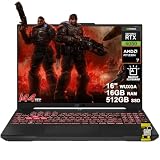
- Best Value: ASUS TUF Gaming A16 Laptop 16" WUXGA IPS 144Hz AMD 8-core Ryzen 7 170 16GB RAM 512GB SSD GeForce RTX 4050 RGB Backlit Type-c AI Noise Cancelation Win11 ICP Hub
- Premium Choice: NIMO 15.6 Gaming-Creator-Laptop, 8-Core AMD Ryzen 7 8745HS 16GB RAM 1TB SSD (Beat i7-1360P up to 4.9GHz) Radeon 780M, FHD 100W Fast PD for Video Editing, AI Tasks & Remote Streaming, 2-Yr Warranty
Brand matters more in gaming laptops than in almost any other PC category, because the same Nvidia GPU can be configured, cooled, and supported in wildly different ways depending on who built the chassis around it. ASUS ROG, Lenovo Legion, and Acer Predator currently dominate on engineering and value, while Razer and Alienware compete on build quality and Alienware alone offers genuinely broad service coverage. Below is how each major brand’s flagship stacks up, and where each one’s weaknesses show.
As an Amazon Associate I earn from qualifying purchases.
Each row is the brand’s representative shipping model in 2026, chosen because it best illustrates that manufacturer’s design philosophy.
| Product | Key Spec | Best For | Rating |
|---|---|---|---|
| ASUS ROG Zephyrus G16 | RTX 5080 Laptop, 16″ OLED 240Hz, 4.3 lb | Best all-round engineering | 4.7 / 5 |
| Lenovo Legion Pro 7i | RTX 5080 Laptop 175W, 16″ 2560×1600 240Hz | Best performance per dollar | 4.6 / 5 |
| Acer Predator Helios Neo 16 | RTX 5070 Ti Laptop, 16″ 165Hz IPS | Best mid-range value | 4.4 / 5 |
| Alienware 16 Area-51 | RTX 5080, vapor chamber, 16″ 300Hz | Best cooling and support | 4.5 / 5 |
| Razer Blade 16 | RTX 5090 Laptop, CNC aluminum unibody, OLED | Best build quality | 4.4 / 5 |
| MSI Raider 18 HX | RTX 5090 Laptop, 18″ 4K 120Hz, dual fan | Best desktop replacement | 4.3 / 5 |
| HP Omen 16 | RTX 5070 Laptop, 16.1″ 1600p 240Hz | Quietest fan tuning | 4.3 / 5 |
| Gigabyte Aorus 16X | RTX 5070 Ti Laptop, 16″ 165Hz, aggressive pricing | Best discount hunting | 4.1 / 5 |
🛒 Best Price Today on Amazon
Prime members get fast, free shipping on everything above, plus member-only deals. New members get a 30-day free trial — cancel anytime.
How to choose between gaming laptop brands
Start by separating engineering quality from marketing tier. Every manufacturer sells a budget line and a premium line, and the gap between them within a single brand is usually larger than the gap between brands at the same price. ASUS TUF and ASUS ROG are not comparable machines; neither are Lenovo LOQ and Lenovo Legion. Shop by product line, not by logo.
Then compare three concrete things. First, total graphics power — Lenovo and MSI publish generous TGP figures, Razer and ASUS run their thin models more conservatively. Second, serviceability: check whether the bottom panel comes off with standard screws, whether there are two SO-DIMM slots and two M.2 slots, and whether the manufacturer publishes a service manual. Lenovo and Acer score well here; Razer’s soldered RAM does not. Third, warranty and parts availability in your country, because a two-week turnaround beats a one-week turnaround only if the depot actually stocks your model’s parts.
Software matters more than buyers expect. ASUS Armoury Crate, Lenovo Vantage, and Alienware Command Center all control fan curves and power profiles, and a bad utility can leave real performance on the table. Read owner forums for the specific model before buying, not just professional reviews.
Good gaming laptop brands for overall reliability
Lenovo’s Legion line has the strongest recent record for build consistency and thermal design, with generous GPU power limits, dual upgradeable RAM slots, and a keyboard that outclasses most competitors. ASUS ROG is close behind and generally better on display quality. Both companies iterate carefully rather than redesigning chassis every year, which is why their failure rates trend low. For a deeper look at how these machines are cooled, read our laptop thermal design explainer.
Good gaming laptop brands for premium build quality
Razer remains the benchmark for materials and fit and finish. The Blade 16’s CNC-milled aluminum unibody feels closer to a MacBook Pro than to a typical gaming machine, and its per-key RGB and trackpad are the best in the category. The costs are real: soldered memory, higher prices, and thermals that constrain sustained performance relative to thicker rivals. Buy Razer if the machine travels with you daily and you value how it looks and feels.
Good gaming laptop brands for value shoppers
Acer and Gigabyte compete almost entirely on price, and both regularly undercut ASUS and Lenovo by $200 to $300 at the same GPU tier. The Predator Helios Neo line in particular delivers near-flagship frame rates with a plainer chassis and a merely adequate display. Gigabyte’s Aorus machines go further on discounts but have weaker software and support. Our gaming laptop deal tracking guide explains when these prices bottom out during the year.
Good gaming laptop brands for customer support
Alienware, as part of Dell, has by far the broadest service network and the most useful premium support options, including on-site repair in many regions. That is a genuine differentiator when a machine costs $2,500 and you depend on it. ASUS and Lenovo offer competent but more variable regional service, while Razer’s support is centralized and can mean long shipping turnarounds.
Good gaming laptop brands for thin and light machines
ASUS effectively created this segment with the Zephyrus G14 and still leads it. The current G14 and G16 pack full-power mobile GPUs into chassis under 4.5 pounds without the compromises that used to define ultraportable gaming. Razer’s 14-inch Blade is the premium alternative, and Alienware’s x-series is worth a look if you want vapor chamber cooling in a slim body. See our portable gaming laptop comparison for measured weights and battery figures.
Good gaming laptop brands for desktop replacements
MSI dominates the 18-inch category, where thickness stops being a constraint and cooling capacity becomes the whole point. The Raider 18 HX runs an RTX 5090 Laptop GPU at its full power ceiling with fan noise that would be unacceptable in a thinner machine but is tolerable in a permanent desk setup. Buyers considering this class should honestly ask whether a desktop plus a cheap ultrabook would serve them better.
Good gaming laptop brands to be cautious about
Be careful with any brand’s entry-level sub-line — Acer Nitro, MSI Cyborg, Lenovo LOQ, ASUS TUF — where cost cutting shows up as dimmer panels, single-channel memory, and reduced GPU power limits. These are not bad machines, but they should be judged against each other rather than against the flagship line that shares the badge. Our entry-level gaming laptop guide compares them directly, and the spec sheet red flags article lists what to refuse at any price.
Frequently Asked Questions
Which gaming laptop brand is the most reliable?
Lenovo Legion and ASUS ROG consistently show the lowest reported failure rates among enthusiast machines, largely because both companies reuse proven chassis designs across generations rather than redesigning annually. Reliability is also strongly influenced by how the machine is used: keeping vents clear, avoiding soft surfaces, and repasting the heatsink around year three matter more than the badge on the lid.
Are Razer gaming laptops worth the premium?
They are if portability and build quality are your top priorities and you have the budget. A Blade 16 costs roughly 25 to 35 percent more than a Legion Pro with similar internals, and it will generally deliver slightly lower sustained performance because the chassis is thinner. What you get in exchange is a machine that looks and feels professional in an office and weighs noticeably less.
Is Alienware still a good gaming laptop brand?
Yes, though its position has changed. Alienware no longer competes on price and its chassis are heavy, but the current Area-51 machines have genuinely excellent vapor chamber cooling and the best support infrastructure in the category. It is a strong choice for buyers who want a machine serviced quickly and who play long sessions where sustained thermals matter more than weight.
Do gaming laptop brands matter for warranty claims?
They matter enormously. A one-year warranty from a brand with local depots is worth more than a two-year warranty that requires international shipping. Before buying, check whether the manufacturer has authorized service in your country, whether accidental damage coverage is available, and whether opening the bottom panel to upgrade RAM voids anything — in most regions it legally does not, but policies vary.
Which brand offers the best gaming laptop displays?
ASUS and Razer lead on panel quality, both shipping factory-calibrated OLED options with full DCI-P3 coverage and high refresh rates. Lenovo’s Legion panels are excellent IPS displays with strong brightness but fewer OLED options. Budget lines from every manufacturer typically use 250 to 300-nit panels with roughly 60 percent sRGB coverage, which looks noticeably washed out beside a premium screen.
As an Amazon Associate we earn from qualifying purchases at no extra cost to you. Product prices and availability are accurate as of the date shown and are subject to change.



Ready to decide? Our #1 pick for 2026 is the ASUS ROG Zephyrus G16.
Live price & availability on Amazon.