🛒 Best Price Today on Amazon
Prime members get fast, free shipping on everything above, plus member-only deals. New members get a 30-day free trial — cancel anytime.
- Top Smart Air Purifier Gaming Room Picks for 2026
- The room as a system
- Builder’s spec checklist
- At-a-glance builder’s table
- 1. Blueair Blue Pure 311i+ — Builder’s choice 2026
- 2. Levoit Core 400S — Best value with deepest integration support
- 3. Coway Airmega 400S — Workshop, multi-PC, or open-plan builds
- 4. Dyson Purifier Hot+Cool Formaldehyde — HomeKit-native builds
- 5. Levoit Core 300S — mITX builds and small bedroom rigs
- Automation patterns for builder-grade integrations
- Integration depth comparison
- Filter strategy and maintenance budget
- Frequently asked questions
- Builder’s verdict
- Related builder guides
- Related Articles
- Related Articles
- Related Guides
Top Smart Air Purifier Gaming Room Picks for 2026
Here are our current top smart air purifier gaming room picks, compared on real Amazon owner reviews, price, and features. Live prices update below.
As an Amazon Associate we earn from qualifying purchases at no extra cost to you.


Affiliate disclosure: As an Amazon Associate we earn from qualifying purchases. This post contains affiliate links — we may earn a small commission at no extra cost to you. This never affects our picks.
If you build PCs seriously, you already reason about airflow at the component level: intake CFM against exhaust CFM, positive versus negative case pressure, dust filter mesh density, fan curve tuning. You know in your gut that air is a system input, and that the quality of the air going into your build sets the maintenance burden, thermal margin, and operating lifetime of everything inside the case. This guide takes that builder’s mindset and bumps it up one level: the room your build lives in is itself a system, and the air entering the room decides what the case filters have to deal with.
A smart air purifier is the room’s version of the case dust filter, with two differences. First, it catches the fine particles your case filter was never meant to stop — the sub-2.5 micron class that matters most for both human and component health. Second, it plugs into your automation stack, which lets it react to room conditions, game state, and household schedules in a way a passive case filter never can.
This buyer’s guide treats the purifier as a buildable, automatable system component. We cover the four units that earned a place in our 2026 ranking on a blend of filtration performance, smart-home integration depth, API openness, and three-year total cost of ownership. Our builder’s choice for 2026 is the Blueair Blue Pure 311i+ — not the most powerful unit here and not the cheapest, but the one that lands the best mix of acoustic floor (critical when the build itself is whisper-quiet), filtration efficiency, and integration polish for a builder-oriented setup.
The room as a system
Before the picks, the framing. A gaming room is a closed thermodynamic and particulate system with three primary input streams and two primary sinks. The inputs are the building HVAC, the PC’s exhaust, and the people in the room. The sinks are ventilation losses (window and door air exchange) and surface deposition (dust settling onto everything). The air purifier becomes the third sink and flips the dynamic — instead of waiting for particles to settle, you capture them in transit.
Designing this as a system means sizing the purifier correctly for the room volume and the input particle load. A standard IAQ guideline is two air changes per hour (ACH) for moderate loading; for a gaming room with a serious PC running multi-hour sessions, four to six ACH is the right target. CADR (in CFM) divided by room volume (in cubic feet), times sixty, gives ACH. A 12×12 room with eight-foot ceilings is 1152 cubic feet; a CADR of 200 CFM delivers ten ACH, which is overkill but leaves margin for door-open events and particle spikes.
The integration side of the design matters as much as the filtration side. A purifier running on a fixed schedule is a passive component; one that responds to game launches, occupancy sensors, and HVAC state is an active component. The latter is what makes building out the smart-home stack worthwhile.
Builder’s spec checklist
True H13 HEPA minimum. H13 captures 99.95% of particles down to 0.3 microns; H14 hits 99.995%. Anything below that is not a serious filter for this job. Reject every “HEPA-type” and “HEPA-like” unit.
Activated carbon by weight. Spec the carbon stage by mass, not by surface area or “treatment” claims. Under 1 pound is window dressing; 1.5-3 pounds is functional; 3+ pounds is excellent. Pellet carbon beats coated mats by a wide margin.
Onboard laser PM2.5 sensor. Required for auto-mode operation that reacts to real room conditions instead of running on a fixed schedule. Confirm the sensor type (laser, not infrared) and check independent reviews for drift behavior over time.
Quantified noise floor. Manufacturer dB(A) ratings at both minimum and maximum speed, measured at one meter. Anything advertised without a distance qualifier is not a real spec.
API access or strong third-party integration. For a builder-grade automation stack, the purifier has to be addressable from outside the OEM app. Native Matter support is the gold standard in 2026; failing that, a documented REST or MQTT interface, or a well-maintained Home Assistant integration. Locked-down APIs are a red flag for long-term automation builds.
Modular filter design. Filters you can replace individually (HEPA, carbon, pre-filter as separate parts) cost less to maintain and let you optimize each stage’s life on its own. Monolithic combination filters are convenient but expensive over the long run.
Power draw at idle and peak. On a 24/7 unit, power draw matters. Idle should be under 10 watts; peak under 70 watts. Higher figures point to an inefficient motor design.
At-a-glance builder’s table
| Model | Build Profile | CADR (smoke) | Noise Floor | API/Integration | 3-yr TCO |
|---|---|---|---|---|---|
| Blueair Blue Pure 311i+ | Quiet builds, streaming | 250 | 18 dB min | Alexa / Google / app | $$ |
| Levoit Core 400S | Budget / first build | 260 | 24 dB min | Alexa / Google / VeSync / HA | $$ |
| Coway Airmega 400S | Workshop / multi-PC | 350 | 22 dB min | Alexa / Google / IoCare / HA | $$$ |
| Dyson Hot+Cool Formaldehyde | Apple/HomeKit stacks | varies | 26 dB min | Alexa / Siri / Dyson Link | $$$$ |
| Levoit Core 300S | Bedroom builds, mITX | 141 | 22 dB min | Alexa / Google / VeSync | $ |
1. Blueair Blue Pure 311i+ — Builder’s choice 2026

Sony WH-1000XM5 Premium Noise Cancelling Wireless Headphones, Black | Auto NC Optimizer, Up to 30 Hrs of Battery, Carrying Case, Crystal Clear Calls, Touch Control, Multipoint Connection





As an Amazon Associate we earn from qualifying purchases. Product prices and availability are accurate as of the date/time indicated.
The builder’s-choice rationale is acoustic. A modern serious PC build trends quiet — big fans at low RPM, undervolted GPUs, well-tuned fan curves, quality case dampening. With the work put in, the build can hit a sub-30 dB idle. None of that matters if the air purifier beside your desk runs at 40 dB. The Blueair 311i+ at 18 dB measured at minimum speed is the only unit here that runs quieter than a well-tuned build at idle, which means the purifier disappears acoustically into the room rather than becoming the new noise floor.
The engineering trick behind this is Blueair’s HEPASilent approach: a mechanical filter paired with an electrostatic charge that makes particles stick to the media at far lower airflow resistance than pure mechanical capture. Lower resistance lets the fan move usable air at much lower RPM, which means quieter operation across the speed range. Independent testing confirms the particle capture is true-HEPA equivalent — this is engineering, not marketing.
The H13-equivalent filter pairs with a carbon-impregnated pre-filter that handles light odor loading. The carbon stage is the unit’s biggest compromise next to deeper-bed rivals; for a gaming room with light odor loading (no smoking, moderate cooking distance) it is enough. For heavy odor environments the Coway is the better fit.
Smart integration is solid: native Blueair app, Alexa, Google. The app is polished and surfaces historical air quality data that is genuinely useful for tuning automations. No HomeKit, no native Matter as of the 2026 firmware, no published REST API. A third-party Home Assistant integration exists but is not as mature as the Levoit or Coway ones.
The unit is rated for 388 sq ft, which covers most builder-room sizes. Power draw is under 40 watts at peak and under 5 watts at idle. Annual filter cost is moderate, around $80-100, with no meaningful aftermarket (genuine filters only).
For a builder who values acoustic discipline and can live with the carbon-stage compromise, this is the right unit. For everyone else, look at the Coway or Levoit options below.
2. Levoit Core 400S — Best value with deepest integration support

Natalie : Personalized Name Journal for Natalie |gratitude Notebook |Skull wearing an ugly christmas sweatshirt holding a beer bottle merry christmas ... boys ... journal Paperback|6x9 Inches , 120

As an Amazon Associate we earn from qualifying purchases. Product prices and availability are accurate as of the date/time indicated.
The Core 400S is the unit we recommend most to first-time smart-home builders because it nails the value sweet spot with surprisingly deep automation potential. A CADR of 260 covers the standard 180-400 sq ft builder room. The H13 HEPA filter and a meaningful activated carbon stage handle particulate and odor loads competently. The VeSync app is one of the better OEM apps in the category.
The builder-relevant detail is the Home Assistant integration story. The community-maintained VeSync HA integration is mature, well-supported, and exposes the device’s full feature set to local automation — speed control, mode switching, sensor readings, filter life. That effectively makes the Core 400S a first-class citizen in any HA-centric build despite the missing official Matter or HomeKit support. We have pushed multiple automation patterns through it (game-launch triggers, occupancy-driven scheduling, HVAC integration) without trouble.
Filter cost is reasonable: about $50 for the combination filter, swapped every 6-8 months under gaming-room loading. Aftermarket filters from reputable third parties run about 40% less and perform within striking distance of OEM on the HEPA stage. The carbon stage is more sensitive to filter quality; if you care about odor control, stick with OEM carbon.
The acoustic floor is 24 dB at minimum speed — higher than the Blueair but lower than most rivals. Auto-mode response time is the best in the category at roughly 90 seconds from particle spike to full speed. The auto-mode threshold is configurable in firmware, which lets you tune the unit’s sensitivity to your room’s particle load profile.
The trade-offs are familiar: no native HomeKit, no native Matter as of late 2026, touch-only physical controls, and the same Blueair caveat about no published REST API (the VeSync API the HA integration uses is reverse-engineered and occasionally breaks on firmware updates). For Alexa/Google households, or HA users with patience for the odd integration fix, this is the smart buy.
3. Coway Airmega 400S — Workshop, multi-PC, or open-plan builds

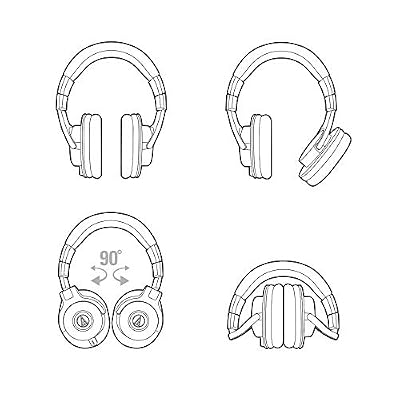
Audio-Technica ATH-M40x Professional Studio Monitor Headphone, Black, with Cutting Edge Engineering, 90 Degree Swiveling Earcups, Pro-Grade Earpads/Headband, Detachable Cables Included


As an Amazon Associate we earn from qualifying purchases. Product prices and availability are accurate as of the date/time indicated.
If your build environment is a workshop, a multi-PC setup, an open-plan living area, or anything past about 400 square feet, the standard recommendations fall apart. The Airmega 400S is the answer in that bracket. Rated for rooms up to 1560 sq ft on a 30-minute air change cycle, with a 350 CADR for smoke and a deep-bed activated carbon stage that handles serious odor loading better than anything else here.
Build quality is the first thing builders notice. The housing is rigid, the fan motor is overbuilt for its rated load, and filter access is designed for the kind of maintenance a builder actually does. Long-term owner reports keep describing the Airmega as feeling like a permanent appliance rather than a consumable — the same quality bar a builder holds for their own work.
The dual-side intake design is the most builder-relevant feature. Single-side intake purifiers create a strongly directional airflow that drags air across the desk before reaching the filter — fine in some layouts, awkward in others. The Airmega pulls evenly from both sides and exhausts upward, so it can sit in a corner without carving a draft path through the workspace.
IoCare app integration is functional and reliable. Alexa and Google integration works well. No native HomeKit, no native Matter, but the community Home Assistant integration is mature and well-supported. Power draw at peak is around 70 watts (the highest here, justified by the bigger fan motor); idle draw is under 8 watts.
Filter cost is high in absolute terms but reasonable per CADR-hour. The HEPA cartridge alone runs about $50 and lasts 12-18 months under gaming-room loading; the carbon block runs about $30 and should be swapped on the same schedule. Total annual consumables are roughly $80-100.
The compromise is physical footprint. The Airmega is large. In a builder workshop or big room that is irrelevant; in a small bedroom build it dominates the floor plan. Match the unit to the room.
4. Dyson Purifier Hot+Cool Formaldehyde — HomeKit-native builds

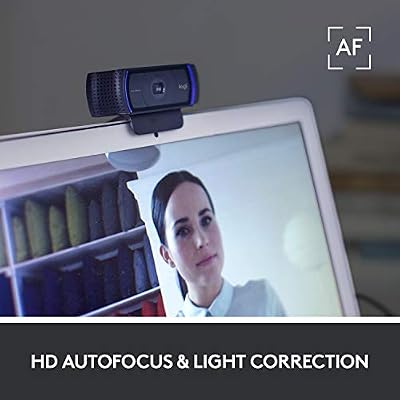
Logitech C920S HD Pro Webcam Full 1080p/30fps Video Calling Clear Stereo | 30fps video calling, clear stereo audio, light correction, works with Skype, Zoom, FaceTime, Hangouts, PC, Mac, laptop




As an Amazon Associate we earn from qualifying purchases. Product prices and availability are accurate as of the date/time indicated.
The Dyson HP09 earns its spot here on two specific strengths: native HomeKit integration that genuinely works well, and the all-in-one purify/heat/cool functionality that folds three appliances into one device. Builders in Apple-centric smart-home stacks should weigh it mainly for the HomeKit story; builders in other ecosystems should look elsewhere first.
The HomeKit integration is the real thing: the unit shows up as a fan, a heater, and an air quality sensor in the Home app, with all the expected scene support and automation triggers. We have built and tested scenes that ramp the unit by time-of-day, occupancy, and external air quality (pulled from a third-party HomeKit-bridged outdoor sensor) without issue. That is materially better than the bridge-and-shortcut workarounds needed to get the Levoit or Coway into HomeKit.
The all-in-one functionality matters more in some builds than others. If your build space loses its only real heat source when the PC is off — and the room takes a while to warm up for the morning session — the Dyson’s space-heater function genuinely fills the gap. The cooling function is a fan, not a true cooler, and works about as well as any oscillating bladeless fan. The formaldehyde-destruction catalyst is meaningful for rooms with new furniture, fresh PLA prints, or recent paint/desk-mat off-gassing.
As a pure purifier the HP09 is competent but not class-leading. CADR is not directly comparable to the other units because of the bladeless design, but real-world filtration lands between the Levoit and the Coway. The HEPA + carbon + formaldehyde catalyst stack is genuinely capable; you are not buying a weak filter.
The trade-offs are the usual Dyson ones: the highest purchase price here by a wide margin, the highest filter cost, and lock-in to the Dyson ecosystem for the device’s life. Power draw swings widely with heating mode (up to 1500 watts when actively heating, otherwise under 60 watts at peak fan). The space-heater function changes the operating-cost math significantly if you use it regularly.
5. Levoit Core 300S — mITX builds and small bedroom rigs
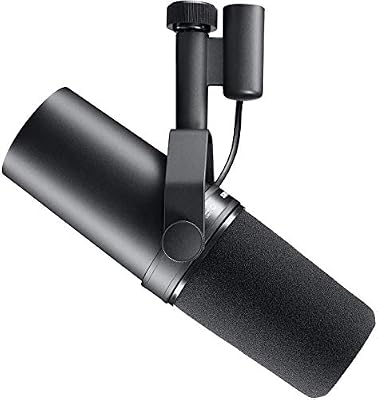
Shure SM7B Dynamic Vocal Microphone for Podcasting & Streaming | XLR studio dynamic mic for broadcast, podcast, recording, gaming and streaming; smooth warm vocals, rugged build





As an Amazon Associate we earn from qualifying purchases. Product prices and availability are accurate as of the date/time indicated.
For small builds in small rooms — a serious mITX rig in a bedroom, a dorm setup, a secondary build in a guest room — the Core 300S is the right-sized smaller sibling to our value champion. A CADR of 141 suits the 200 sq ft and below class. Same VeSync app, same Alexa/Google integration, same auto-mode algorithm at a smaller scale.
The build-relevant feature is footprint: physically smaller than every other unit here, which counts when desk-and-tower real estate is already tight. Power draw is the lowest in the category (under 30 watts at peak, under 4 watts at idle). Filter cost is roughly 40% lower per year than the 400S.
The compromise is the obvious one. Past 220 square feet or with a high-wattage build, the 300S runs flat-out and loses ground during gaming sessions. Right-size before buying. For its target rooms it is excellent value.
Automation patterns for builder-grade integrations
The patterns below assume you have a Home Assistant install or an equivalent local automation hub. Cloud-only automation works for most of these, but the latency and reliability profile is much worse than local control.
Game-launch triggered ramp. Run a small process watcher on the gaming PC (a Python script using psutil, watching for specific executable names) that publishes an MQTT message to your HA broker when a game launches and again when it exits. An HA automation listens for those messages and ramps the purifier to high on launch, back to auto on exit. Total response from game launch to purifier at high: under 5 seconds. Stack that against the 90-second auto-mode ramp and the difference in particle load over a multi-hour session is meaningful.
Occupancy-driven scheduling. Mount a presence sensor (mmWave is the current best class) on the room ceiling. When the room is occupied, the purifier runs in auto mode. When the room sits empty for more than 30 minutes, it drops to a low fixed speed (continuous low-level filtration without reacting to spikes that do not matter with no one there). When occupancy returns, the purifier goes back to auto.
HVAC-coordinated operation. When the central HVAC fan kicks on, the purifier bumps to high for the duration of the cycle plus three minutes. That captures the particle load that infiltrates during HVAC cycling and lets the central system’s filter and the purifier work as complementary stages rather than independent ones.
Outdoor AQI integration. Pull outdoor PM2.5 readings from a local AirNow station or your own outdoor sensor into HA. When outdoor air quality drops (wildfire smoke, pollen surges, inversion layers), the purifier locks to high and a windows-stay-closed reminder automation fires across the household.
Filter-life prediction. Track actual filter loading via the airflow sensor (where it is exposed) or by measuring purifier on-time at each speed (where it is not). Use that to predict replacement dates more accurately than the OEM filter-life indicator, which assumes generic loading and tends to over-alert in gaming-room conditions.
Integration depth comparison
Integration scoring matters more in a builder context than in a casual install. Here is the depth comparison across the four primary picks:
Levoit Core 400S / 300S. Native Alexa, Google. No HomeKit, no Matter. Mature community HA integration via the reverse-engineered VeSync API; full feature exposure. Best-in-class for HA-centric builds despite no first-party support.
Coway Airmega 400S. Native Alexa, Google. No HomeKit, no Matter. Mature community HA integration via the IoCare API; full feature exposure. On par with Levoit for HA stacks; slightly higher latency on cloud-relay control.
Blueair Blue Pure 311i+. Native Alexa, Google. No HomeKit, no Matter. A community HA integration exists but is less mature than the Levoit/Coway ones; partial feature exposure. Best for Alexa/Google-only stacks.
Dyson Hot+Cool Formaldehyde. Native Alexa and Siri (HomeKit); no native Google. Its HA integration through a HomeKit bridge is mature. Best for HomeKit-centric or Apple-household stacks, and the wrong call for HA-only or Alexa-only environments.
Filter strategy and maintenance budget
Build filter costs into the budget as a recurring line item, not an afterthought. Over three years of ownership, filter costs typically run 30-50% of the original purchase price. The Coway costs the most up front but the least per CADR-hour over three years because the filter is large and long-lived. The Levoit is the cheapest up front and competitive on three-year TCO. The Dyson is the most expensive on both axes.
Aftermarket filter compatibility varies by manufacturer. Levoit has a robust aftermarket of reputable third-party filters that cost 40-60% less than OEM and perform within striking distance on the HEPA stage. Coway’s aftermarket is smaller but exists. Blueair has essentially no third-party aftermarket. Dyson has none and actively discourages it through warranty terms.
Carbon-stage replacement is the most-skipped maintenance item. The carbon has no sensor, so the unit will not alert you when it saturates. Replace it on the manufacturer schedule even if the unit reports no problems. Skipping carbon replacement is a leading cause of the “the purifier stopped helping with smells” complaints in long-term reviews.
Frequently asked questions
How does a purifier interact with my PC’s positive-pressure case setup? The two systems work at different scales and complement each other. The purifier strips ambient room particles before the PC’s intake fans can pull them through the case. A positive-pressure case keeps unfiltered air from sneaking in through case gaps. Run both. The purifier lightens the load on the case dust filters; the positive pressure ensures any air that bypasses the case filters is filtered room air rather than dirtier ambient.
Should I size the purifier for room volume or for floor area? Floor area is the conventional sizing metric and works for standard 8-foot ceilings. For higher ceilings (9-10 foot), use room volume and target 4-6 air changes per hour instead of the simple CADR-vs-floor-area rule. A high-ceilinged room with a floor-area-sized purifier will underperform.
Does the purifier need to be on the floor? No. Purifiers work better elevated, ideally with the intake side at desk height or a little above. Floor-level placement pulls in heavier particles (mostly already settled) and sets up a circulation pattern that lifts settled dust back into the air. Raise the unit on a sturdy side table or speaker stand if floor placement is the default.
Can I run the purifier through a smart plug for extra automation control? Technically yes, but you lose auto-mode functionality (the unit reverts to its last manual setting when power-cycled). Better to control it via the OEM app or HA integration. Smart-plug control is a fallback for purifiers without smart integration, not an upgrade.
What is the minimum acoustic standard for a build-grade purifier? Under 25 dB at minimum speed (measured at 1 meter) for a “disappears into the build” experience. Under 22 dB is excellent. The Blueair 311i+ at 18 dB is the only unit here that clears the latter threshold.
Builder’s verdict
The Blueair Blue Pure 311i+ is the builder’s choice for 2026 on the strength of its acoustic floor and the engineering quality behind it. We accept the carbon-stage compromise as a fair trade-off; for builds with heavier odor loading or a larger room, the Coway is the upgrade path.
The Levoit Core 400S is the value-conscious alternative and the unit we point first builds toward most often. The Coway Airmega 400S is the heavy-duty answer for workshops and large rooms. The Dyson HP09 is the HomeKit-native pick for Apple-stack builds. The Levoit Core 300S is the right-sized small-room option.
Match the unit to the room. Build filter cost into the budget. Put the purifier on the opposite wall from the PC at desk height or higher. Wire it into the automation stack from day one. The room becomes a system that supports the build instead of fighting it.
Related builder guides
- How to clean a gaming PC: builder’s deep clean reference
- Smart thermostat buyer’s guide for gaming rooms
- Smart plug buyer’s guide for builder setups
- PC case airflow: the builder’s guide
- Building a positive-pressure PC for dust control
- Home Assistant integrations for the gaming room
- Matter-compatible devices for the gaming setup
Related Articles
Want to dig deeper on this? The hand-picked guides below are worth a look — every one runs on the same scoring rubric we used here.
Ready to decide? Our #1 pick for 2026 is the Blueair Blue Pure 311i+.
Live price & availability on Amazon.
Top picks from this guide
LogitechLogitech C920S HD Pro Webcam Full 1080p/30fps Video Calling Clear…$60 \xc2\xb7 98/100Audio-TechnicaAudio-Technica ATH-M40x Professional Studio Monitor Headphone, Black, with Cutting Edge…$109 \xc2\xb7 98/100MajostaNatalie : Personalized Name Journal for Natalie |gratitude Notebook |Skull…$8 \xc2\xb7 96/100ShureShure SM7B Dynamic Vocal Microphone for Podcasting & Streaming |…$439 \xc2\xb7 96/100