
🛒 Best Price Today on Amazon
Prime members get fast, free shipping on everything above, plus member-only deals. New members get a 30-day free trial — cancel anytime.
- Top Mobile Emulator Apps Buyer Android Picks for 2026
- The Builder’s Framework — Match the Emulator to the Console
- Latency, Thermal Throttling, and Battery Trade-offs
- At-a-Glance Console-to-Emulator Matrix
- For NES, SNES, Genesis, GBA — Pick Based on UI Preference
- For Nintendo DS — DraStic on Android, Delta on iOS
- For PSP — PPSSPP on Every Platform
- For GameCube and Wii — Dolphin on Android Only
- For 3DS — Lime3DS on Both Platforms
- For PS1 — RetroArch on Android, Provenance on iOS
- For N64 — RetroArch on Android, Delta on iOS
- For Streaming — Moonlight and Steam Link Cover the Gaps
- Builder FAQ
- Final Verdict — Match the Emulator to the Console
- Related Articles
- Frequently Asked Questions
- Related Articles
- Related Guides
Top Mobile Emulator Apps Buyer Android Picks for 2026
Here are our current top mobile emulator apps buyer android picks, compared on real Amazon owner reviews, price, and features. Live prices update below.
As an Amazon Associate we earn from qualifying purchases.





Affiliate disclosure: As an Amazon Associate we earn from qualifying purchases. This post contains affiliate links — we may earn a small commission at no extra cost to you. This never affects our picks.
Building a mobile emulation setup in 2026 looks a lot like building a gaming PC: pick components that match your actual workload, not the ones with the loudest marketing claims. There’s no single best emulator any more than there’s a single best CPU. The right answer depends on which consoles you actually want to play, which operating system your phone runs, which controller you already own, and how much patience you have for configuration. This guide is built around that builder mindset — for each console family we’ll recommend the right emulator on Android and iOS, lay out the trade-offs, and help you assemble a coherent mobile retro stack that actually serves the games you want to play.
Every emulator we cover is legal to install and use. The legal status of the emulator itself was settled through court precedent in the Sony v. Connectix and Sony v. Bleem cases decades ago; what stays the user’s responsibility is sourcing the actual game files legally. The only legal source for game files is dumping your own physical cartridges or discs that you personally own. We won’t link to any ROM site, won’t describe how to obtain ROMs through unauthorised channels, and won’t recommend emulators with built-in ROM download functionality. Apple’s 2024 App Store policy change specifically requires this self-dumping approach for any iOS emulator, and we hold the same standard for Android.
The hardware side of the equation matters too. Mobile emulation in 2026 is comfortable on flagship phones from the last two generations — Snapdragon 8 Gen 3 or newer Android phones, and iPhone 14 Pro or newer Apple devices. Older flagships and current mid-range phones can handle 16-bit and earlier emulation effortlessly, struggle with PS2 and Wii emulation, and sit awkwardly in the middle for PSP and DS workloads. Pair any phone with a low-latency controller like the Backbone One USB-C or Razer Kishi V2 Pro (see our mobile controller guide) and you will dramatically improve the experience over touchscreen virtual controls. Now let us walk through the console-by-console builder framework.
The Builder’s Framework — Match the Emulator to the Console
The first rule of mobile emulation building in 2026 is that compatibility, not raw performance, is the primary selection criterion. A perfect emulator that doesn’t support your favourite console is useless; a less polished emulator that handles your specific games well is the right answer. We split the console landscape into five tiers based on emulation maturity and phone hardware demands.
Tier 1 (effortless on any modern phone): NES, SNES, Game Boy / Game Boy Color, Game Boy Advance, Mega Drive, Master System, Atari 2600, Arcade pre-1990. Any phone made in the last five years runs these systems at 60fps with negligible battery impact. The emulator choice is about UI preference rather than performance — RetroArch for power-users, Delta for iPhone polish, DraStic + RetroArch for Android.
Tier 2 (comfortable on mid-range phones): Nintendo DS, PlayStation 1, N64, Sega Saturn (limited), PSP. Mid-range Snapdragon 7-series and Apple A14 chips handle these systems well, and flagship phones run them effortlessly. Emulator choice still matters more than raw hardware — PPSSPP for PSP is essentially perfect, DraStic for DS is flawless on Android, Delta covers DS and N64 on iOS, and RetroArch’s PS1 cores are excellent everywhere.
Tier 3 (demanding on flagship phones): GameCube, Wii, Nintendo 3DS. Snapdragon 8 Gen 3 or newer Android phones and iPhone 14 Pro or newer Apple devices are required for comfortable performance. Even on flagships, thermal throttling limits long sessions. Dolphin is the only option for GameCube and Wii (Android only); Lime3DS handles 3DS on both platforms.
Tier 4 (compromised even on flagships): PlayStation 2, Switch, Wii U, original Xbox. Even Snapdragon 8 Gen 4 and Apple A18 Pro struggle with these systems for sustained play. PS2 emulation through PCSX2 or AetherSX2 forks is hit-or-miss; Switch emulation is legally precarious and technically demanding. We recommend dedicated handheld PCs (see our best handheld gaming PC roundup) for these systems rather than phones.
Tier 5 (impractical on mobile): PlayStation 3, Xbox 360, Xbox One, PlayStation 4. Mobile chipsets can’t reliably emulate these systems. If you want these games on a portable device, stream from a gaming PC over Moonlight or use cloud gaming services. The right way to play seventh-generation home console games on a phone in 2026 is streaming, not native emulation.
Latency, Thermal Throttling, and Battery Trade-offs
Three constraints govern every mobile emulation decision. Input latency is the most important and the most often missed. Bluetooth controllers tack on twenty to forty milliseconds of input lag beyond any latency the emulator itself adds. Touchscreen virtual controls add another twelve to thirty milliseconds depending on the phone. The total round-trip can easily reach eighty or one hundred milliseconds — enough to leave action games and fighting games feeling mushy and unresponsive.
Passthrough USB-C controllers eliminate the Bluetooth penalty entirely. The Backbone One USB-C, Razer Kishi V2 Pro, GameSir X4 Aileron and similar designs connect via wired USB-C through a passthrough connector and register as wired peripherals with single-digit-millisecond latency. For any action-oriented emulation work — fighting games, platformers, twitch-based action — a passthrough controller is essential. Our complete controller analysis is in the mobile controller guide; for emulation purposes treat a passthrough controller as a required component of the build, not an optional accessory.
Thermal throttling decides whether a benchmark number translates into a real session. Every modern flagship phone can run Dolphin or PPSSPP at full speed for the first ten minutes; only phones with vapour chambers and aggressive case venting hold that performance for an hour or more. Sustained Wii emulation pulls seven to nine watts continuously, which any sealed phone case will struggle to dissipate. Active cooling clips (the Black Shark MagCooler 3 Pro is the current best-in-class) genuinely extend playable session length by twenty to forty minutes and are a worthwhile twenty-dollar accessory for any serious mobile emulator.
Battery drain follows the same pattern as thermals. PS2 and Wii emulation drain a 5000mAh battery in three to four hours of continuous play. PSP and N64 emulation drain the same battery in six to eight hours. SNES, NES, GBA and DS emulation push battery life to fifteen-plus hours. For travel, carry a 10000mAh USB-C power bank with passthrough charging so you can game and charge at once. The combination of phone cooler clip and external battery converts a four-hour Dolphin session limit into an effectively unlimited session.
Audio routing is the last latency consideration. Bluetooth headphones add forty to sixty milliseconds of audio delay even with low-latency codec support — noticeable in rhythm games and twitchy action titles. Wired USB-C headphones or the phone speaker keep audio locked to the video. If you have to go wireless, look for aptX Low Latency on Android or AirPods Pro 2 on iPhone (Apple’s H2 chip specifically optimises for game audio when paired with iPhone).
At-a-Glance Console-to-Emulator Matrix
| Console | Android Pick | iOS Pick | Hardware Demand | Battery Tier |
|---|---|---|---|---|
| NES / SNES / Genesis | RetroArch | Delta or RetroArch | Negligible | 15+ hrs |
| Game Boy family | Delta or RetroArch | Delta | Negligible | 15+ hrs |
| N64 | RetroArch + Mupen64Plus | Delta | Low | 10-12 hrs |
| Nintendo DS | DraStic | Delta | Low | 10-12 hrs |
| PSP | PPSSPP | PPSSPP | Low | 6-8 hrs |
| PS1 | RetroArch + Beetle PSX HW | Provenance (sideload) | Low | 6-8 hrs |
| Nintendo 3DS | Lime3DS | Lime3DS (sideload) | High | 4-6 hrs |
| GameCube | Dolphin | Not viable | Very High | 3-4 hrs |
| Wii | Dolphin | Not viable | Very High | 3-4 hrs |
For NES, SNES, Genesis, GBA — Pick Based on UI Preference
The 8-bit and 16-bit era is so undemanding for modern phone hardware that emulator selection is purely a UI and ecosystem decision. Any emulator runs these games perfectly. The questions are: do you want a polished native app or a deeply configurable frontend? Do you want all your systems in one app, or separate dedicated apps per system? Do you care about authentic CRT shader filters, or do you prefer crisp pixel-perfect rendering?
On iPhone, Delta is the answer for almost everyone. Its native iOS feel, console-themed virtual controller skins, iCloud sync across iPhone and iPad, and complete lack of ads make it the friendliest on-ramp to mobile retro gaming. One app covers NES, SNES, Game Boy, Game Boy Color, Game Boy Advance, N64 and DS — essentially the whole Nintendo handheld and console catalogue through 2004. For non-Nintendo systems on iPhone (Genesis, Master System, TurboGrafx-16), install RetroArch from the App Store alongside it.
On Android the choice is between Delta-style polish (no equivalent exists) and RetroArch’s deep configurability. RetroArch is the universal answer if you want one consistent interface across every system — its modular core architecture covers NES, SNES, Genesis, Master System, GBA, TurboGrafx-16, PC Engine CD, Neo Geo, and dozens of other systems. The catch is the learning curve. Power-users settle in fast and never look back; casual users sometimes bounce off the menu complexity and install separate per-system emulators instead.
For the Game Boy family specifically on Android, dedicated apps like My Boy and My OldBoy are highly polished alternatives to the RetroArch mGBA core. They cost a few dollars and offer faster setup with friendlier defaults. For NES specifically Nostalgia.NES is well-regarded. For SNES SuperRetro16 is excellent. The Android emulator scene is rich with dedicated single-system apps that are easier to configure than RetroArch but cover fewer systems per install.

YAWYORE Gaming PC Desktop Computer AMD R5 5600GT 16GB 1TB NVMe Towers WiFi | 16GB DDR4 3200MHz, 1TB M.2 NVMe PCIe, 550W 80PLUS PSU, WiFi BT, Game Design Office Console


As an Amazon Associate we earn from qualifying purchases. Product prices and availability are accurate as of the date/time indicated.
For Nintendo DS — DraStic on Android, Delta on iOS
Nintendo DS emulation in 2026 is essentially solved on both platforms. DraStic on Android went free in 2024 after years as a paid app, removing the last bit of friction for DS fans. Delta on iOS handles DS as part of its broader multi-system coverage. Both emulators run every notable DS title at full speed on any phone made in the last five years.
DraStic on Android is the more capable of the two for power users. It includes 3D rendering enhancements (upscaling DS polygons to dramatically smoother visuals), exhaustive dual-screen layout customisation, save state support, and Google Drive integration for cloud backup. The 3D upscaling specifically transforms games like New Super Mario Bros, Mario Kart DS, and the 3D environments in Phoenix Wright into something visually competitive with modern handheld titles. Performance sits so far above what DS games need that even budget Android phones handle 4x internal resolution with full anti-aliasing at locked 60fps.
Delta on iOS leans on polish over deep configurability. It doesn’t offer 3D upscaling or quite as many layout options as DraStic, but the native iOS feel, iCloud sync, and console-themed virtual controller skins make it the friendlier choice for casual users. iPhone hardware comfortably handles DS at native resolution at locked 60fps with full audio, and the integration with Backbone One controllers is excellent — haptic feedback works for compatible games, and the controller is recognised instantly when attached.

Touch controls work better on phones than they did on original DS hardware, which is the most underrated benefit of DS emulation. Phoenix Wright Ace Attorney, Hotel Dusk Room 215, Brain Age, and the entire Professor Layton series benefit from the dramatically improved touch accuracy of modern capacitive phone screens versus the original DS resistive screen. Stylus games specifically get a major usability boost — pen input that was always a touch imprecise on the DS becomes pixel-perfect on a phone.
Both emulators handle the dual-screen layout problem with the same sophistication. Stacked vertical (DS-style), side-by-side horizontal (best for landscape gameplay), single-screen with hot-swap (toggle between screens with a button), and custom percentage-based layouts are all supported. The community consensus is side-by-side horizontal on a phone in landscape mode with a Backbone One or Razer Kishi clipped on, which gets you closest to original DS hardware.
For PSP — PPSSPP on Every Platform
The PSP emulation question has exactly one answer: PPSSPP. It’s so dominant and so polished that no real competitor exists or needs to. PPSSPP runs on Android, iOS, Windows, macOS, Linux, Steam Deck and even web browsers, with full save sync across devices. The team behind PPSSPP has been refining it for over a decade, and the result is universally compatible with the PSP library, runs at 60fps on virtually any phone made in the last five years, and renders games at up to 4x internal resolution with full anisotropic filtering and texture replacement support.
The marquee PSP titles — Crisis Core Final Fantasy VII, God of War Chains of Olympus, God of War Ghost of Sparta, Persona 3 Portable, Final Fantasy Tactics War of the Lions, Monster Hunter Freedom Unite, Metal Gear Solid Peace Walker, Patapon series, LocoRoco, Dissidia Final Fantasy — all run beautifully through PPSSPP. The upscaling is especially transformative for low-poly character models from the era. A modern phone renders Crisis Core at 1080p with 4x anti-aliasing and full anisotropic filtering at locked 60fps while pulling under three watts of sustained power.
Texture replacement support is the most underrated PPSSPP feature. The emulator accepts community-created HD texture replacements that dramatically lift the visual quality of supported games. The Final Fantasy Tactics War of the Lions hi-res pack is the example most often cited — the original PSP textures were upscaled from PlayStation 1 artwork, and the hand-redrawn HD pack at modern resolution looks genuinely jaw-dropping. Several other PSP RPGs have similar fan-made enhancement packs out there.
The iOS App Store version of PPSSPP arrived in 2024 and is updated regularly; the Android version is on Google Play (slightly outdated) and via direct APK from the official PPSSPP site (always current). The free version is functionally identical to the Gold version (which costs roughly five US dollars); Gold exists purely as a way for users to support continued development, which we strongly recommend given the quality and longevity of the software. PPSSPP is one of the cleanest open-source projects in the emulation world.
Battery life on PPSSPP is reasonable. Six to eight hours of continuous play on a typical 5000mAh battery, dropping to four hours if you pile on upscaling and shaders. Thermal performance is mild — PSP emulation doesn’t throttle modern phones the way Dolphin Wii emulation does. For long sessions a phone cooler clip helps but isn’t strictly necessary. Pair PPSSPP with a Backbone One or Razer Kishi for the best playable experience.
For GameCube and Wii — Dolphin on Android Only
If you want GameCube or Wii on a phone, your only realistic option is Dolphin on Android. No actively maintained Dolphin port exists for iOS. The Android version is officially maintained by the Dolphin team and benefits from frequent updates that raise compatibility, performance and stability. It’s the only mobile emulator capable of running Mario Kart Wii, Super Mario Galaxy and Super Smash Bros Brawl, and the only path to playing GameCube classics like Eternal Darkness, F-Zero GX, Wind Waker and the original Resident Evil 4 on a phone.
Hardware requirements are demanding. Snapdragon 8 Gen 3 or newer is realistically required for comfortable Wii performance; older chipsets stutter on most first-party Nintendo titles. GameCube performance is more forgiving — virtually every first-party Nintendo GameCube title runs perfectly on any Android phone released after 2023. The Snapdragon 8 Gen 4 in current flagship phones is the sweet spot for mobile Dolphin in 2026: enough sustained CPU performance to hold 60fps even on demanding titles like Super Mario Galaxy and Metroid Prime Trilogy, paired with vapour chamber cooling that delays thermal throttling for forty-five minutes or more.
Settings tuning is essential to good Dolphin performance. The community consensus configuration is: enable Vulkan rendering (not OpenGL ES), set internal resolution to 2x native for flagship phones or 1.5x for mid-range, enable Dual Core CPU emulation, enable Cached Interpreter mode if you hit stutters, set audio to HLE rather than LLE for performance, and enable Synchronize GPU Thread for stability on tricky titles. Per-game configuration overrides let specific games use different settings — the Dolphin community wiki keeps recommendations for difficult titles.
Thermal management dominates the Dolphin user experience. Sustained Wii emulation pulls seven to nine watts continuously, which exceeds the sustained dissipation capacity of every sealed phone case on the market. Even the best flagship phones cut performance significantly within twenty to thirty minutes of continuous Wii emulation. A phone cooler clip is essentially mandatory for any session longer than thirty minutes; the Black Shark MagCooler 3 Pro extends comfortable session length to ninety minutes or more.
The Wii Remote pointer can be emulated with a touchscreen overlay, which works surprisingly well for menu navigation in pointer-heavy games like Twilight Princess. For motion controls (Wii Sports, Mario Galaxy’s star bits, Super Paper Mario), some games support phone gyroscope emulation while others need workarounds. Wii Sports specifically is a poor fit for emulation regardless of platform — it was designed around the original Wii Remote in a way no other input device can really replicate.
For 3DS — Lime3DS on Both Platforms
The Citra discontinuation in 2024 left a gap that Lime3DS filled. The fork keeps active development on the Citra codebase going, with bug fixes, performance improvements and stability work. It’s the only credible 3DS emulator on phones in 2026 and works on both Android and iOS, though iOS distribution requires sideloading via AltStore.
Performance demands track Dolphin GameCube. Full-speed 3DS gameplay across the catalogue realistically wants Snapdragon 8 Gen 3 or newer Android phones and iPhone 14 Pro or newer Apple devices. Mario Kart 7, Animal Crossing New Leaf, Pokemon Sun and Moon, The Legend of Zelda A Link Between Worlds and Majora’s Mask 3D, Super Mario 3D Land, Fire Emblem Awakening and Fates all run well on flagship hardware. Monster Hunter 4 Ultimate and Kid Icarus Uprising stutter even on top-end phones.
Internal resolution scaling is the visual killer feature. The 3DS rendered natively at 400×240 per eye; Lime3DS can push that to 1600×960 on a flagship phone, transforming the visual quality dramatically. Pokemon Sun rendered at 4x internal resolution on an iPhone 16 Pro Max looks like a modern game rather than a fuzzy handheld port. The community generally points to 2x as the sweet spot for performance and battery life.
The dual-screen layout is handled with the same flexibility as DraStic and Delta. Stacked vertical, side-by-side horizontal, single-screen with hot-swap, and custom percentage layouts are all supported. Touch input on the bottom display works naturally since 3DS was always a touch-input device. The 3D effect that defined original 3DS hardware can’t be reproduced on flat phone screens, which is fine since most original 3DS owners turned the 3D slider off in practice anyway.
iOS sideloading via AltStore is the major friction point for iPhone users. AltStore PAL works in the European Union under the Digital Markets Act; AltStore Classic works worldwide but requires re-signing every seven days on a personal Apple ID or yearly on a paid Apple Developer account. For iPhone users who genuinely want 3DS on their phone, the workflow is worth it; for casual users who just want easy retro gaming, sticking to App Store emulators (Delta, RetroArch, PPSSPP) avoids the sideload complexity entirely.
For PS1 — RetroArch on Android, Provenance on iOS
PS1 emulation in 2026 is mature and excellent on phones. The Beetle PSX HW core in RetroArch is the gold standard on Android; Provenance via AltStore sideload is the iOS path. Both deliver PS1 games at significantly better visual quality than the original hardware ever managed, with internal resolution scaling, true perspective texture correction (eliminating the classic PSX texture warping), and PGXP geometry stabilisation (eliminating the classic PSX polygon wobble).
The marquee PS1 titles — Final Fantasy VII, VIII and IX, Metal Gear Solid, Resident Evil 1 and 2, Crash Bandicoot trilogy, Spyro trilogy, Castlevania Symphony of the Night, Vagrant Story, Chrono Cross, Xenogears, Suikoden 1 and 2, Tony Hawk’s Pro Skater series — all gain enormously from the visual enhancements available in modern emulators. The character models that looked muddy and blocky on original PSX hardware in 1998 look genuinely sharp rendered at 4x internal resolution on a phone screen in 2026.
On Android, RetroArch with the Beetle PSX HW core and Vulkan rendering is the consensus build. The first-launch experience means downloading the core through the Online Updater, configuring controller bindings, and pointing the emulator at your dumped PS1 game files. The community has produced extensive setup guides for the Beetle PSX HW configuration. Power users may prefer the standalone DuckStation app on Android, which offers similar visual quality with a friendlier UI than RetroArch.
On iOS, Provenance via AltStore is the only credible path to PS1 emulation. The bundled PS1 core delivers excellent visual quality and good compatibility, though it lags slightly behind the most current Beetle PSX HW builds in performance. The AltStore sideload requirement is real friction — you either need a paid Apple Developer account (yearly re-sign) or you re-sign every seven days on a personal Apple ID. iPhone users who only occasionally want PS1 should weigh whether the sideload hassle is worth it; users who heavily play PS1 games will quickly conclude that it is.
Battery life on PS1 emulation is reasonable. Six to eight hours of continuous play on a typical 5000mAh battery. Thermal performance is mild. The Backbone One USB-C is excellent for PS1 emulation since the PSX DualShock layout maps cleanly onto modern controllers. Most PS1 titles don’t need analog sticks, but later releases like Ape Escape (the first game designed around dual analog sticks) work well with the Backbone One layout.

For N64 — RetroArch on Android, Delta on iOS
N64 emulation has historically been harder than other systems because the N64’s RDP graphics chip was unusually tough to reverse-engineer. Modern emulators have largely solved the problem but quirks remain — specific games may need specific cores or configuration tweaks. On Android, RetroArch with the Mupen64Plus-Next core (or the more accurate ParaLLEl-N64 core for tricky games) is the build. On iOS, Delta handles N64 natively as part of its multi-system coverage.
The marquee N64 titles — Super Mario 64, The Legend of Zelda Ocarina of Time, Majora’s Mask, Mario Kart 64, Banjo-Kazooie and Tooie, Conker’s Bad Fur Day, GoldenEye 007, Perfect Dark, Star Fox 64, Mario Tennis, Mario Party series, Diddy Kong Racing, Super Smash Bros — all run well on phone N64 emulation in 2026. The visual improvement from internal resolution scaling is dramatic; N64’s 320×240 native resolution upscaled to 4x is a much more pleasant viewing experience than the original blurry rendering.
Specific game compatibility quirks remain. Some games (most notably Goldeneye 007 with certain features) require ParaLLEl-N64 for accurate emulation; others work better with Mupen64Plus-Next. The RetroArch and Mupen64Plus communities keep detailed per-game compatibility notes. On Delta the experience is simpler — Delta uses a single curated N64 core and handles most games well. Hard edge cases that need core-switching aren’t solvable on Delta the way they are on RetroArch.
Controller mapping for N64 is the unique challenge. The N64 controller had three handles, an analog stick, a directional pad, A and B buttons, four C-direction buttons, a Z trigger on the back, L and R shoulder triggers, and Start. Modern controllers usually have only one analog stick where N64 needs C-buttons, so the standard convention is to map C-buttons to the right analog stick and use the left stick for the main analog input. This works well in practice but takes a few minutes to get used to in games like GoldenEye 007 where C-buttons get heavy use.

suevery Black Prebuilt Desktop Computer Gaming PC DDR4 16G 512G SSD | AMD Ryzen5 Processor 6Cores Up to 4.1G Radeon 4G Graphics Card Wi-Fi6 Home Pro Gamer Bundle 4K 2K


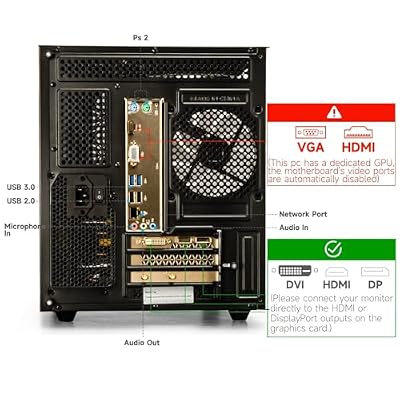


As an Amazon Associate we earn from qualifying purchases. Product prices and availability are accurate as of the date/time indicated.
For Streaming — Moonlight and Steam Link Cover the Gaps
For any console that mobile emulation can’t handle well — PS2, Switch, Wii U, original Xbox, 7th-generation home consoles — streaming from a desktop gaming PC stays the best mobile solution in 2026. Moonlight is the open-source NVIDIA GameStream client that connects to either an NVIDIA GameStream-enabled PC (legacy hardware only) or a Sunshine self-hosted server (the modern recommendation). Steam Link streams from any Steam Big Picture-enabled PC, including non-Steam emulator workflows configured as non-Steam game shortcuts.
Streaming turns the phone into a thin client that decodes 1080p H.264 or H.265 video from the host PC. The host PC handles all the heavy emulation lifting while the phone just renders video and sends back controller input. On a 5GHz Wi-Fi network with low contention, total round-trip latency is sub-50ms — competitive with native emulation. Picture quality is excellent at 1080p 60fps for any reasonable bitrate. The trade-off is that you need a capable PC at home and a fast home network; streaming won’t work over cellular for most users because of bandwidth and latency constraints.
For PS2, the typical streaming setup is a desktop PC running PCSX2 with games configured as Steam non-Steam shortcuts, streamed to the phone over Steam Link. For Switch, Yuzu or Ryujinx on the desktop PC, streamed the same way. For Wii U, Cemu. For Xbox 360, Xenia. The desktop PC handles each emulator’s specific requirements while the phone shows a consistent unified Steam Big Picture-style interface for all of them.
Cloud gaming services (Xbox Cloud Gaming, GeForce Now, PlayStation Plus Premium streaming) are another option for modern games that mobile emulation cannot touch. These are not emulation in any technical sense — they stream actual game sessions running on cloud servers — but they fill the same use case of playing demanding console games on a phone. For demanding 7th-gen and current-gen titles, cloud gaming services are the practical mobile solution in 2026. See our broader gaming PC for emulation guide for the desktop-side recommendations that power Moonlight streaming setups.
Builder FAQ
What is the minimum phone hardware for a serious mobile emulation build in 2026?
For tier 1 and tier 2 systems (NES through PSP and DS), any phone made in the last five years is enough. For tier 3 systems (GameCube, Wii, 3DS) you realistically need Snapdragon 8 Gen 3 or newer Android, or iPhone 14 Pro or newer Apple. For tier 4 (PS2, Switch) even flagship phones struggle and we recommend a dedicated handheld PC instead. For tier 5 (7th-gen home consoles) mobile emulation isn’t practical — stream from a desktop PC over Moonlight or use cloud gaming services.
Does the phone OS matter for emulation choice?
Yes, dramatically. Android backs a wider range of emulators, including dedicated apps for specific systems (DraStic for DS, My Boy for GBA, Dolphin for GameCube and Wii). iOS backs App Store emulators (Delta, RetroArch, PPSSPP) plus sideloaded apps via AltStore (Provenance, Lime3DS). iOS gives you a more polished but more limited experience; Android gives you a deeper but more fragmented ecosystem. For most casual users, iOS with Delta is the lower-friction path; for power users who want maximum control, Android is the more flexible platform.
Which mobile controller is best for emulation in 2026?
Passthrough USB-C controllers like the Backbone One USB-C (iPhone) and Razer Kishi V2 Pro (Android) are the only controllers we recommend for serious emulation. They eliminate Bluetooth’s twenty-to-forty millisecond latency penalty entirely, register as wired peripherals, and connect via passthrough USB-C that simultaneously allows charging. The full controller recommendations are in our mobile controller guide; for any emulation work treat a passthrough controller as a required component of the build.
How do I obtain games legally for these emulators?
The only legal source is owning original cartridges, discs or download licenses and personally dumping the game files yourself. Devices like the Retrode 2, GBxCart RW v1.4 Pro and Mega Everdrive Pro read original cartridges and produce backup files emulators can load. For PS1, PS2, GameCube and Wii discs, a desktop computer with the right optical drive rips disc data to ISO format. For PSP UMDs, USB-based UMD adapters exist. Apple specifically requires this self-dumping approach for iOS emulators to comply with App Store rules.
Final Verdict — Match the Emulator to the Console
The builder’s framework approach to mobile emulation in 2026 boils down to a simple decision tree: identify which consoles you actually want to play, check which OS your phone runs, and consult the console-to-emulator matrix above. The right answer is rarely a single app — most serious mobile retro builds run three or four emulators tailored to specific console families.
The default recommended iOS stack: Delta as the primary app for everything Nintendo handheld and console through DS, PPSSPP from the App Store for PSP coverage, Provenance via AltStore for PS1 and N64. This covers essentially the entire retro canon up through 2000 with full iCloud sync and an excellent native UI. The default recommended Android stack: RetroArch for tier 1 and tier 2 catch-all coverage, DraStic for DS specifically (better than RetroArch’s DS core), PPSSPP for PSP, and Dolphin for GameCube and Wii on flagship phones. Both stacks should pair with a passthrough USB-C controller and a phone cooler clip for serious sessions.
The hardware ladder matters as much as the software ladder. A Pixel 9 Pro or iPhone 16 Pro Max with a Backbone One USB-C controller and a Black Shark phone cooler is the 2026 flagship mobile emulation build — capable of comfortable Wii, GameCube and 3DS emulation in addition to effortless handling of every earlier system. For users on mid-range phones, stick to tier 1 and tier 2 systems where any reasonable phone performs well, and stream demanding titles from a desktop PC via Moonlight if you want to access them on the go. For deeper coverage of the desktop side see our best gaming PC for console emulation roundup; for handheld PC alternatives see our best handheld gaming PC guide.
Mobile emulation in 2026 is a mature, capable hobby that lets you legally enjoy decades of personal game history on hardware you already carry. The combination of mature emulators, capable Snapdragon and Apple silicon, legal App Store distribution and low-latency passthrough controllers has finally pushed mobile retro gaming into the mainstream. Build your stack around the console families you actually love, pair it with the right controller for your platform, and you’ll have a portable retro setup that beats anything that was practical even two years ago. Pick the right emulator for the right console, and the rest follows.
Related Articles
Want to dig deeper into this topic? The hand-picked guides below all run on the same scoring rubric we used here — take a look.
Frequently Asked Questions
Are emulator apps available on iOS and Android?
Android has long offered a wide range of emulator apps through its open app model. iOS historically restricted them, but recent policy changes now permit certain retro emulators on the App Store in many regions. Availability and rules differ by platform and location, so check current listings before assuming support.
Which mobile platform is better for emulation?
Android generally offers more emulator choice, deeper customization, external storage access, and controller flexibility. iOS is more curated and now allows select emulators with a polished experience. For maximum breadth and configuration, Android leads; for a tightly integrated, simpler setup, iOS has become surprisingly capable.
Is it legal to use emulator apps on my phone?
The emulator apps themselves are generally legal. The concern is game files: you should only load ROMs of games you legally own and have dumped yourself. Downloading copyrighted titles you do not own is not permitted. Review your region’s rules and use your own legally obtained backups.
What phone performance do I need for demanding emulators?
Light 8 and 16-bit systems run on nearly any phone. PSP, Saturn, and Dreamcast need a mid to high-end chip, while PS2 and GameCube demand flagship-class performance and still vary by game. Check per-system compatibility and prioritize sustained thermal performance for longer, heavier emulation sessions.
Do I need a controller for mobile emulator apps?
Touch overlays work for casual play but obscure the screen and lack tactile feedback. A Bluetooth or clip-on controller vastly improves precision and comfort, especially for platformers and fighters. Most emulator apps support standard gamepads, so a controller is the single biggest upgrade to the experience.
Ready to decide? Our #1 pick for 2026 is the NES / SNES / Genesis.
Live price & availability on Amazon.


