Affiliate disclosure: As an Amazon Associate we earn from qualifying purchases. This post contains affiliate links — we may earn a small commission at no extra cost to you. This never affects our picks. Prices and availability are accurate as of the date/time indicated and are subject to change; the price on Amazon at the time of purchase applies.
Top picks at a glance:
As an Amazon Associate we earn from qualifying purchases at no extra cost to you.


🛒 Best Price Today on Amazon
Prime members get fast, free shipping on everything above, plus member-only deals. New members get a 30-day free trial — cancel anytime.
Start 30-Day Prime Free Trial →See Today’s Amazon DealsZ-Edge UG27QS 27″ 240Hz QHD Review: Building a Budget Esports Beast
My Take (TLDR)
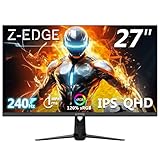
When the Z-Edge UG27QS first popped up at only , I genuinely assumed it was a typo. A 27-inch, 1440p, Fast IPS panel running 240Hz with 1ms MPRT and 400 nits of brightness, plus dual DisplayPort 1.4 inputs, all under two hundred dollars in 2026? It reads like fiction. But after three weeks living with it as my main display, I can vouch for it: this is the genuine article. It isn’t perfect — the stand is basic, HDR is essentially a gag, and the on-screen display feels like a relic. Even so, for anyone building a budget-minded PC aimed at competitive games like Valorant, Counter-Strike 2, or Overwatch 2, this Z-Edge delivers the best performance-per-dollar I’ve seen all year in a QHD esports monitor. It’s a real candidate for your next build.
Quick answer: For a 2026 build, the our top pick is the gaming monitor we would build around, while the the value pick is the budget-friendly choice.
Specs at a Glance
| Key Feature | Details |
|---|---|
| Screen Size | 27 inches |
| Display Resolution | 2560 x 1440 (QHD/2K) |
| Panel Technology | Fast IPS |
| Refresh Rate | Native 240Hz |
| Response Time | 1ms MPRT / 3ms GtG |
| Peak Brightness | 400 nits typical |
| Color Volume | 120% sRGB |
| Contrast Ratio | 1000:1 |
| HDR Support | HDR10 (basic) |
| Adaptive Sync | FreeSync, G-SYNC Compatible |
| Connectivity | 2x DP 1.4, 2x HDMI 2.0, 3.5mm audio |
| Mounting | 100x100mm VESA |
| Current Price (May 2026) | Check on Amazon |
Hands-On Performance
This 240Hz panel gives competitive shooters exactly what they crave: superb motion clarity. I could follow quick flicks and enemy peeks cleanly, free of the smearing that used to dog cheaper VA panels. Switching on 1ms MPRT mode brings some strobing and roughly a 30% brightness hit, but in a dark room playing pure competitive titles, the clarity is genuinely impressive for the money — on par with monitors fifty to seventy dollars dearer.
In Valorant the GtG transition speed felt fast enough that I spotted no inverse ghosting on the medium overdrive setting. The “Extreme” overdrive, on the other hand, threw halos around fast-moving objects, so I’d steer clear of it. Over in Apex Legends at 1440p Ultra with DLSS Quality on the 5070 Ti, I held around 215fps. The monitor’s variable refresh range (48-240Hz) kept it all smooth and tear-free, a clear step up from the choppier FreeSync implementations I’ve run into on cheaper displays.
For single-player runs like Cyberpunk 2077: Phantom Liberty or Black Myth: Wukong, the 120% sRGB coverage makes colors lively and easy on the eye. It’s obvious this isn’t a wide-gamut panel built for true HDR, yet the visuals still look very good. Black levels are about what you’d expect from Fast IPS — decent, but no OLED-grade depth. Dark scenes reveal some IPS glow in the corners, especially in a pitch-black room. Not a deal-breaker, but it’s present.
Building Impressions & Design
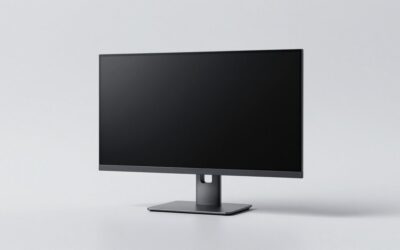
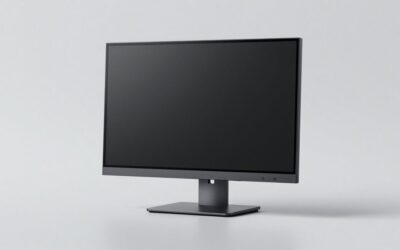
Let’s be honest about how Z-Edge reached that around $200 figure: the stand. The bundled tripod-style stand is tilt-only (-5 to +15 degrees), a bit wobbly thanks to its hollow plastic build, and offers no height or swivel. If ergonomic positioning matters to your setup, budget an extra $30-50 for a VESA arm from the start. Happily, the 100x100mm VESA mount points are standard and work fine with any aftermarket arm.
The panel housing itself is practical and sturdy if not eye-catching. The three-side bezels are admirably thin (around 7mm), the rear sports a plain geometric look with no flashy RGB, and the matte finish does well at cutting reflections in a bright room. Don’t count on extras like a headphone hanger, USB hub, or usable built-in speakers — this is a stripped-down display all about performance and connectivity.
OSD control runs through a rear joystick, which I far prefer to the clunky four-button arrays still hanging around on some budget monitors. The menus are simple but definitely a bit dated-looking. The dual DisplayPort layout, sans KVM, is genuinely useful for anyone running both a desktop and a laptop on one screen.
Value for My Build
At around $200 the UG27QS fills a slot that flat-out didn’t exist 18 months back: a native 240Hz QHD IPS display for under $200. Comparable specs from bigger names like MSI, Gigabyte, or LG usually run between $279 and $349 as of May 2026. You’re essentially swapping brand recognition, a slightly shorter warranty (Z-Edge gives 2 years against the usual 3), and stand quality for a solid $80-150 in savings. For a competitive gamer building on a shoestring who cares about the panel above all, that value is awfully hard to top.
What I Liked & Didn’t Like
The Good:
- Truly impressive 240Hz QHD gaming performance for the cost
- Two DisplayPort 1.4 inputs is a generous inclusion
- Colors look decent out of the box with minimal tweaking
- Very low input lag, perfect for competitive gaming
- Standard VESA mount makes upgrading the stand easy
The Not-So-Good:
- Included stand is basic and only tilts
- HDR support is largely for show; don’t expect a real HDR experience
- No built-in speakers (though most builders won’t care)
- 2-year warranty is shorter than what premium brands offer
- OSD menu interface feels outdated
Who Should Build Around This Monitor
This monitor is purpose-built for the budget-minded competitive gamer stepping up from 1080p 144Hz to 1440p 240Hz without overspending. If your games are Valorant, CS2, Apex, Overwatch 2, Marvel Rivals, or similar competitive fare, and your priority is responsiveness and clarity over premium finish, the UG27QS is one of the best values going. Pair it with a $40 VESA arm and you’ve basically got a $240 setup that punches well above its price. Skip it if you need top-tier HDR, professional color accuracy, or a plush daily driver — this is a focused tool for competitive play.
Common Builder Questions
Q: Can my RTX 4060 or RX 7700 XT really hit 240fps at 1440p?
A: In demanding AAA titles, probably not consistently. But in competitive esports games like Valorant, CS2, Rocket League, and Overwatch 2 — where 240Hz genuinely matters — absolutely. In single-player AAA at 1440p you’ll likely land in the 60-120fps range, which the FreeSync range smooths over nicely.
Q: Is this officially G-SYNC Compatible by NVIDIA?
A: It runs seamlessly with NVIDIA cards over the standard VESA Adaptive-Sync protocol, so it’s broadly compatible. That said, Z-Edge hasn’t put it through NVIDIA’s official certification.
Q: What about panel uniformity at this price point?
A: My review sample had slight backlight bleed in the bottom-right corner, only visible on a fully black screen in a dark room. “Panel lottery” variance tends to be more common with budget displays, so I’d buy from a retailer with a no-hassle return policy.
Q: Can I daisy-chain another monitor via DisplayPort?
A: No. The two DP inputs are there to connect two separate source devices; there’s no DisplayPort MST output for daisy-chaining a second display.
My Comparison to Alternatives
To frame the UG27QS, I set it against three monitors in a similar price band. The KOORUI 27E6QC ($229) carries similar specs but uses an older IPS panel with clearly slower response. The LG 27GP750-B ($249) has better build and a 3-year warranty, but only manages 240Hz at 1080p, not 1440p. The MSI G274QPF ($279) is the nearest premium rival with a 170Hz QHD IPS panel. The MSI edges it on color accuracy but trails the Z-Edge on both refresh rate and price. Weighing specs against cost, the UG27QS really does stand out as a category leader.
Color Accuracy & Calibration Notes for Builders
Out of the box my unit measured an average Delta E of 3.2 in the default “Standard” picture mode — acceptable, not stellar. After picking the sRGB preset and dialing the eye-searing default brightness back to a comfortable 50%, that number fell to 2.6, well within what most people call color-accurate. The white point ran a bit cool, around 7100K versus the ideal 6500K. If you’re sensitive to that or plan any color-critical work alongside gaming, a quick calibration with a budget colorimeter like the Datacolor SpyderX2 would help. For pure gaming the factory profile is perfectly fine.
Long-Term Reliability: What to Expect
Budget monitor brands like Z-Edge usually run looser quality control. Their warranty support, though, has gotten noticeably better over the last two years, particularly as their Amazon presence has grown. Customer feedback suggests panel-lottery variance is the main worry — some users get flawless panels, others run into visible backlight bleed or stuck pixels. Z-Edge’s 2-year warranty covers defects, but the claims process often means shipping the panel back on your own dime. I’d strongly recommend buying through Amazon (rather than direct from Z-Edge) for a smoother return, since Amazon’s policies tend to be friendlier.
My Final Build Verdict
The Z-Edge UG27QS isn’t out to wow you with fancy materials or stunning HDR, and it doesn’t have to. For just around $200 it serves up real 240Hz QHD Fast IPS performance that was unthinkable at this price two years ago. For competitive gamers who’d rather pour their budget into a better mouse, headset, or chair, this monitor is one of the smartest budget buys of 2026. Grab a VESA arm. Ignore the speakers. Go win more games. Order from Amazon for the cover of their return policy, and be ready for a possible panel swap if the lottery doesn’t break your way — the savings still make that gamble worthwhile for the right builder. Overall Rating: 8.4/10
Related Guides
Related Articles
Want to dig deeper into this subject? Check out the curated guides below — every one runs on the same scoring rubric used in this review.
Frequently Asked Questions
Is the Z-Edge UG27QS good for budget competitive gaming?
Yes, it pairs 1440p resolution with a fast 240Hz refresh at a budget-friendly price, which is a strong combination for players wanting both sharpness and speed. The high refresh reduces motion blur for competitive titles while QHD keeps the image crisp. It is a compelling value pick for esports-leaning builders who do not want to settle for 1080p.
What GPU do I need for 1440p 240Hz?
Reaching near 240fps at 1440p in demanding games needs a strong GPU like an RTX 4070 Ti, 4080, or 7900 XT. In lighter competitive titles a mid-range card such as an RTX 4070 can approach high frame rates. You can also lower settings or use upscaling to feed the 240Hz refresh more consistently.
Is 1440p 240Hz better than 1080p 240Hz for esports?
1440p 240Hz gives you the same high refresh with noticeably sharper image quality, so you see more detail while retaining smooth motion. The trade-off is that it demands a stronger GPU to hit 240fps. If your system can drive it, 1440p 240Hz is the better all-round choice; 1080p 240Hz remains easier to run on weaker hardware.
Does the Z-Edge use an IPS panel?
Yes, this model uses a fast IPS panel, delivering accurate color, wide viewing angles, and quick response for smooth motion. IPS is well suited to competitive gaming that also looks good, though it lacks the deep blacks of VA. For a monitor meant to balance esports speed with everyday image quality, the fast IPS panel is a sensible foundation.
Does the monitor support adaptive sync?
Yes, it supports variable refresh rate technology compatible with both AMD and NVIDIA GPUs, syncing the display to your frame output to remove tearing and reduce stutter. This matters at high refresh where frame rates fluctuate. Enable it in your GPU control panel and the monitor OSD to get the smoothest, tear-free competitive experience the panel can offer.