Affiliate disclosure: As an Amazon Associate we earn from qualifying purchases. This post contains affiliate links — we may earn a small commission at no extra cost to you. This never affects our picks. Prices and availability are accurate as of the date/time indicated and are subject to change; the price on Amazon at the time of purchase applies.
Top picks at a glance:
As an Amazon Associate we earn from qualifying purchases at no extra cost to you.




🛒 Best Price Today on Amazon
Prime members get fast, free shipping on everything above, plus member-only deals. New members get a 30-day free trial — cancel anytime.
Start 30-Day Prime Free Trial →See Today’s Amazon DealsMy Personal Dual Monitor Gaming Setup Guide
As a builder who’s basically always multitasking, I’ve landed on a dual monitor setup as the best mix of productivity and gaming without dragging me into ultrawide land. Honestly, who wants their favorite games stretched out? For me, two 27-inch 1440p panels are the sweet spot. One screen runs the main game or work; the other handles Discord, OBS, or whatever secondary apps I’ve got open. This $1100 dual monitor build is what I point people to when they’re serious about juggling tasks, streaming on a budget, or just want clearly separated screen zones.
Quick answer: For a 2026 build, the our top pick is the prebuilt gaming PC we would build around, while the the value pick is the budget-friendly choice.
I’m Alex Rivera, and I’ve been on dual monitors since well before it was trendy. Take it from me, for certain workflows they still beat ultrawides outright.
My Component Choices
| Category | My Pick | Why I Chose It | Approx Price (May 2026) |
|---|---|---|---|
| Main Gaming Monitor | Gigabyte M27Q X 27″ 1440p 240Hz IPS | Blazing fast for competitive gaming, excellent color accuracy for my design work | $329 |
| Secondary Utility Monitor | Dell G2724D 27″ 1440p 165Hz IPS | Perfectly matches the primary’s height and thin bezels, ideal for all my secondary apps | $229 |
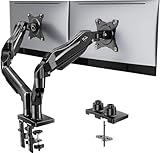
| Dual Monitor Mount | Ergotron LX Dual Side-by-Side | Super smooth adjustments, completely frees up my desk space by ditching those clunky monitor stands | $269 |
| Keyboard | Wooting 60HE+ or Keychron Q1 Pro | Both offer a premium tactile feel, whether you prefer wireless freedom or a solid wired connection | $195 |
| Mouse | Logitech G Pro X Superlight 2 | Wireless, incredibly responsive, and absolutely no cable drag across my expansive setup | $159 |
| Mousepad | Glorious 3XL desk mat (spanning both monitors) | A single, massive surface for unrestricted, sweeping mouse movements | $59 |
| Headset | HyperX Cloud Alpha Wireless | Battery life for days of use, and a clear mic for all my Discord calls | $169 |
| Ergonomic Chair | Used Steelcase Leap V2 or new Sihoo Doro | Essential for maintaining comfort and support during those marathon dual-screen sessions | ~$250 |
At MSRP the whole setup runs around $1659. But realistically, with a smart used-chair buy and a little patience for sales, I’ve seen it come together for $1050-$1150. I’ll say it as loudly as I can: do NOT skip the monitor arm. Two separate monitor stands will eat your desk space faster than you can mutter “bezels.”
What You Can Expect From This Setup
Pair this dual monitor layout with a capable gaming PC (think RTX 5070 or better) and here’s the performance I get firsthand:
- Primary Display (1440p 240Hz): I get buttery-smooth 240+ FPS in my favorite competitive shooters, and single-player AAA titles look stunning with incredible clarity.
- Secondary Display (1440p 165Hz): Since both monitors are 1440p, apps glide seamlessly between them without any annoying scaling issues.
- Dual Monitor Arm Benefits: I can effortlessly pull both displays closer, push them back, and adjust their height independently. This little gem frees up about 8 inches of desk depth!
- My Streaming Workflow: Game on the main screen, while OBS, chat, Discord, and a browser run perfectly on the secondary. It’s a game-changer.
- My Productivity Workflow: I often have my IDE and documentation open, or a document and research, or even a video tutorial with notes – all simultaneously and efficiently.
- Wireless Peripherals: No more getting my mouse cable snagged when I’m zipping between screens. Pure freedom.
A dual monitor workflow plays out differently than an ultrawide. Instead of tiling windows across one giant canvas, I deliberately switch between separate contexts. Some of us, me included, genuinely prefer that clean split; others feel it breaks their focus. It comes down to personal taste.
Where I Save and Where I Spend
Where to save: I flat-out avoid mismatched monitors, different resolutions or wildly different refresh rates are a no-go unless the second screen is purely for vertical text. And unless you’ve got a very specific reason, skip a third monitor; diminishing returns kick in fast. If you’ve committed to dual, don’t try to wedge an ultrawide in too; they’re different paradigms.
Where to splurge: The monitor arm, no contest. A cheap, wobbly arm from some no-name brand will sag, irritate you, and wreck the whole experience. The Ergotron LX is my pick for sheer durability. And if you do any creative work, spend on color-accurate panels; my Gigabyte M27Q X lands a Delta E under 2 straight out of the box.
My Personal Upgrade Path
One of the best parts of a dual monitor setup is how modular it is when it’s time to upgrade:
- Add $300: I’d consider upgrading my primary display to a 27″ 1440p OLED (like the LG 27GS95QE or MSI 271QR) for incredible visuals.
- Add $200: A third vertical monitor is great for dedicated chat windows or code references.
- Add $150: A Stream Deck XL is fantastic for setting up macros for window management and app switching.
- Add $250: A high-quality webcam (MX Brio) and a good USB microphone (Shure MV6) are next for serious streaming.
- Add $400: A USB-C dock with KVM is perfect for seamlessly switching between my work and gaming PCs.
Every piece of a dual monitor setup is essentially modular, which means I can invest in upgrades piece by piece over time instead of starting over.
Potential Roadblocks I’ve Encountered
Dual monitor setups are great, but they do come with a few quirks worth knowing:
- Desk Depth: Two 27-inch monitors side-by-side with their original stands need at least 32 inches of desk depth. With a monitor arm, I can get by comfortably with 28 inches.
- GPU Output Ports: Driving two 1440p displays at high refresh rates requires DisplayPort or HDMI 2.1. Be aware that some lower-tier GPUs might limit the refresh rate of your second monitor.
- Bezel Gap: Even with super-thin bezels, there’s still a 5-10mm gap between the displays. Sometimes windows behave oddly when trying to span this gap.
- Cursor Drift in Games: In some games, my mouse cursor can drift onto the second monitor, leading to accidental alt-tabs. Tools like Lossless Scaling, DisplayFusion, or simply using borderless fullscreen with cursor lock usually fix this.
- Refresh Rate Mismatch: If your primary is 240Hz and your secondary is 60Hz, Windows can sometimes cause visual hitches when content moves between them. I always try to match refresh rates as closely as possible.
- Display Arrangement: For long sessions, I find a stacked (one above the other) arrangement is easier on my neck than side-by-side, though side-by-side gives me more immediate horizontal app real estate.
My Dual Monitor FAQ
Should my secondary monitor be a different size? I lean toward matching sizes for visual consistency. If you do mix, a vertical 24″ 1080p next to a horizontal 27″ 1440p is a common asymmetric combo.
Why not just get an ultrawide instead? For me, separate monitors give me bezels (which I treat as a feature when I want windows snapping to one display rather than spanning both) and the freedom to run different refresh rates for different content. Ultrawides look tidier, but I find them less flexible in day-to-day use.
Can I rotate one monitor vertically? Definitely. My Ergotron LX arm pivots a full 90 degrees no problem. It’s brilliant for coding, reading docs, or keeping chat windows in view.
What about input lag on the secondary monitor? Both of my panels sit under 5ms input lag in Game Mode. I always game on the primary; the secondary is strictly for content where latency doesn’t matter.
Will Discord/OBS/etc. hurt my gaming performance? Modern OBS with NVENC AV1 encoding barely touches game performance. Discord, especially with hardware acceleration off, is just as minor.
Should both monitors be from the same brand? If matching color accuracy across screens matters to you (say, for creative work), then yes, same brand helps. Otherwise, mixing brands is totally fine for an asymmetric workflow.
My Final Thoughts
For serious multitaskers and builders like me, a dual monitor setup is the dependable workhorse. They don’t carry the instant wow of an ultrawide or the full immersion of one massive panel, but for real productivity and flexible workflows, nothing matches them.
This $1100 setup hands you two genuinely capable gaming displays (a 240Hz primary and a 165Hz secondary) plus a top-tier monitor arm and solid peripherals. My number-one tip: measure your desk depth. Make sure it can actually fit this layout before you commit.
I’d happily recommend this build to any budget-minded streamer, hybrid worker who needs distinct app spaces, or anyone whose daily grind means constantly referencing material next to their main task.
Related Guides
Related Articles
Want to dig deeper into this topic? Check out the hand-picked guides below, each scored with the same rubric we used in this review.
Frequently Asked Questions
Should both monitors be the same model for a dual setup?
Matching models gives identical color, brightness, refresh rate, and height, creating a seamless look and consistent experience across both screens. It is not required, though, since many people pair a main gaming monitor with a secondary display for chat, Discord, or browsing. If you mix models, use adjustable arms to align heights and calibrate colors to reduce mismatch.
Do I need a powerful GPU to run dual monitors for gaming?
Gaming on one monitor while the second shows static content like Discord or a browser adds little GPU load, so a mid-range card handles it fine. Demand rises only if you run games or video on both screens at once. Check that your GPU has enough video outputs, and for high refresh use DisplayPort where possible.
How should I position dual monitors ergonomically?
Place your primary monitor directly in front at eye level and angle the secondary toward you beside it, so you turn your head rather than your whole body. Monitor arms help fine-tune height, distance, and angle for comfort. If you use both equally, some people center the gap between them; if one is primary, keep it straight ahead.
Can I game on one monitor and use the other at the same time?
Yes, that is a key benefit: you can play full-screen on the main display while keeping a guide, stream chat, Discord, or system monitors on the second. Running the game in borderless windowed mode makes it easier to move the mouse between screens without minimizing. This multitasking flexibility is why many gamers prefer dual setups.
What cables and ports do I need for a dual monitor setup?
Confirm your GPU has enough outputs, typically a mix of DisplayPort and HDMI, to match your monitors’ inputs, and use the highest-bandwidth connection each supports for full resolution and refresh. DisplayPort is preferred for high-refresh gaming. Avoid daisy-chaining through low-bandwidth adapters, and buy cables rated for your target resolution and refresh rate to avoid signal issues.
Ready to decide? Our #1 pick for 2026 is the Main Gaming Monitor.
Live price & availability on Amazon.